

13 Plant Diseases The Old Farmer's Almanac Can Help You Identify

There's little more frustrating than watching your favorite plant in the garden succumb to a plant disease. In order to save your plant, you first need to know what is trying to kill it. The Old Farmer's Almanac can help you pinpoint some of the most common kinds of plant disease, including early blight and powdery mildew.
Understanding what's causing the wilting or browning of leaves can be the first step towards finding a cure. Many conditions are caused either by fungus, which reproduces via spores, or bacteria, which increase their numbers through cell division. All plant diseases need three things to live: a host plant, some kind of microorganism, and the perfect conditions for it to thrive. That means factors like too much rain can sometimes increase the likelihood of certain kinds of plant disease.
Curing a plant of infection means either killing the microorganism or changing the environment to make it more hostile to the invader. Once you know what's bothering your plant, then you can go about fighting it properly. By simply hazarding a guess and getting it wrong, you might end up spending a lot of time and money trying to treat the wrong kind of infection, and it could make things worse. If you're not sure what's bothering your plant, it's time to do some research. Read on for a list of the 13 plant diseases the Almanac can help you identify.
Brown spots could mean anthracnose
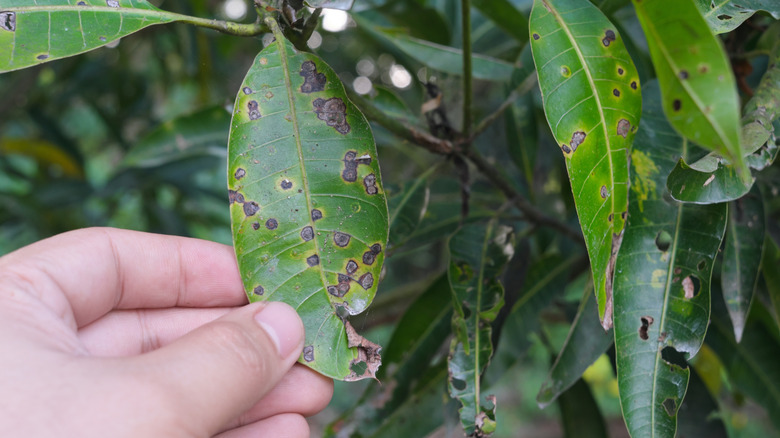
If you've noticed small yellow or brown spots on the leaves of a plant, the fungus anthracnose could be to blame. This plant disease thrives in cool and wet conditions and can affect many kinds of plants from trees and shrubs to flowers and vegetables. Young leaves sometimes curl at the edges. Often, just a part of the leaf dies. You'll know it's anthracnose in your tree if it keeps spreading through the entire canopy while rainy weather continues. To cure anthracnose, try using a copper-infused fungicide.
Damping off has this one sign
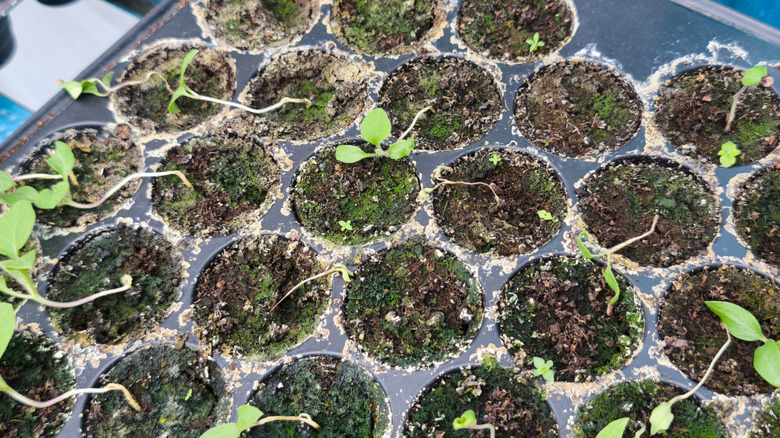
Damping off, the fungal infection that hits seedlings at their most vulnerable, becomes obvious when young sprouts begin to wilt and fail to thrive. Did you know, however, that damping off also can happen before sprouts even make it to the surface? You might assume seeds simply failed to germinate, but fungus could be to blame. You'll also be able to tell your plants are suffering if the very first sprout or leaf to emerge from the soil is soft and squishy, or if roots fail to truly form.
Yellow leaves? Early blight could be the cause
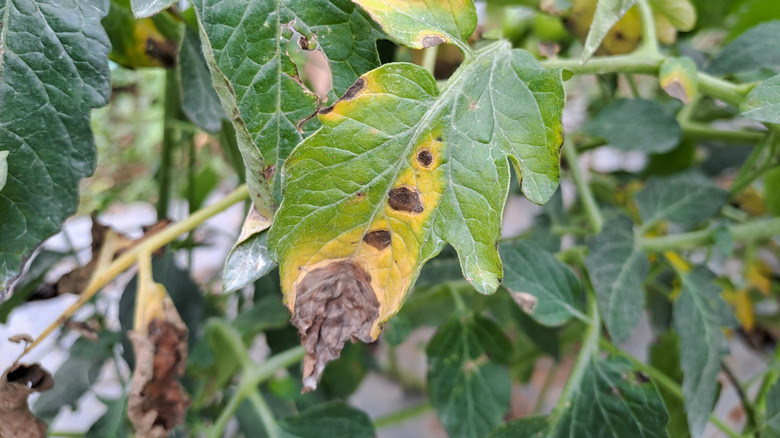
If the leaves of your tomato plant yellow and begin to curl, the problem might be early blight. Caused by the Alternaria solani fungus, early blight can destroy your tomato crops, either in the garden or in containers. Once you see signs of early blight, it might be too late to stop the disease as it spreads rapidly and doesn't always fully respond to fungicides. This disease also targets eggplants, potatoes, peppers, and other vegetables in the garden. Early blight, like many fungal infections, spreads in wet and warm conditions.
Late blight wants to finish off a plant
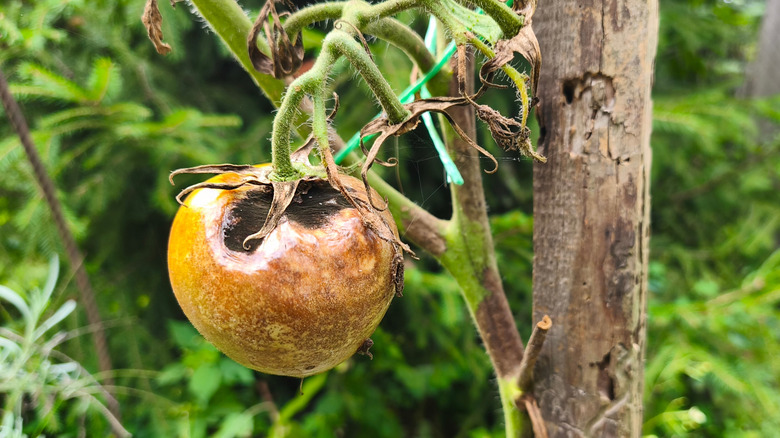
Unlike early blight, late blight arrives usually in the last half of the growing season. Spread through the water-loving fungus, Phytophthora infestans, late blight prefers cooler and wet weather. The 1840s Irish potato famine could be blamed on late blight. You can tell it's arrived when potatoes turn purplish or red, or when brown spots appear on tomatoes. Dried, brown leaves will wither on stems. This disease spreads through the air, and not through the soil. The good news is that blight is less common and doesn't always appear every year.
Fire blight will burn your plants
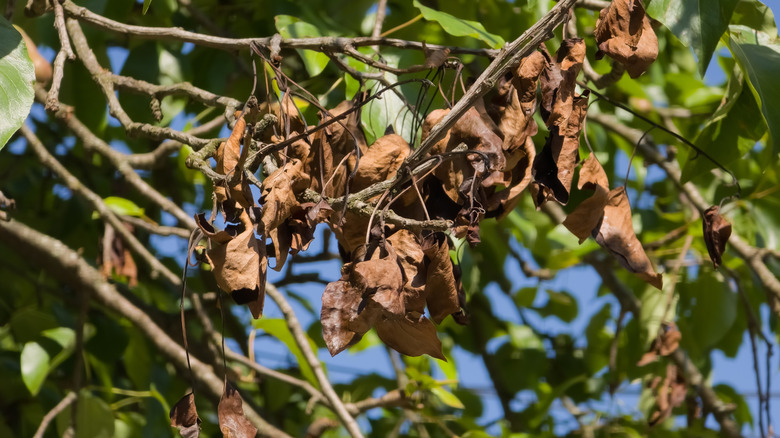
If your pear or crab apple tree suddenly seems to have entire branches or stems filled with dead, singed leaves, you may have a case of fire blight. This bacterial plant disease caused by Erwinia amylovora tends to target members of the Rosaceae family, including apples, pears, strawberries, and roses. Fire blight also causes fruit to wither on the vine as well, becoming so dried out they'll look raisin-like and shriveled. The best treatment is to cut away affected branches. If it reaches the main stem or trunk, the plant likely won't survive.
Unsightly powdery mildew strikes hard
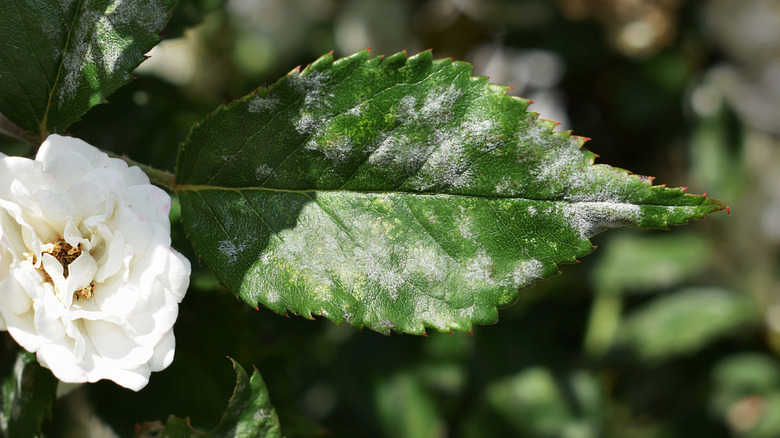
If you're asking yourself: What's that white fuzz growing in my garden? The answer is probably powdery mildew. One of the most common kinds of garden fungus, it can affect almost anything in the garden, including 10,000 different plants! These obligate fungal parasites prey on the live tissue of plants. One of the reasons it's so widespread is because it doesn't need particularly wet conditions to thrive. Powdery mildew can also look like cobwebs on a plant, so look closely. Baking soda might be a possible remedy for this invasive fungus.
Don't be fooled by downy mildew
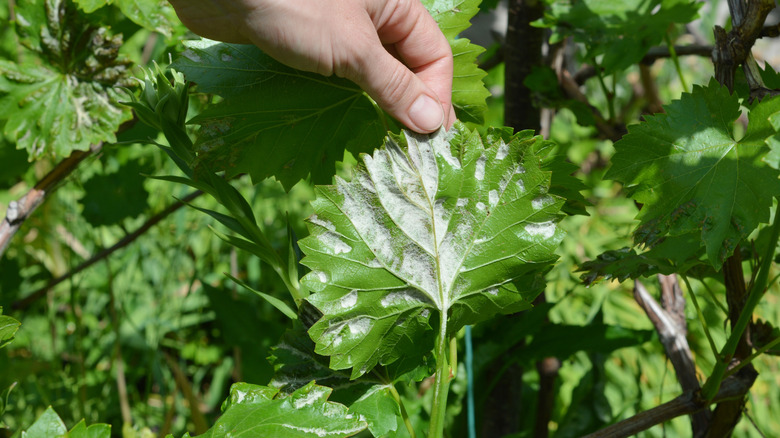
While downy mildew seems similar to powdery mildew, the two are decidedly different. Downy mildew begins as small yellow or green spots that eventually turn brownish and can cover an entire leaf. On the underside of the leaves, you'll see signs of the fuzzy, white growth that inspired its name. It traditionally targets grapes, cucumbers, and roses. To control the spread of the disease, remove any diseased plants. Also, don't water susceptible plants from overhead — try irrigating near the base of the plant.
Fusarium wilt causes yellow leaves
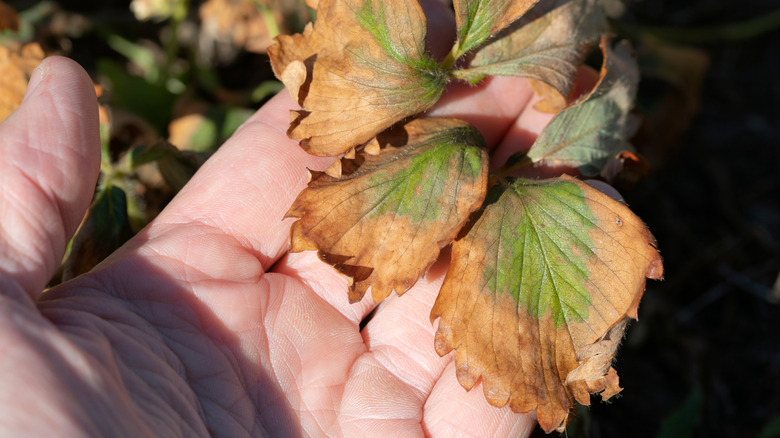
If leaves in the garden begin to yellow, then you may have a case of Fusarium wilt fueled by the Fusarium oxysporum fungus. This condition appears in the heat of summer and sometimes just on one side of the plant. You might easily mistake it for lack of watering. To determine if it's a disease or dry soil, scrape back the outer layer of the plant stem and look for red or brown discoloration, a sure sign of this wilt. Your plant can't be cured of this infection, so the best strategy is prevention.
Gray mold lives up to its name
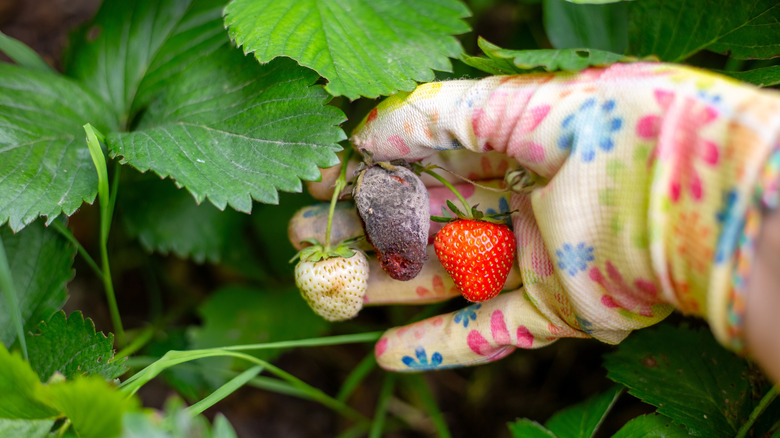
Mold doesn't just come for the berries inside your refrigerator crisper drawer. It can also come for them in your garden. Gray mold affects berries, flowers, and a host of plants outside. The fungus Botrytis cinerea causes this disease, and it can hitch a ride anywhere — on your garden tools, in the water or soil, or even boosted by the breeze. Gray mold usually infects a plant through a wound, and often starts as a brown or black spot. Look for powdery spores on the leaves, a sure sign of a colony.
Mosaic virus isn't the decoration you want in the garden
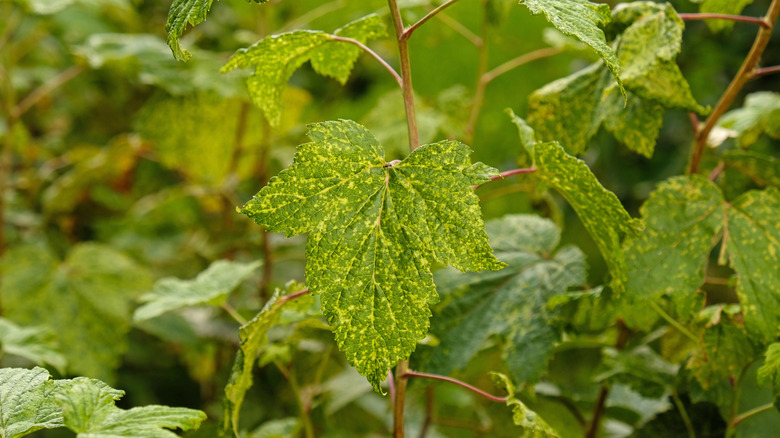
You'll know it's mosaic virus when the leaves of your cucumbers suddenly grow a splotchy white or yellow design. Specific strains of this disease can affect tomatoes, okra, and beans, but it's probably most common in cucumber plants. It can be spread by aphids, so if you've got these bugs feasting in your garden, you may get double trouble. The disease strikes young growth first, and may result in puckered, curled, or otherwise malformed leaves. Also, sick plants won't produce as much cucumbers as they normally would.
Rust disease will corrode leaves
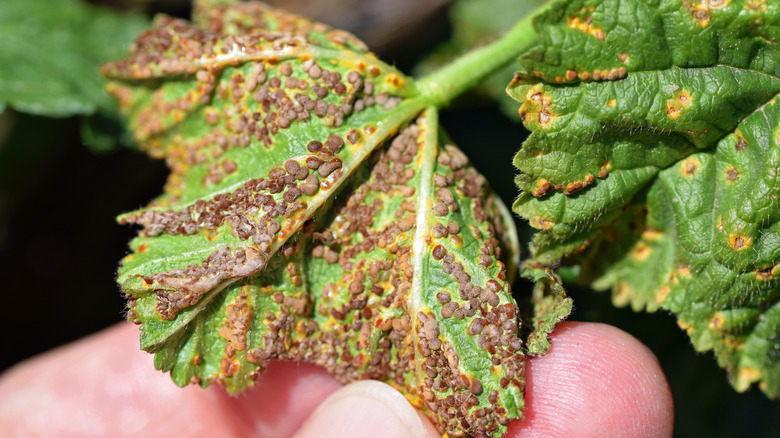
Rust isn't just for garden tools. A common plant disease by the same gives off the same effect: Brown, yellow, or reddish spots that appear out of nowhere, corroding the undersides of leaves. Fungus causes rust disease in plants, especially in roses, and often appear as dark-colored raised spots. A severe infection will cause the plant to drop affected leaves. You can control rust disease on plants by cutting off any affected parts and clearing away any diseased or dead leaves that have fallen to the ground.
Look for fluffy growth on stems for white mold
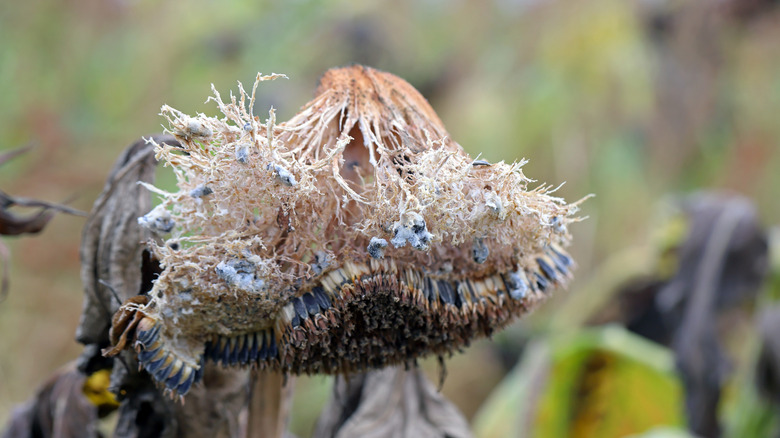
Sclerotinia sclerotiorum, also known as white mold, can strike any number of plants in the garden — from sunflowers and cabbage to tomatoes and beans. Not to be confused with another white fungal infection, powdery mildew, white mold goes after the stems of plants. Cottony white and fluffy growth usually appears there first, and then stems can turn hard and black and die. This disease spreads quickly, so plucking out diseased plants and burning them is the best thing you can do to stop the spread in your garden.
White rot strikes allium
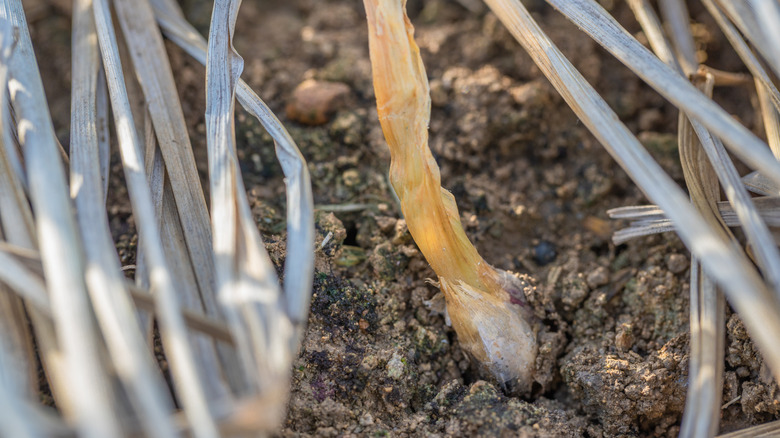
If your garlic or onion plants begin to shrivel and die, white rot could be the issue. This Sclerotium cepivorum fungus preys on plants in the allium family. First, the plant will start to yellow, and then it will shrivel very prematurely in the growing season. You can easily pluck these bulbs from the ground with little resistance, and once you do, you'll see evidence of white mold growing on the garlic or onions. To prevent the spread of this pathogen, rotate allium crops with different vegetables regularly.