

9 Flower Varieties With The Best Curb Appeal For A Stunning Landscape
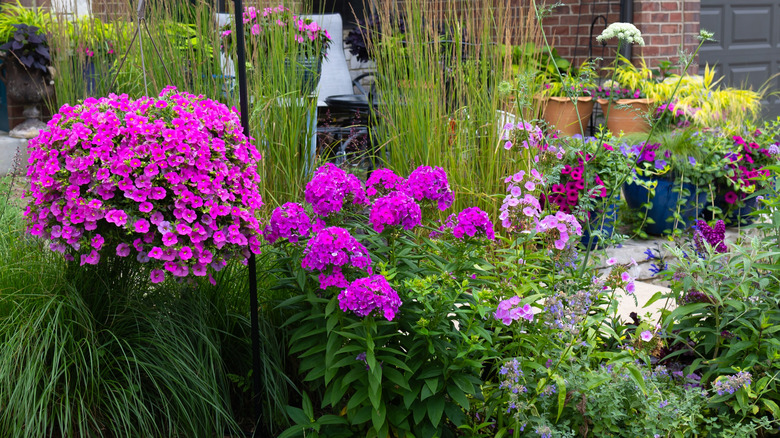
An initial impression of your home is hard to shake. The first thing visitors (or prospective buyers) see before they get to your door is your front yard or garden, so it's a great opportunity to "wow" them with some stunning blooms. Think about what makes the interior of your home special, and treat your front yard as an amuse-bouche that offers just a taste of your style and personality. From bright, familiar favorites such as tulips and petunias to native selections like foothill penstemon and purple poppy mallow, there are myriad ways to extend a visual invitation to viewers.
From the color of your door to the addition of water features or benches, there are many elements to keep in mind when thinking of ways to improve your home's curb appeal. In much the same way, not every flower you select has to be a bold focal point that screams for attention — you need a cohesive, harmonious selection that looks great in multiple seasons. Try playing with different shapes of flowers and varied textures in addition to color to create layers of interest.
Tulips
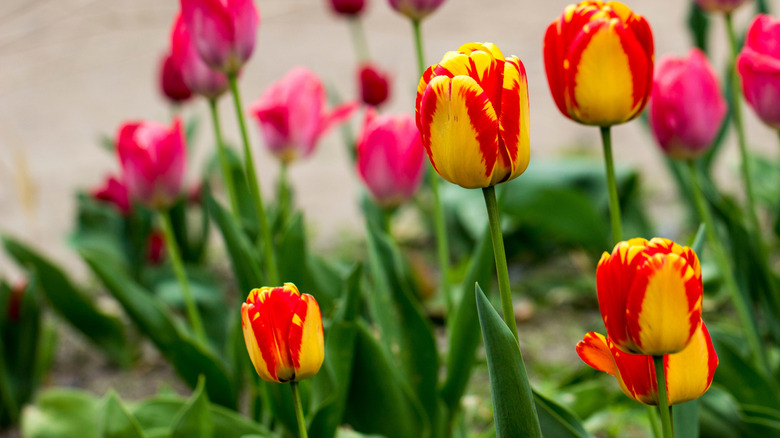
Few springtime sights in USDA Zones 3 through 8 are more welcoming than a profusion of tulips (Tulipa spp.). With their height and the comparatively large blooms, they're guaranteed to draw appreciative eyes to your front yard. There are over 100 wild species of tulips and thousands of cultivars, so odds are, you're bound to find a few that will perfectly suit your home's aesthetic. You might want to check out the Darwin hybrid group, as these have particularly large and showy blooms and are among the more long-lived varieties, so you won't have to replant your bulbs often.
Hardy hibiscus
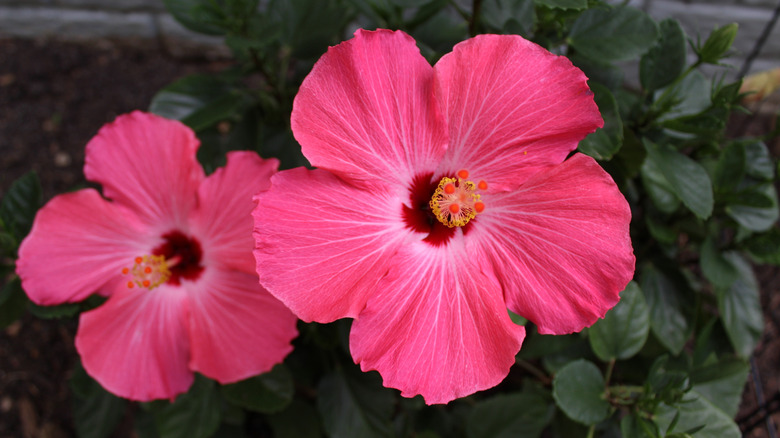
With large, colorful blooms that bring to mind tropical vacations, hardy hibiscus (Hibiscus spp.) makes a fabulous addition for the front of a home. While their more delicate tropical relatives can't survive the chill of winter, hardy hibiscus varieties are hybrids of U.S.-native species and can tough it out as low as zone 4. Plant hardy hibiscus in full sun and enjoy its summer blooming season until the first frost, at which time you'll want to cut it back to a few inches above the ground. Don't worry, though: It will be back bigger than ever next year!
Petunias
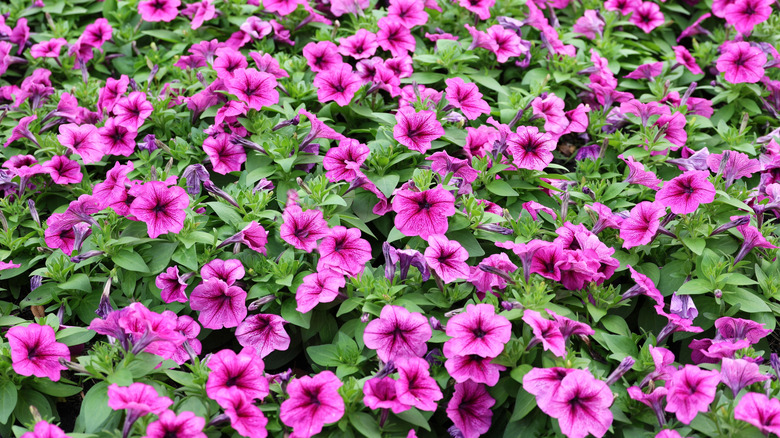
With hundreds of varieties available, petunias (Petunia x hybrida) can provide a pop of color to the front of your home, no matter what color palette you favor. The grandiflora category showcases particularly large, eye-catching blooms, while those in the multiflora category offer a profusion of blooms. Within these categories, you'll find a near-endless variety of hues in single and double petal arrangements. Perennial in zones 10 through 11, petunias are at their best when grown in full sun but can also tolerate partial shade. Make sure to deadhead the larger and double varieties for the best results.
Hummingbird sage

Not all curb appeal has to come from exotic imports. U.S. native plants can be showstoppers in their own right. Hummingbird sage (Salvia spathacea) can serve as both a ground cover and a dash of color in shade and partial shade spots. You've probably already extrapolated from its common name that these flowering plants will attract hummingbirds to your yard and garden. Insect pollinators are also drawn to its bright pink blooms. Hardy in zones 8 through 11, hummingbird sage is able to thrive in a wide range of soil types and is very tolerant of drought periods.
Blazing star

Advocates of U.S. native plantings are pushing back against the idea that these plants are messy or unattractive, and the purple blossoms of blazing star (Liatris spicata) are exemplary of the ornamental potential of native plants. Found growing wild in the eastern United States, blazing star is a hardy perennial in zones 3 through 8. It prefers full sun and is most comfortable in moist, well-draining soil. Summer's heat and humidity are no issue, and if you like decorating with dried flowers, blazing star is an excellent plant to cultivate.
Black-eyed Susan
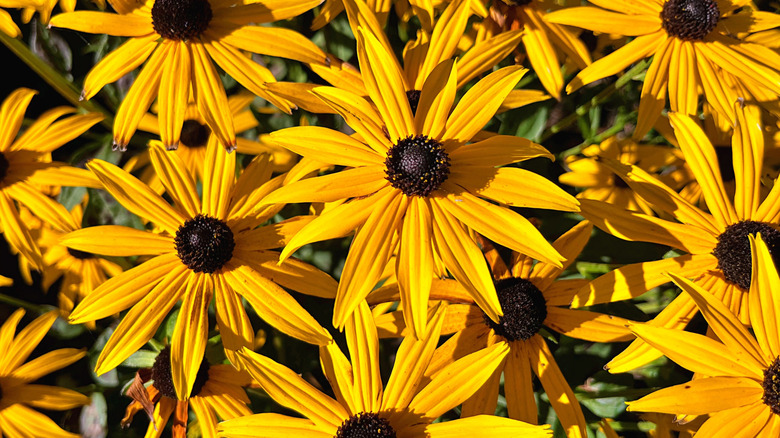
Another native flower ideal for drawing eyes from the street or sidewalk, black-eyed susans (Rudbeckia hirta) are a particularly good selection if you're located near the coast, thanks to their salt tolerance. Hardy in zones 3 through 8, these brilliant yellow, daisy-like flowers are short-lived perennials, but will readily self-seed so you can enjoy them for years to come. Black-eyed susans are perfect for sunny locations, and although they're quite drought-tolerant, they'll thank you for an occasional drink. Deadheading spent flowers can encourage more blooms, which attract butterflies and other insect pollinators, while the ripe seedheads attract songbirds.
Foothill penstemon
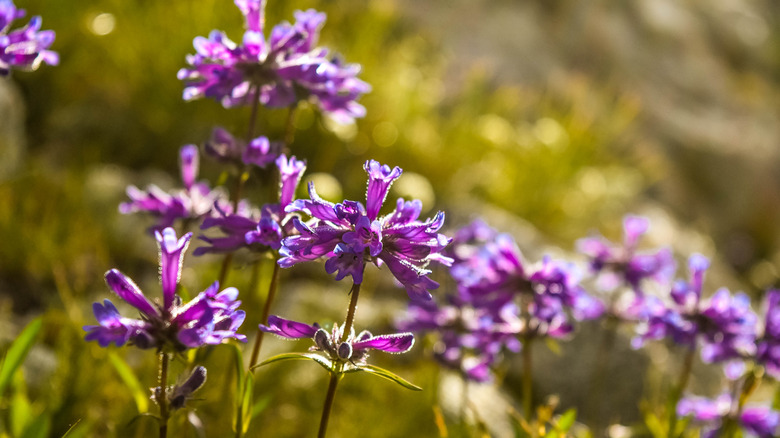
Hailing from the mountains and foothills of the U.S. West Coast, foothill penstemon (Penstemon heterophyllus) is a gorgeous front-yard addition. In particular, the 'Margarita B.O.P.' variety — whose name refers to the seedling discovered at the "bottom of the porch" in Margarita, CA — boasts a beautiful progression from eye-catching gold buds to pinky-purple blooms that eventually turn blue with age. A low, neat grower, this highly adaptable flower has no problem tackling drought conditions and is winter hardy in zones 6 through 10. By deadheading spent flowers, you can encourage a second round of blooms.
Purple poppy mallow
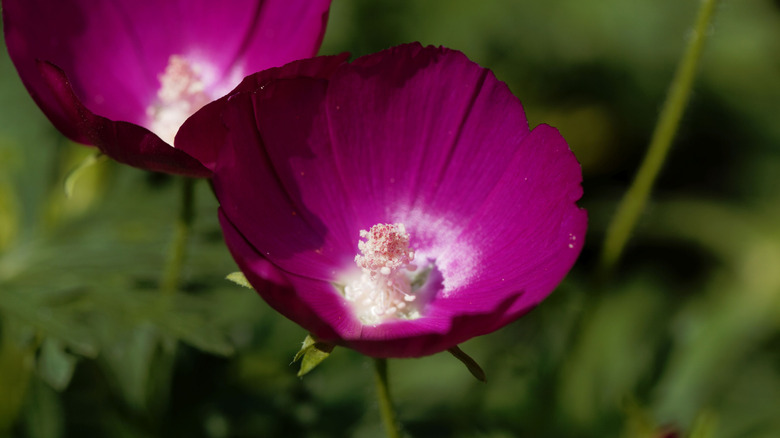
Don't neglect the little strip of land between the sidewalk and the curb. Although it can be a little difficult to find attractive plants that grow well in such an exposed area that often has poor, compacted soil, there are stunners like purple poppy mallow (Callirhoe involucrata) that can thrive. A U.S. native ground cover more than capable of handling dry, full-sun conditions, purple poppy mallow is also suited to zones 4 through 8. With cup-like flowers in a stunning magenta or reddish-purple, it's easy to see why another of its common names is winecup.
Phlox

If you're relying on spring flowers like tulips to carry the aesthetic of your front garden, you're going to need something pretty for after those blooms fade. With a flowering season beginning in mid-summer, garden phlox (Phlox paniculata) can be a good option to cover for fading spring bulbs. Suited to full sun or partial shade applications in zones 4 through 8, this perennial mound flowering plant can span two or three feet wide. Its five-petaled flowers can be found in a rainbow of pastel and bold hues, including pink, orange, purple, and red, but watch out for powdery mildew!