

How To Prepare Your Garden For Heavy Winter Snow
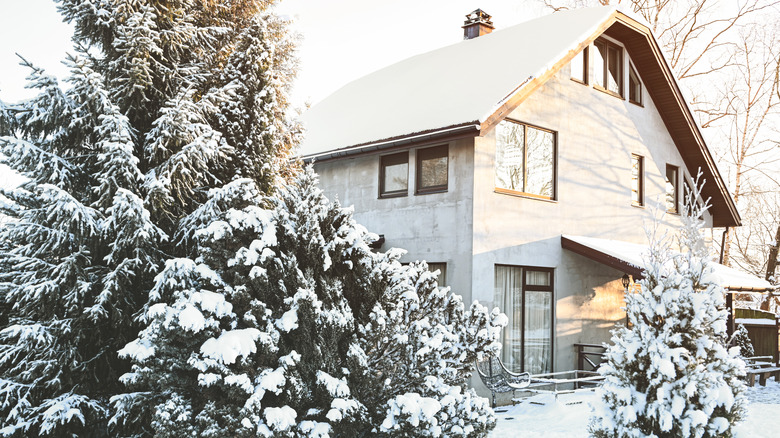
While snow turns a garden into a pretty winter wonderland, these big storms can also damage plants that are left unprotected. A few things you do now, like adding mulch to help warm plants and covering others in protective burlap, can help shield vulnerable plants from a heavy dump. It's best to get to work as soon as possible to save your plants from any potential bad weather.
According to the Old Farmer's Almanac's prediction for snowfall this winter, some places like the eastern half of the Ohio Valley and the Carolinas might be in for even more precipitation than usual, so now's the time to get the garden ready for storms. The snow accumulations can do some good, like protecting roots against the cold, but they bring other problems — such as branch-breaking weight and the possibility of eroding away the soil when it melts. As they thaw, snowbanks often sweep away nutrient-rich soil downhill, away from your garden beds.
To protect against lost soil, grab some mulch to cover exposed dirt. Aim for a 3-inch layer of shredded leaves, straw, or wood chips, especially around tender perennials. This will give the ground a bit of an anchor when temperatures warm and ice melts. Mulch also helps regulate soil temperature, too. It protects vulnerable plants from fluctuating temperatures. Even hardy perennials can be at risk from sudden plunges in temperature followed by warming thaws. As a bonus, mulch will conserve what moisture is left in the ground for thirsty plants, since snow won't do plants much good until it melts.
Protect shrubs and plants from snowfall

The more snow that falls, the heavier it gets. This is a problem! According to meteorologist Justin Thompson-Gee, lighter, fluffy types weigh in at about 4 pounds a square foot, while heavier, wetter kinds can get up to 12 pounds per square foot. A big storm with lots of buildup on shrubs or trees will bend or break limbs. Boxwoods or yews often are especially vulnerable to harm, and some evergreen arborvitaes have upturned branches that can get walloped by heavy snowfall.
To protect shrubs, cover the entire plant with burlap. The cloth is preferable to plastic because it's breathable and allows some light through. If you're short on burlap, even an old bedsheet can work in a pinch. If you don't have a covering at all, you can lash branches together with bungee cords or pantyhose. This will help the branches stay strong and hold up to storms.
Another thing you can do for susceptible plants, including roses, is encircle them with a cage. Chicken wire or hardware cloth will work. Simply make a circle around the plant, leaving about a foot or foot and a half of empty space. Bury the edge of the wire in the ground, or use wooden or metal stakes to secure it. Fill with soil, mulched leaves, or straw to help make a warm blanket of insulation and then top with a burlap cover or blanket.
Trim dead branches before a big snow

Heavy snow is more likely to break weak or dead branches. Before a storm, trim these away. You don't want to prune any live limbs, though, since this can make your tree more vulnerable to the cold. Do the scratch test on the bark to see if the skin underneath is green. If it is, then the branch is alive and should be left alone. For bigger trees, you may want to call in an expert to discuss how to best make it blizzard-proof, especially if you regularly receive heavy snowfall.
Take a walk around your house, and pay special attention to small trees and shrubs beneath or near your sloping rooftop. Big sheets of snow might build up on the roof and fall directly on them, so give them extra care and attention before a big snowfall. Build a cage or even a DIY shelter made of spare pieces of wood. Even an overturned pot or utility bucket on top of a small plant will be better than nothing.
One more tip? Give your garden a decent watering in late fall, well before any winter storm arrives. Blizzards often bring brittle winds that can give plants a lashing, and snow won't actually hydrate your plants until it melts. So make sure the ground is well watered before it freezes, which will help sustain plants through snowstorms. These are just a few things you can do to keep plants healthy and safe during heavy winter snow.