

Gardeners Swear By This Fresh-Smelling Solution To Repel Ticks, But Does It Work?
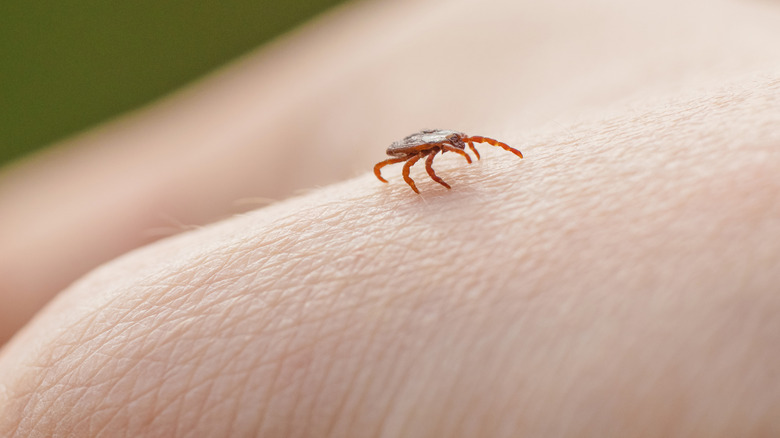
Anyone battling ticks in the backyard would love a magic bullet that smells great and keeps the biting bugs away. It's no wonder then that some gardeners turn to peppermint oil to keep the biting insects at bay, but does it work? The evidence is mixed.
Some say the parasites hate the smell of peppermint and that it interferes with their ability to track the warm-blooded prey they want to snack on. But there's not a lot of conclusive or definitive evidence proving this concentrated organic oil is really effective. One study, however, from the Center for Disease Control, did find that peppermint oil, in combination with other oils (like rosemary) might help repel them from skin for about two hours. That's less effective than popular deterrents like DEET, which can repel the pests for six hours. They did find peppermint oil was better than nothing though, and that in a four-hour period, the aromatic concentrate encouraged 50% of ticks to bug off.
With a 50-50 success rate, you might be better off leaving the peppermint oil inside and trying to keep ticks at bay with garden plants they hate going near. Of course, if you want to try concentrated peppermint oil, there's little harm in it — especially if you like the smell of mint — and it could be better than no protection at all. If you do want to try using peppermint oil, you can combine it with other ingredients that could make it more potent.
Try using peppermint oil to repel ticks

The Old Farmer's Almanac offers an aromatherapy recipe that includes peppermint, witch hazel, and lemongrass or eucalyptus oil that smells good to us, but not the ticks. The addition of the peppermint may be a good deterrent. Remember, though, that peppermint only irritates the insects. If you want to kill them, try rubbing alcohol. It's the trusty medicine cabinet staple that can handle ticks, but you need to soak the bugs for up to 24 hours for it to work.
Whatever you do, don't use peppermint oil to try to remove a tick embedded in your skin. If you lather on oil, this might spook the bug, speeding up the process of infecting you with a disease if it's carrying one. To avoid the bacteria that causes Lyme disease, you're better off using pointed tweezers to pluck the tick off. The faster and cleaner you remove the tick, the less likely you'll get infected.
Aside from dousing you or your yard in minty oil and crossing your fingers, there are other tried and true ways to make your yard less tick-friendly. Keep your yard tidy and garbage-free with the grass well trimmed. Since pests occasionally hitchhike on deer or other animals, discouraging unwanted foragers in the yard will also help. Remove places they like to hide by properly discarding leaves. By keeping your garden tidy, you might also avoid attracting snakes into your yard.