

Where The Old Farmer's Almanac Predicts Colder-Than-Usual Weather Will Be This Winter
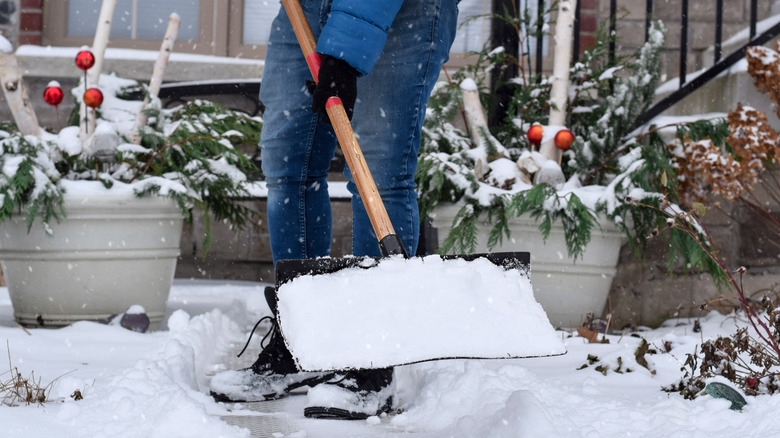
While the Old Farmer's Almanac predicts that many regions of the country will be in for a milder than usual end of year, a few areas should brace for colder than normal temperatures, according to their long-range forecast. The Carolinas and the Ohio Valley could be in for chilly conditions and more snow than usual. Even the Southeast and northern Florida might see unexpected dips in the mercury this winter. These areas should consider how the possible lower temperatures will impact their gardens.
For Atlanta, Savannah, Columbia, and Raleigh, the weather won't just be colder than normal, but heavy snowfall could come with it in December and January. While there's some debate about how accurate the Old Farmer's Almanac's long-term predictions actually are, it's a good idea to be on the safe side. That means spreading out a thick layer of mulch, especially for tender perennials. Extra prep now may help them survive sudden freezing spells and just as harmful soil temperature fluctuations. You can also use frost prevention tools like frost covers to lay on top of tender foliage and prevent snow or ice damage.
Similarly, the Old Farmer's Almanac also predicts precipitation at higher levels — especially more snow – as well as lower-than-usual temperatures for the Ohio Valley (including Cincinnati, Pittsburgh, and Louisville). The threat of snowfall is greatest from late December through February. You'll still want to think about your less hardy plants and prepare to cover them or bring them inside before blizzards.
Floridians should brace for colder than usual weather
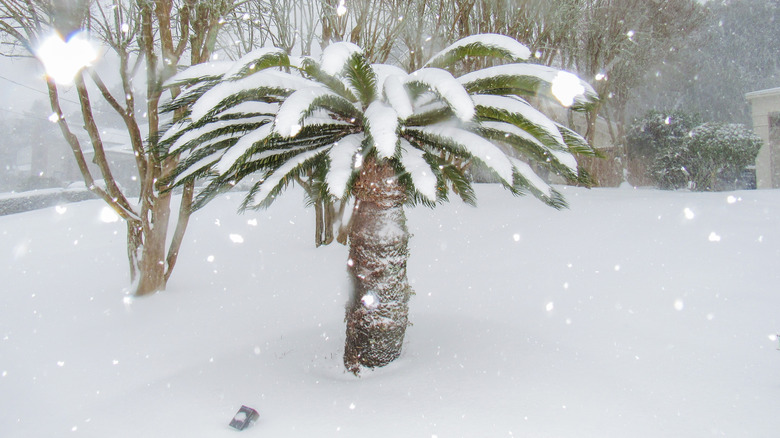
Florida may also be in for a colder-than-usual winter this year, according to the Almanac. That means you may need to jump into action to save tender perennials susceptible to cold. Since most of northern Florida falls into USDA Plant Hardiness Zone 9, that means if temperatures drop into the 20s, you'll need to assess which plants to cover for frost protection.
To protect tropical plants, use a cloth covering. Burlap and even blankets or sheets will do. Try to avoid plastic, though, since it can trap moisture and get too hot when the sun is out. If you're worried about your palm tree, wrap the palm leaves together at the center in protective cloth before the cold arrives. Some palm trees are hardy down to zone 7, so double-check your variety. Meanwhile, you can move delicate potted plants from the patio into the garage. While most Floridians don't usually have to worry about frost damage, a colder-than-usual weather forecast forces you to consider the tropical plants that are better off overwintering indoors, at least temporarily.
In both Florida and the Carolinas, consider taking cuttings from your favorite perennials before a freeze sets in. This way, you can clone your plants indoors as a kind of insurance policy, just in case they don't survive. Then, when the weather warms again, you can plant the seedlings outside. This is just one way to help minimize long-term garden damage during a colder-than-usual winter.