

10 Plants That Are Attracting Icky Squash Bugs Into The Garden
We may receive a commission on purchases made from links.
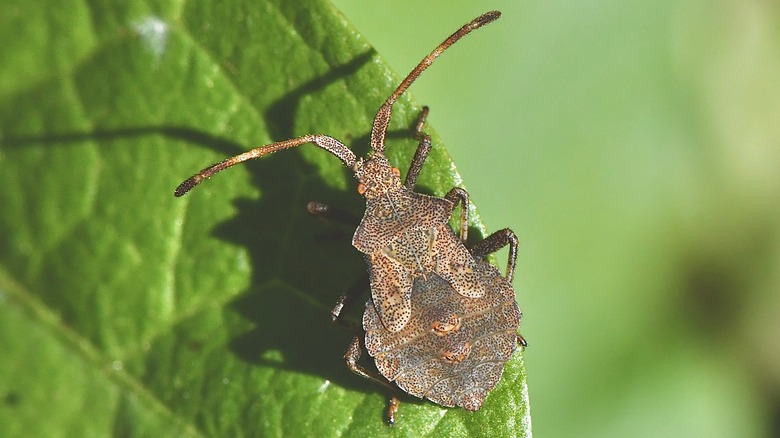
Squash bugs are probably the last guests you want to see come uninvited to your vegetable garden. You'll know them by their flat gray or brown bodies and the damage they do to your gourds. If you want to know what's killing your squash or zucchini plants, chances are good it's this bothersome pest. There are certain types of plants the bugs seem to prefer even more, however, such as pumpkins, watermelons, and other types of vining plants.
And they're destructive, too. Squash bugs can quickly consume and kill a plant. They suck the sap and juice out of leaves while injecting harmful bacteria into the cells as they eat. This can cause leaves to yellow, which will eventually they'll shrivel and turn brown. Sometimes, the early damage can be mistaken for bacteria wilt. And these annoying bugs don't just stop at the leaves. They'll keep on eating well after fruit forms, damaging or even killing entire crops of gourds.
The best way to deal with these uninvited critters might be just to catch and kill them early. Adults tend to emerge ready to mate and mingle around June, and waste no time getting to work. After mating, they'll lay eggs underneath their favorite plant leaves within around 10 days of the first time you see one. In mid-summer, it's a good idea to check beneath the leaves for eggs. Look near the stem to see groups of small, brown or red seed-like pods and remove them when you can. You'll especially need to look near these 10 plants that attract the small bugs in the first place.
Squash bugs love their namesake, squash
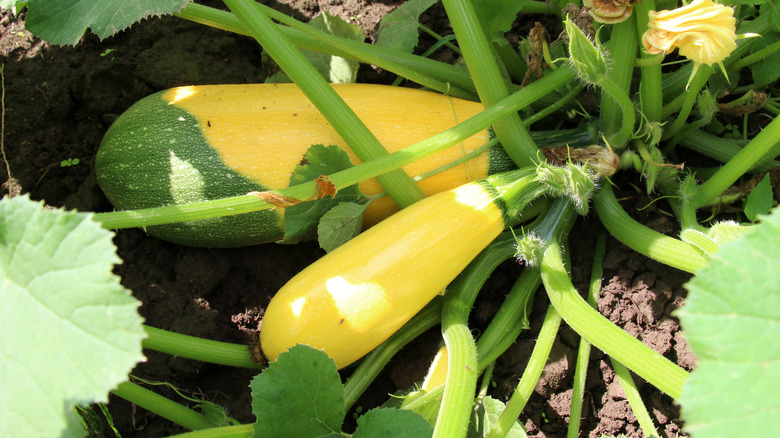
Since this bug gets its name from squash (Cucurbita spp.), this summer vining vegetable remains the bug's number-one choice for food, including both crookneck or straightneck varieties. These hungry pests can absolutely disrupt the life cycle of your squash plant, so it's best to be proactive and protect these vegetables. You can trap them by tucking boards beneath your plants. They'll hide beneath it at night. In the morning, they'll be clustered there, so it will be easier to kill them.
Cucumbers draw in the pests
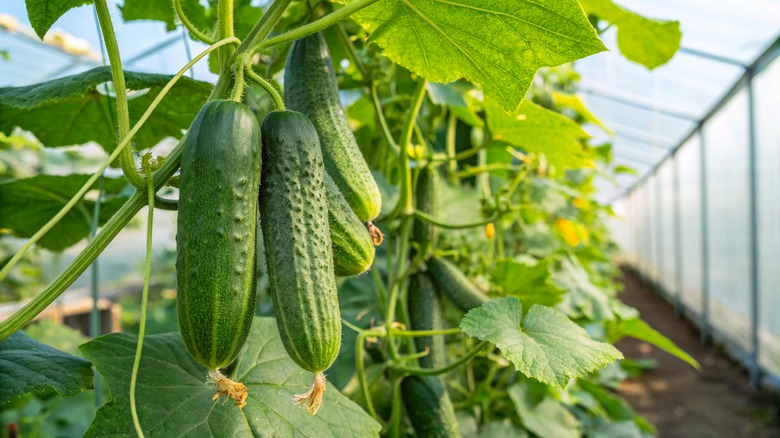
Squash bugs don't mind munching on cucumbers (Cucumis sativus) and will happily make your favorite summer vegetable its new nursery. While most cucumber plants can fend off just a few, they're often easily overtaken by these quickly reproducing pests. Given that one bug will lay 20 eggs at a time, and females make 250 eggs in a lifetime, it's no wonder their colonies often grow so fast.
Squash bugs fixate on pumpkins
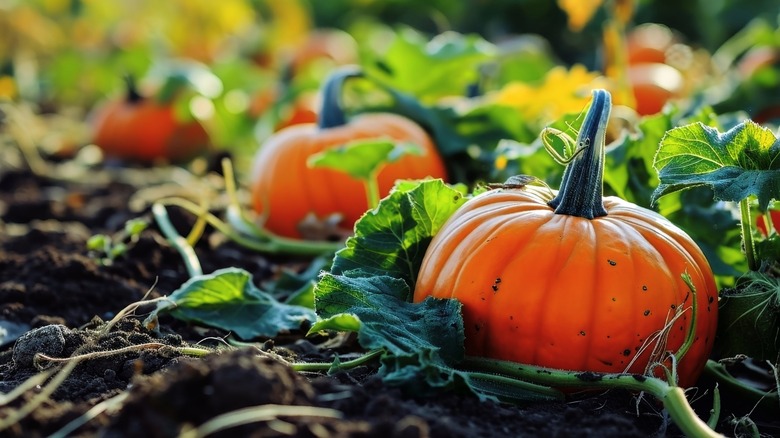
Pumpkins (Cucurbita pepo) aren't safe from squash bugs, either. It's not surprising, since pumpkins are technically a winter squash, and these bugs love their gourds. In fact, they might even be the cause of those yellow leaves on your pumpkin. Sadly, squash bugs can be tough and hard to kill. Their outer shells are thick and resistant to insecticides – but you can effectively use some chemicals, like Acetamiprid, on eggs and recently hatched nymphs. They're likely to be hiding underneath your pumpkin leaves. You can also always pick squash bugs off by hand.
Watermelons attract squash bugs
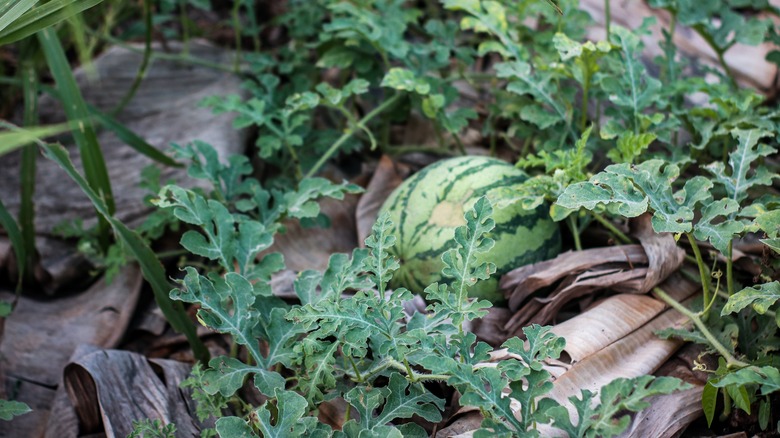
Watermelon (Citrullus lanatus) isn't just one of our favorite, juicy summer treats, it's also at the top of the list for this pest. If you want to protect your watermelon, use neem oil. Squash bugs don't like it, and it's an organic, nontoxic repellent that's safe to use on many vegetables. Try Earth's Ally 3-in-1 plant spray to help keep the bugs at bay. Just follow all instructions on the label when using it.
Butternut squash isn't immune
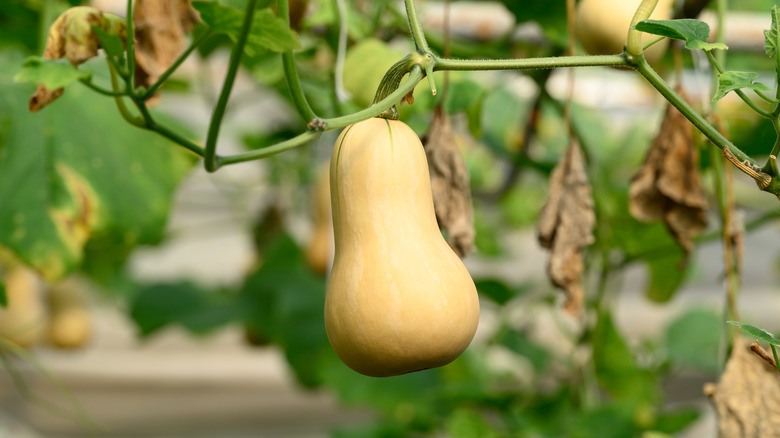
Some gardeners think the thick skin of butternut squash can save it from an infestation, but that's just an old wives' tale. These insects love all kinds of gourds and winter varieties like butternut are no exception. However, it is true that the butternut type might not succumb to a squash bug invasion as quickly as other varieties. It might be slightly more resistant to long-term damage than other kinds.
Pests love sweet cantaloupe melons
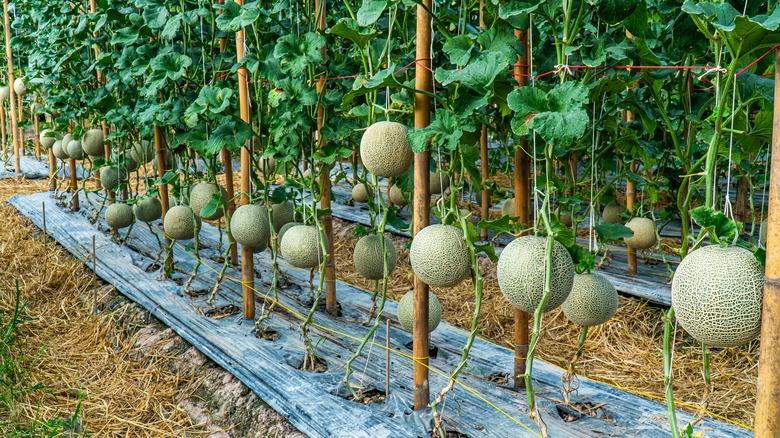
We might like the sweetness of cantaloupes (Cucumis melo), but so do squash bugs. They'll happily snack on this vining melon as long as we let them. These insects really will go for any cucurbit. They also happen to spread the bacteria, Serratia marcescens, which causes yellow vine disease. This condition proves fatal for many melons and gourds. You'll know it by the yellowing of leaves and sudden fall of the plant. Young cucurbits, however, might not yellow. Sometimes, they simply fail.
Squash bugs snack on zucchini
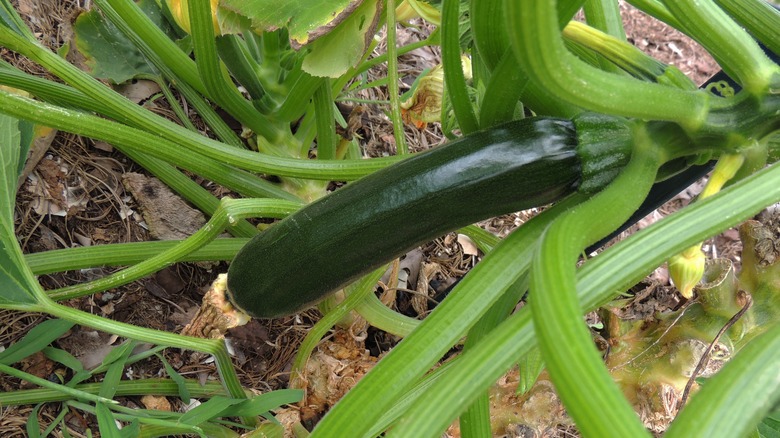
Zucchini (Cucurbita pepo subsp. pepo) is another favorite of the squash bug. If you've had an infestation already, then after the growing season, make sure to remove and burn any withered vines and also any fallen autumn leaves as well. Adult insects spend the winter hiding beneath ground debris, so the cleaner you can keep your garden, the less likely they'll return next spring to lay a new clutch of eggs.
Pattypan squash lures in the pests
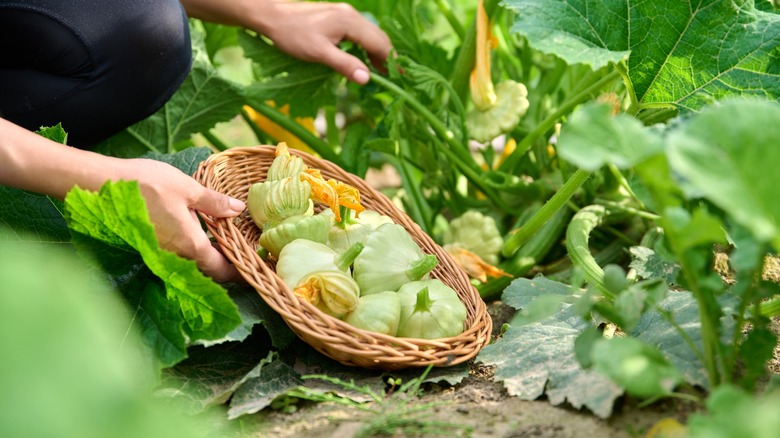
Bushier types of vining vegetables like pattypan squash (Cucurbita pepo var. clypeata) may be more susceptible to bug infections than traditional vining gourds. The thicker foliage of this variety has more leaves and therefore more places where adults can inconspicuously lay their eggs or simply just hide from view. These pests are more likely to go unnoticed until you've got a full-fledged infestation. Since adults like to hide near the base of the plant, skip using straw mulch, one of their favorites.
Squash bugs love the apple gourd
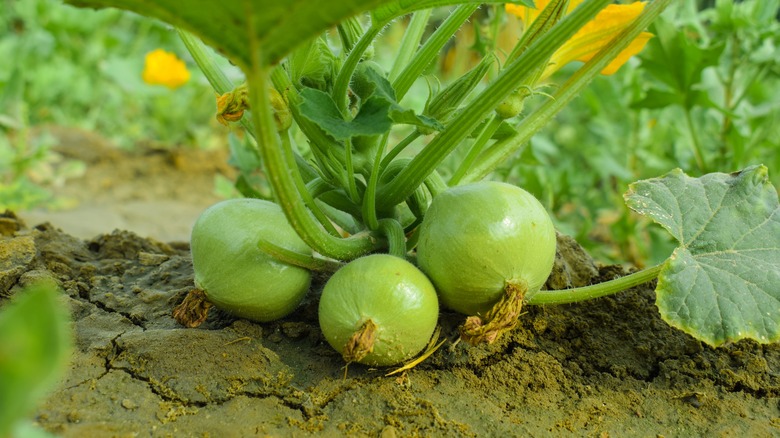
Apple gourds, also known as tinda (Praecitrullus fistulosus), are more common in India than the U.S. — but squash bugs will take a bite out of this cousin of the pumpkin, too. Once an adult lays eggs on a plant, they'll hatch in about a week. It only takes young nymphs a month and a half to mature. They'll do so faster in dry, warm weather. Young bugs will be lighter in color than their adult counterparts, because they're covered in a kind of white residue. Nymphs are less than a half-inch long.
Bitter melon is sweet for these pests
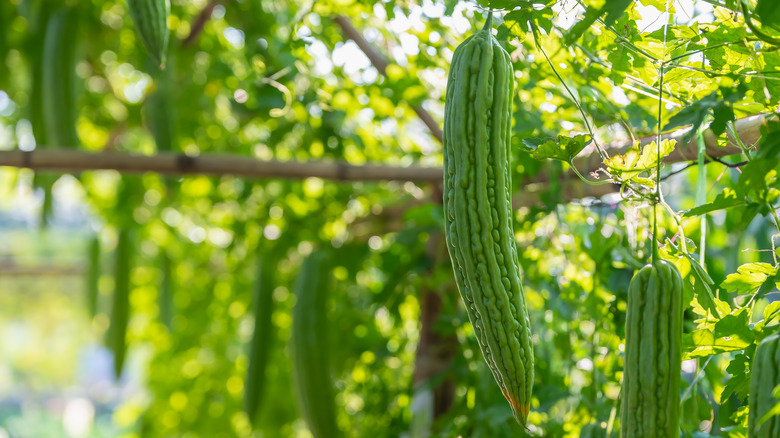
Not all pests like their meals sweet. Bitter melon (Momordica charantia) can also be targeted. It looks a lot like a very bumpy cucumber. Bitter melon is more commonly eaten in many parts of Asia. Of course, if you see a flat bug on a plant, make sure you're dealing with a squash bug. They're sometimes confused with stink bugs. If given a choice, stink bugs prefer tomatoes or bean plants to cucurbits.