

The Beneficial Garden Shrub You Can Propagate From Cuttings In Winter
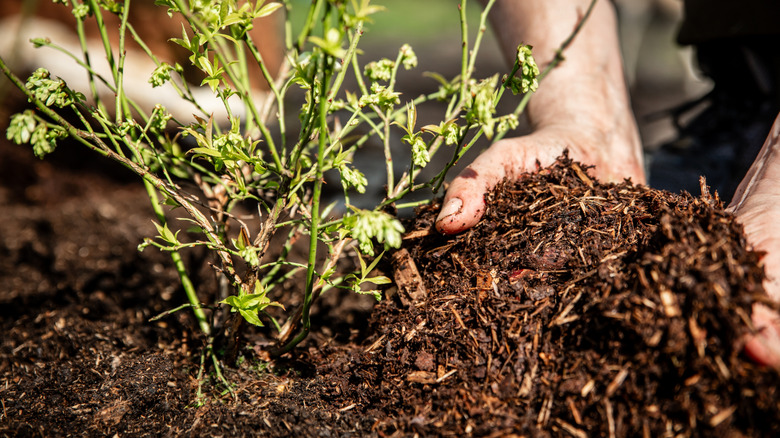
There are so many excellent reasons to plant highbush blueberry shrubs (Vaccinium corymbosum) in your garden. In addition to being relatively easy to grow and care for, they have year-round appeal, from their dainty flowers to their lovely red branches. The berries themselves are both delicious and highly nutritious, delivering health benefits ranging from improving gut health to decreasing your risk of cardiovascular disease. But wait, there's more! You can multiply your shrubs relatively easily. If you already have a blueberry bush in your yard and are longing for more, you can actually start propagating blueberry plants over the winter by taking hardwood cuttings from existing bushes and rooting them over the next year.
You can actually take blueberry cuttings in late spring, as well, but cuttings taken at that time are from softwood, or the current season's growth. Hardwood cuttings are best taken in the chilly depths of winter, typically around January or February. These cuttings are taken from growth that has occurred over the past year. There are advantages and disadvantages to either of these types of cuttings: Softwood cuttings tend to root more quickly, while hardwood cuttings might be a little hardier. It's worth noting that the best time to prune highbush blueberries is in late winter, so you can just take your cuttings while you're performing that essential winter task that ensures a healthy blueberry shrub next spring. Before you begin any of this, though, remember that it is illegal to propagate any trademarked plants, even if it's for your own yard.
How to select and take hardwood blueberry cuttings
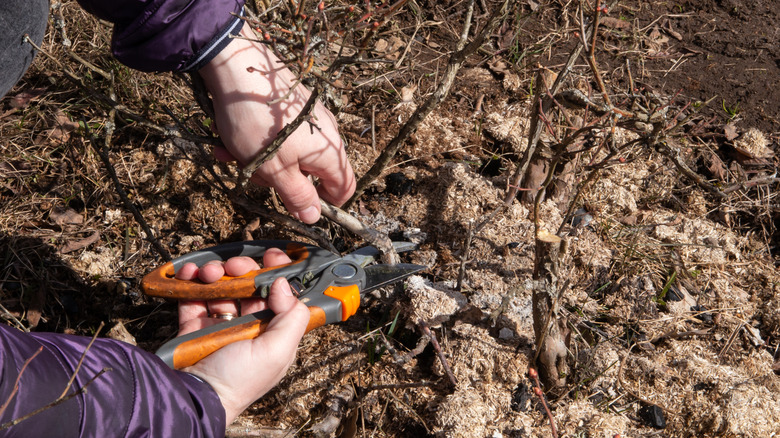
When selecting which stems to cut, make sure you choose strong, healthy shoots that are 12 to 36 inches long and show no signs of disease. These shoots — or "whips" — should be firm and mature, ideally a quarter-inch or so in diameter. Also, you'll want to look for whips that are as straight as possible and pale green or red in color.
Once you've collected your whips, divide them into 5 to 6-inch sections. For this task, you can use a knife or bench saw, as long as the instrument is sharp. You also shouldn't use the tip of the shoot at all. Additionally, always take the time to disinfect your cutting instrument to reduce the risk of spreading any disease to your new plant. You can use a solution of one part bleach to five parts water to get that done. It's best to make the bottom cuts for these shorter sections at a slant just below a leaf node and the top cut just above a node. It's important to stay organized and keep track of which end should point up, as cuttings stuck upside-down will not root.
Rooting and planting hardwood blueberry cuttings
So now that you have your cuttings, what medium should you plant them in? There are many different answers to this question, but a good general rule is that it should be very well-draining. You can try using a 50:50 mix of perlite and coir or an equal-parts mixture of sand, coir, and pine bark. Pure ground peat is another good choice. It's a good idea to soak your medium for three or four hours before planting the cuttings to ensure that it's moist throughout. Although not essential, you can dip your cuttings in a rooting hormone gel to increase your chances of success. Insert your cuttings in your prepared medium about halfway down, remembering to keep the correct end up.
Typically, with hardwood, it should take three to four months to grow roots from plant cuttings, but you'll probably see some shoot growth just a couple of weeks after you stick the cuttings. Place the pots with your cuttings somewhere sheltered and protected from harsh summer sun, and be sure to keep the medium evenly moist. After they've rooted, you should apply a diluted complete liquid fertilizer once a week. Leave the cuttings in the pots for at least a year before transplanting them.