

The Important Winter Gardening Task To Ensure Healthy Plants In Spring
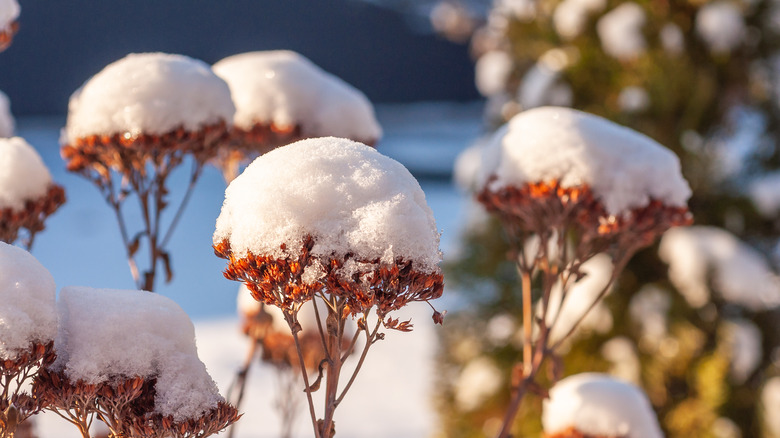
As the winter chill sets in and plants go dormant, you might think your gardening tasks are done until next spring. But there's one more thing you should think about doing to set your plants up for a healthy growing season next year: Add a layer of compost to the garden bed. This simple task can have a big impact in two ways. It improves soil health, and it can act as insulation against freezing temperatures.
Don't underestimate how much home composting benefits your garden while helping the environment as you recycle old food scraps or leaves into plant food. This organic additive gives soil nutrients (including potassium, nitrogen, and phosphorus) to the plants and also feeds beneficial bacteria and other tiny organisms that live below the surface. It also attracts earthworms, which can help aerate the soil. Layering several inches of the all-natural additive in the garden beds in the winter will start the slow-drip of fertilizer into spring, as well as give some plants a protective layer of warmth to guard roots from fluctuating temperatures.
Keep in mind that compost is different from manure. While both are nutrient-rich, the former comes from decomposing foods and organic material, while manure is animal waste. The best news is that you can set up a bin to recycle kitchen waste in large yards or small. You can even compost in a 5-gallon bucket. Or you can skip all the work and just purchase it at a garden center.
How to layer compost in the winter
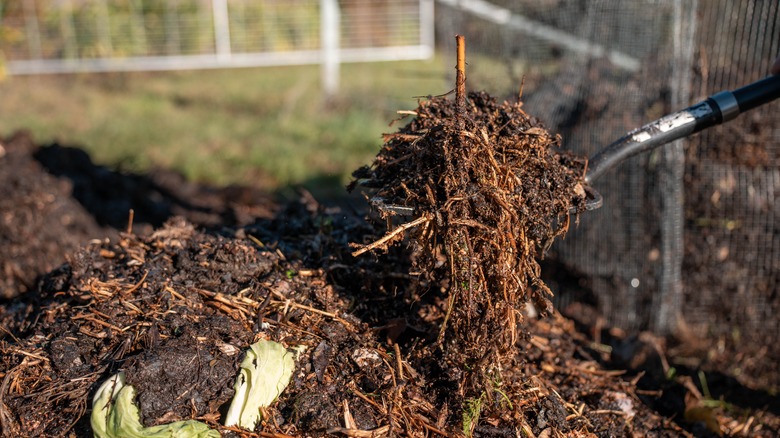
Laying out compost in the winter can be a fairly straightforward task. Because the compost will leach into the soil over the winter, you can add a thick blanket around 3 to 6 inches deep. This is much thicker than the much thinner layer of about an inch for established beds you would normally do in spring. You can use not-quite-ready compost as mulch, and the added heat it generates while it breaks down might even warm plants through the cold winter months.
The key to this task is a slow leaching into the soil, but keep in mind that you can add too much compost to a bed. Since adding too much can be a cumulative action, happening over time, consider doing the winter compost blanket only when necessary. You can determine necessity by doing a soil test in the fall.
Whenever you add compost, make sure not to push it right up against stems or trunks. This can restrict airflow and might cause a fungal infection. For an extra bit of protection, try adding mulch, especially for your hostas, to protect roots from heaving (being pushed upward by freezing soil) this winter.