

The Best Time Of Year To Cut Back Coneflowers For Healthy Blooms
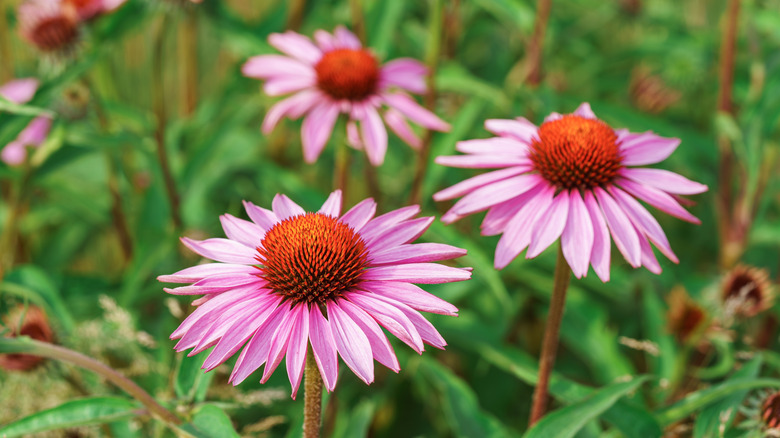
Coneflowers are staples of the summer garden, as these North American natives add color and beauty wherever they grow. And because they're perennials, you can enjoy them year after year. Unlike some perennials, though, coneflowers (Echinacea spp.) are herbaceous, which means that they die back to their roots in the colder months and grow again from new stems each spring. This may leave you with the question of whether you should cut off the dead stems in the fall as part of your winter care for the perennial plants. In most cases, it's best to wait until late winter or early spring to trim these back — or even leave them to disintegrate on their own.
Of course, if your coneflower's stem or leaves appear diseased, it's best to remove them from the garden immediately. But in most other cases, it's better to leave them be through winter. Not only do they provide amazing winter interest and snacks for local wildlife thanks to their seed heads, but waiting may even benefit the plant. After all, you don't want to forget where your coneflowers are planted and accidentally dig them up. The old stems can help provide a useful marker and may even help to keep your plant's roots better insulated. This could be especially important if you live in the colder part of coneflower's range of USDA Hardiness Zones 3 through 7.
How to cut back your coneflower stems in late winter
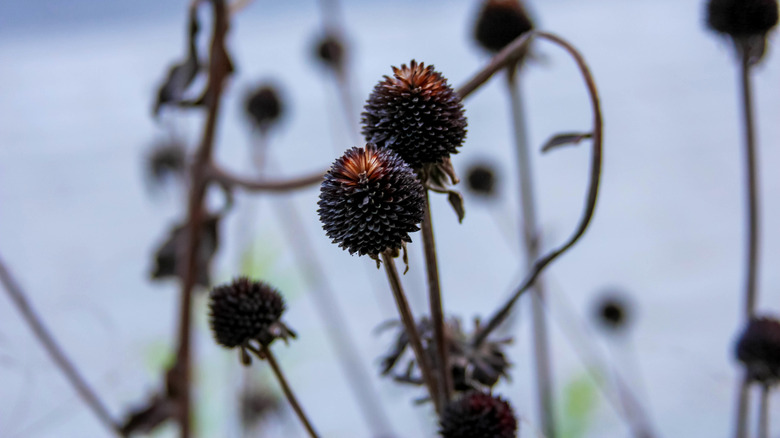
Over the winter, birds and wind may help your coneflowers spread by dispersing their seeds. Then, once late winter or early spring arrives, you can prune your coneflower stems back to about 2 inches if you want. Regular garden shears should be perfect for this task. Once you're done, don't forget to compost the spent stems.
While there is nothing wrong with cutting your coneflower stems back significantly, North Carolina State Extension recommends only cutting the stems back to about 12 inches so that any nearby nesting bees can enjoy them. Then you can just leave these stems alone until they eventually wear away. These parts of the coneflower will generally disintegrate around two years after they grew.
Considering how beneficial many of these bees can be to your garden, there's good reason to try to help them out by providing the with homes. And, don't worry — leaving these stems in place won't cause any issues for the new season's growth. So whether you prune your coneflowers or not, you can look forward to new growth each spring.