

When & Where The Old Farmer's Almanac Predicts Snowfall This Winter
The Old Farmer's Almanac is renowned for the gardening advice and long-range weather forecasts it has been offering for over 230 years. Its predictions for the upcoming winter don't just include temperatures and overall precipitation though — they also look at snowfall specifically. So if you're trying to guess whether you'll have a white Christmas, New Year's, or even Valentine's Day, this famous seasonal weather predictor could give you a good guess.
Of course, The Old Farmer's Almanac isn't perfect in its long-range forecast. It describes itself as 80% accurate on average and notes that it was 86% accurate in its winter forecast for last year. So while not perfect, it can provide an interesting potential look at the season ahead. The Old Farmer's Almanac breaks the United States down into 18 regions when providing its long-range winter forecast, and while it states that on average the United States should see normal amounts of snow or even a bit less than the norm this year, it doesn't believe that will be the case in all regions.
Where The Old Farmer's Almanac predicts large amounts of snow
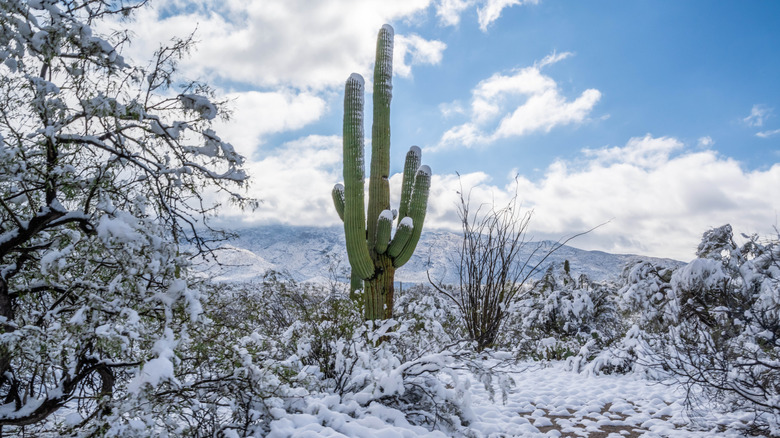
The Old Farmer's Almanac states that the Carolinas and parts of the Southwest will end up seeing more snow than they're used to, with areas around El Paso and Phoenix likely seeing snow in December and January. Be sure to buy or even make a homemade snow plow to be prepared before flakes start to fly if you live in these areas. More snow than average is also predicted for coastal parts of the Southeast, especially during late December and January.
Famously snowy cities in the Great Lakes region like Buffalo and Chicago are still predicted to experience snow of course, but The Old Farmer's Almanac predicts they'll see only about their normal amounts — or maybe even a bit less than average. (Though the snow will still likely be falling there off and on from November through March.)
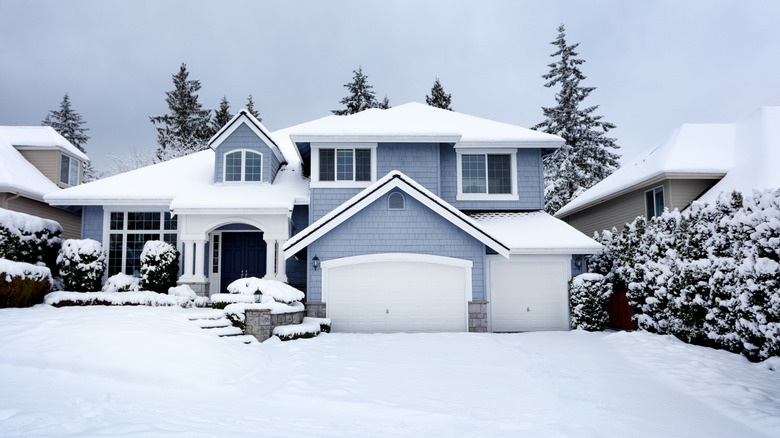
It similarly predicts less snow than normal for the Pacific Northwest, while noting that early February will likely be the snowiest time for that region. Even Alaska is predicted to have less snow than normal. New England areas should also be seeing fewer flurries than average. Though, of course, in those historically snowy regions you should still put on your snow tires and take steps to protect your shrubs from heavy snow. It's better safe than sorry.