

Get Healthier Grass This Spring With A Gardening Trick For Winter

Having a lush green lawn as soon as spring temperatures start to warm is the dream for many homeowners. Unfortunately, many lawns come out of winter with at least some amount of damage. And overseeding (or putting seeds down on an existing lawn) once you notice the patchiness, means waiting patiently for the new grass to mature. One great alternative is to instead overseed your lawn while it's dormant.
While fall may be the best time of year to overseed a lawn, there are a lot of advantages to winter as well. Dormant overseeding involves adding your seeds to your amended lawn during winter, when temperatures are below 40 degrees Fahrenheit. By seeding your lawn during this time, the grass seeds can germinate earlier than seeds planted in spring. The process can actually start during the winter months, then simply finish in spring once temperatures begin to warm. In some cases, this can result in grass that reaches maturity a month or so earlier than spring-planted grass. Dormant seeding also allows you to take advantage of the long, boring winter time when you may have relatively few other garden chores.
How to dormant seed your lawn during winter months
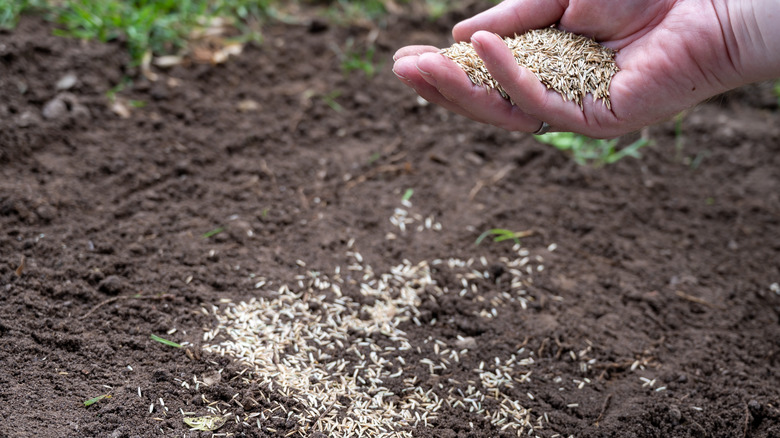
If you're planning to dormant seed your lawn during winter, it's important to prepare during autumn. This involves all the steps you might take any other time you would put down seeds, including tilling and aerating your lawn. Then, when temperatures are consistently low enough, likely between December and February, you're ready to spread your choice of turfgrass seeds. Make sure you do it on a day without any snow on the ground, so the seeds are directly on the soil.
When temperatures start to rise above 40 degrees Fahrenheit, you should start to notice germination. Be sure to stay on top of watering your lawn if you aren't receiving enough rain to keep your seedlings moist. Once the seedlings have reached around 3 inches, you're ready to mow and apply fertilizer. Be aware that you may still need to do a bit more overseeding come spring to account for seed loss due to unexpected temperature fluctuations. Erosion and hungry animals can also potentially carry away some of your seeds and seedlings.