

The Best Way To Straighten Out A Leaning Tree In Your Yard
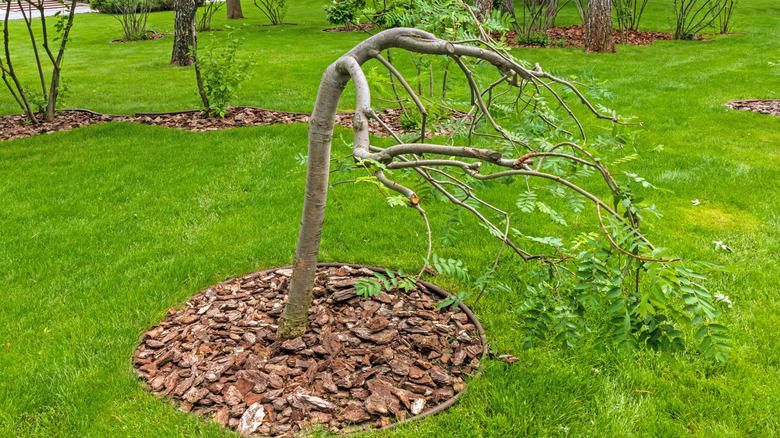
Trees may lean for a variety of reasons. Young, newly planted ball and burlap trees might have particularly small or uneven root systems or were planted incorrectly. They may be located in a site with excessive wind or may have even been knocked askew by deer activity. Mature trees may develop a lean due to some disruptive event, like a storm or softened soil. Determining the cause of the lean can help you figure out how to best address it and keep it from happening again, especially if the cause is root rot or some other disease or defect in the root system. Once you've figured out why the tree is leaning, you can take steps — typically staking or guying — to help them out.
In addition to figuring out the cause of the lean, you'll want to determine the severity and consider whether or not it's dangerous and needs removal, especially for larger trees or trees that are leaning toward structures and walkways. Not all leaning trees need correction. Healthy, strong trees can slowly correct themselves as the stress triggers additional growth. Trees can also develop a sweep, or an upward curve; this is usually a structurally sound (and kind of cool-looking!) correction. In some unfortunate cases, the tree might not be healthy enough and thus will not stand a good chance of survival — or might be so much of a hazard — that it needs to be removed. Consulting a professional arborist may be necessary when making these assessments.
The difference between staking and guying, and what you need for each
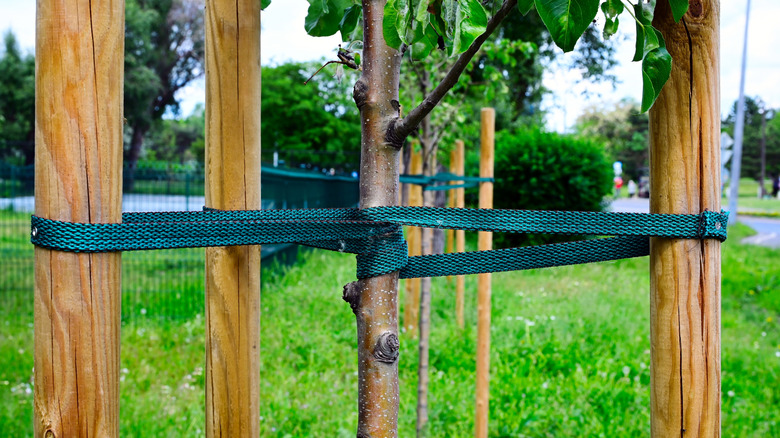
Staking basically entails connecting the trunk of the tree to a nearby post for support. Guying differs in that it is generally used on trees with a larger trunk diameter (or those situated in a particularly windy area) and consists of shorter, stronger anchorage stakes driven into the ground at an angle. For small trees with a trunk that is less than four inches or so in diameter, check if the roots have grown unevenly by wiggling it to see if it moves. Staking can be used in this case to prevent the tree from leaning any further. For small trees that have been tipped by the wind, make sure the trunk is not broken and then try staking. If they aren't a potential hazard, larger leaning trees can benefit from guying — but also try pruning the canopy to keep it smaller and reduce its weight.
When selecting supplies for staking or guying, the material for the stake itself isn't super important: metal, wood, or whatever you can find at your local garden center will do, as long as it's sturdy. Anything strong enough will work for connection materials, including jute rope or metal wire. However, carefully selecting the materials that attach to the trees themselves is crucial, or you risk damaging the tree. The attachment materials should be wide and soft so they don't cut into the bark; you can often purchase canvas straps with grommets from a garden center or hardware store, but old yoga pants or pantyhose can work just as well.
How to stake or guy a tree
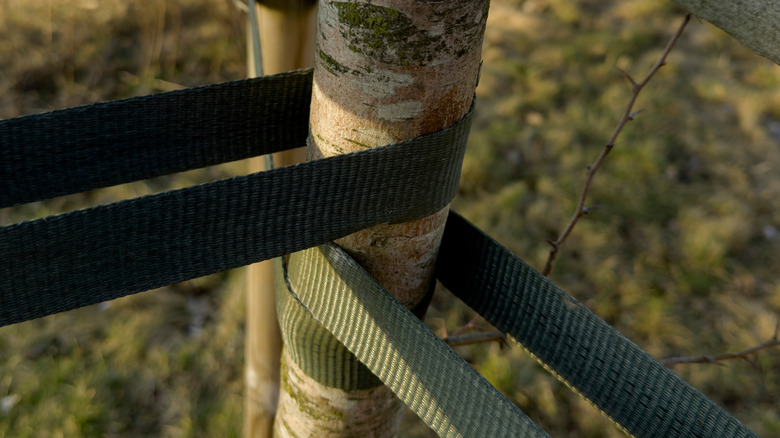
When staking a tree, drive the stake into the ground away from the tree's roots on the opposite side of the prevailing winds. Place the attachment ⅓ to ⅔ of the distance up the trunk to the first set of branches; some movement of the upper trunk needs to be allowed, as the canopy may snap right off if the attachment is placed too high. Make sure that the attachment is loose enough to allow for both growth and some movement in the wind, as this helps to build strong, healthy tissue. As a rule, always begin with one stake, but you can add more if necessary. After one year, remove the tree stakes and try wiggling the tree again; you can replace them if there is still movement.
When guying trees, drive the short, stout stakes into the ground at an angle (like erecting a tent), leaving only a few inches above the ground. If one stake on the upwind side of the tree isn't enough, drive another one in on the opposite side. The attachment point on guyed trees should be a bit higher than staked trees, just above the first set of branches –a larger tree probably has a larger crown, providing more protection against wind. You may also need to take action to fix root rot or other underlying causes. Additionally, keep in mind that guying a particularly large leaning tree is best done by professionals for safety.