

Prepare Your Hydrangeas For Winter With One Simple Addition To The Soil
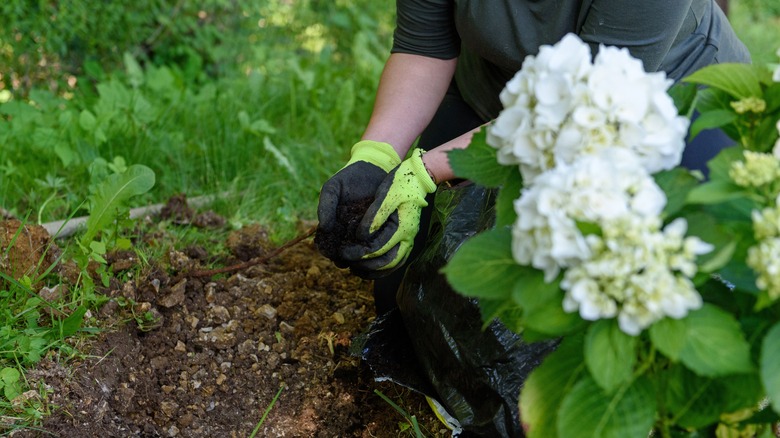
In the same way that you like a cozy blanket in the cold winter months, so do your shrubs. Most varieties of hydrangeas thrive in climates down to USDA Plant Hardiness Zones 3 or 4, but laying down a thick layer of the right kind of mulch is a chore you should do in the fall if you want your hydrangeas to thrive next spring. This especially applies to areas where the ground may freeze and thaw multiple times throughout the winter.
Because mulch helps prevent soil erosion and blocks weeds from sprouting, this simple act benefits plants most any time of year. But a layer of bark or straw rolled out at the base of your woody perennial shrubs in the fall can help keep roots protected through the winter, especially for the species that aren't as cold-hardy, like mopheads and climbing types. Mopheads (H. macrophylla), for example, are only hardy down to zone 6.
While frost damage is more devastating to new growth in the spring, winter chill can still hurt dormant plants when roots freeze. If you've gone without in the past with no issue, your perennial shrubs might have benefited from snowfall. Snow can work like a blanket of insulation to keep roots protected during cold snaps. However, with the Old Farmer's Almanac predicting less precipitation for the winter, that could mean less snow for much of the United States, so it's best to be prepared.
Picking the right kind of mulch for your hydranges
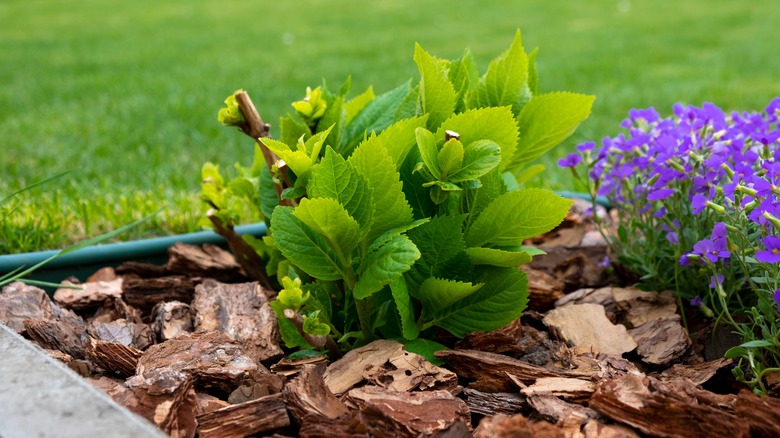
Hydrangeas prefer organic mulch, like shredded tree bark or leaves. Pine straw also works, since the slightly lower soil pH it creates doesn't bother these shrubs. For some species, like Hydrangea macrophylla, acidic soil will even turn blooms blue. Whatever mulch you choose, spread a layer about 3 to 5 inches thick for the best results. Just steer clear of gravel or any other rocky material. Once summer rolls back around, these materials can actually retain too much heat and stress out your plant.
The key to applying insulating material is to do so before the ground is completely frozen — so apply the mulch when the freezing temperatures first begin. Don't forget to do what you can to try to keep mulch in place and protected from winds or storms that might blow it away. Try installing a stone or wooden barrier to edge your beds for added protection.
During temperature fluctuations late in the season, you can go a step further to protect your shrubs. For hydrangeas that bloom on old wood, cold can kill any buds coming out of dormancy, especially if they were enjoying a spring jump in temperatures. One intense way to protect the buds is to make a cage of running chicken wire around the shrub. It should be as tall and wide as the shrub. Then, fill in the space with any pine needles, leaves, or straw you've got left over. Keep it in place until the cold season passes. Obviously, this is more useful for delicate young shrubs rather than large, mature hydrangeas.