

How Using The Old Farmer's Almanac Can Help You Plan Your Vegetable Garden
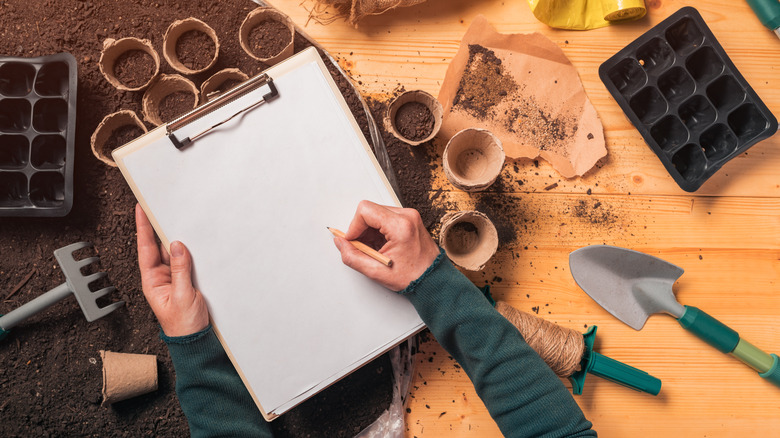
The Old Farmer's Almanac has been around for 234 years and is beloved for its advice. In addition to its long-range forecast that predicts the upcoming winter's weather, The Old Farmer's Almanac also provides useful advice for planting and harvesting. One popular feature gardeners have long enjoyed is the planting calendar. In addition to taking into account your area's first and last average frost dates and a crop's days to maturity, they also use some more unusual data points, including moon phase, when deciding the best time to plant.
Having this information broken down for almost every common crop is extremely convenient and time-saving. Beginning your indoor seed starting too early can easily lead to leggy and root-bound seedlings, but starting too late can lead to delayed harvests. While you should still check your local short-range weather forecast to confirm that frost isn't expected before actually planting out, having approximate dates in mind can be invaluable for planning purposes. It's also helpful to know which crops can handle frost. On the fall planting portion of the calendar, there's a column describing frost tolerance, so you'll be able to plan ahead. You'll want to protect any tender crops with a frost cloth, while frost-hardy plants don't mind a little snow.
The Almanac's advice about planning for the cold (and maybe even the moon)
Your average last frost date is an essential piece of information for planning your vegetable garden. Knowing approximately when you'll be able to transplant your seedlings outside allows you to decide when to plant seeds that need to be started indoors. The same is true for your first frost date in the fall, which will mark the end for some crops and needs to be considered for later plantings. Many garden annuals are not frost-tolerant, and even those plants and flowers that can survive frost can't handle temperatures below a certain point. While you can simply use The Old Farmer's Almanac's frost date calculator for your region for these dates, their planting calendar uses this information to create customized recommendations on when to start indoor sowing, direct sowing, and transplanting.
While there is no question that much of The Old Farmer's Almanac's information is useful, some, while whimsical, is less scientifically based. This includes their use of moon phases to decide ideal planting times. Some gardeners love this ancient technique, despite its lack of scientific backing, while others may opt to ignore it. Of course, you don't have to follow this advice to benefit from the other aspects of their calendar. Their information on roughly when you should start seeds in spring, as well as the last date you can plant a crop to have a harvest before your first frost date, will still be useful.