

Why Mowing The Grass Before Winter Could Be The Key To A Lush Spring Lawn

A lush lawn does a lot to improve the curb appeal of homes, so it can be frustrating if your grass always looks sick and damaged in spring. While your lawn will probably improve as temperatures continue to warm, it can still be disappointing to find dead or crusty-looking patches greeting you. Many of the problems lawns exhibit in spring are caused by snow mold, winter damage from voles and other pests, and disease. How you care for your grass in late fall can go a long way towards mitigating some of these issues. In some cases, it can be beneficial to cut your grass to a shorter height as you head into winter. You can accomplish this by changing the height setting on your lawn mower.
Grass that is tall enough to flop over provides a great winter cover for voles that enjoy eating flower bulbs, grasses, and other plants. A shorter lawn is one way to make your space less appealing to these little pests. Voles aren't the only winter problem long grass can exacerbate, though. Snow mold is a fungal disease that attacks cool-season grasses, especially when they are covered in snow for extended periods of time. Longer grass that is matted down is also more vulnerable.
Keeping a shorter lawn over winter has both pros and cons
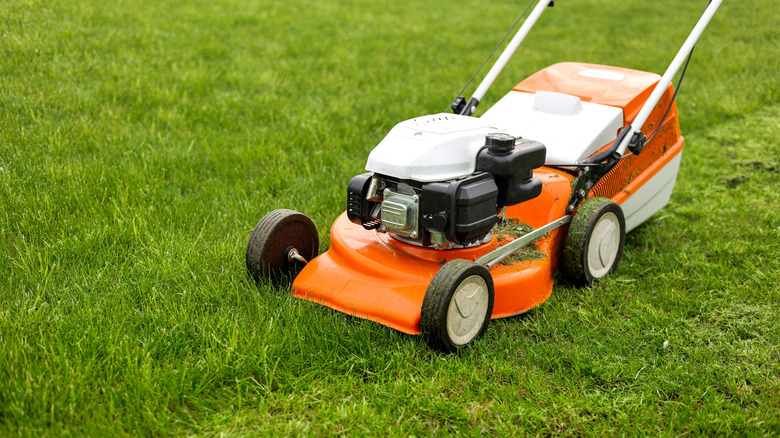
Whatever height you decide to cut your lawn to, it's important to keep mowing regularly until the grass stops growing for the season. And make sure you don't go overboard when shortening your lawn. Opt for a grass length of around 2 inches if you're concerned about winter damage, but it's important that you don't do this exclusively on your last mow before winter. You should instead mow to this height for several weeks to help your grass adapt to the shorter size. Still, cutting your grass lower as you head into winter doesn't come without potential downsides.
Part of the reason a height of around 3 inches, or even 4 inches, is often recommended as the best length to cut grass is that this leads to healthier and stronger root growth. While 4 inches is likely too long for winter, robust root systems aren't just important during summer months — they're important year-round. The last thing you want to do is stress your grass and weaken its roots during a time of year when it may already be dealing with mold and animal damage. One option is to split the difference between 2 and 3 inches and mow your grass to around 2 ½ inches. You should again make sure to mow to this height a few times before winter arrives.