

How To Establish The Fast-Growing Neem Tree For Shade In Your Yard
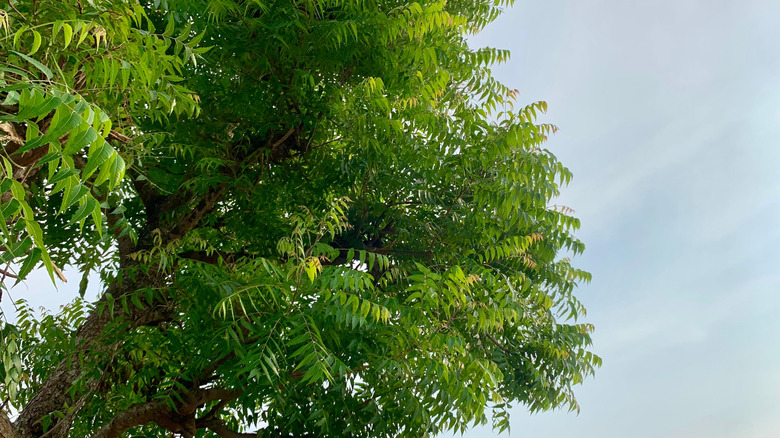
When you live somewhere with sweltering, sunny summers, you may find yourself following patches of shade around to avoid sunburn and stay cool. But if you're located in USDA Hardiness Zones 10 through 12 and it seems like there's just never enough shade in your yard, planting a neem tree (Azadirachta indica) could be a quick shade solution. An evergreen member of the mahogany family, the neem tree can benefit your garden or yard. Its expansive, spreading branches (50 to 75 feet tall and wide when mature) are perfect for cooling down sun-drenched areas — though it's deciduous in drought conditions. It thrives in hot climates and is extremely resistant to drought. Plus, it grows so quickly that it can actually be cut for timber within five to seven years, so your yard will be more comfortable in no time. In spring, you and your local pollinators can enjoy fragrant pink and white flowers.
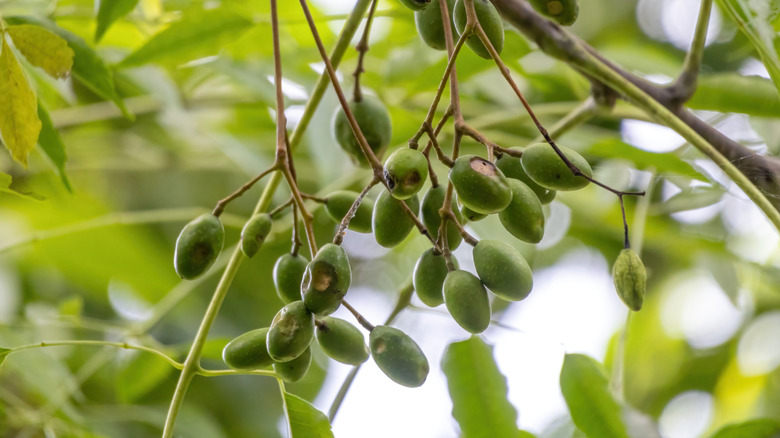
Although you may not be familiar with this South Asia native, even a casual gardener has likely heard of or used neem oil before. This natural insecticide and fungicide is extracted from the seeds of the neem tree, found in its olive-like fruits. In fact, because these chemicals are present in the leaves, they are naturally resistant to insect activity. The flowers, however, do not have these chemicals, so pollinators are unaffected. If you're of a crafty mindset, you might even try processing your own neem oil for use in your garden. The byproduct of this process, called neem cake, makes great fertilizer as well.
Planting and caring for neem trees (and a word of caution)
Because the neem tree hails from hot, tropical regions, it's not suitable for areas where it dips to 40 degrees or below in winter. It typically prefers deep, sandy soils that drain well, and can thrive in very dry conditions. Acidic soils are also no problem for neem trees. If you've been struggling with particularly acidic soil for a while, accumulated neem leaves may even neutralize the site.
The tree will grow easily from seed whether it's planted outdoors or started indoors. It can also grow from cuttings or suckers. Once it's established, you'll find that your neem tree can really take a beating — you can lop off the crown or even lower on the trunk, and it will grow back with a vengeance because of its huge root system.
There's one caveat, though. Because neem trees grow so rapidly and are so adaptable to arid conditions — and are enthusiastic self-seeders — they may escape cultivation and are, in some countries, considered invasive. Make sure to do some research on whether the characteristics of neem trees make them a welcome addition to your area or not. Even if the neem tree isn't invasive in your region, bear in mind that it can become weedy with its suckering tendencies, and you may have to stay on top of managing its dropped fruits to prevent unwanted seedings. Luckily, its seeds are only viable for about a month.