

Protecting Your Rosemary Plants From Winter Chill Could Mean Better Growth In The Spring
We may receive a commission on purchases made from links.
Fresh rosemary (Rosemarinus officinalis) from the garden might be the must-have seasoning for any fall and winter meals. But to make sure rosemary survives the colder weather, you'll want to mulch this perennial shrub to protect it during the chilly winter months. Rosemary, an evergreen perennial herb that comes back year after year, just needs a little extra care to survive and thrive next spring.
This Mediterranean native hates cold, and most varieties can only handles climates down to USDA Hardiness Plant Zone 7. In colder places, you'll probably need to bring your plant indoors for the winter, or at least to a sheltered spot like a garage or basement. Of course, even in mild zones, random cold fronts might bring sudden dips in temperatures. Hardiness charts work based on average low temperatures, not the full range possible for any given region. That's why it's a good idea to insulate rosemary in most gardens just to be safe.
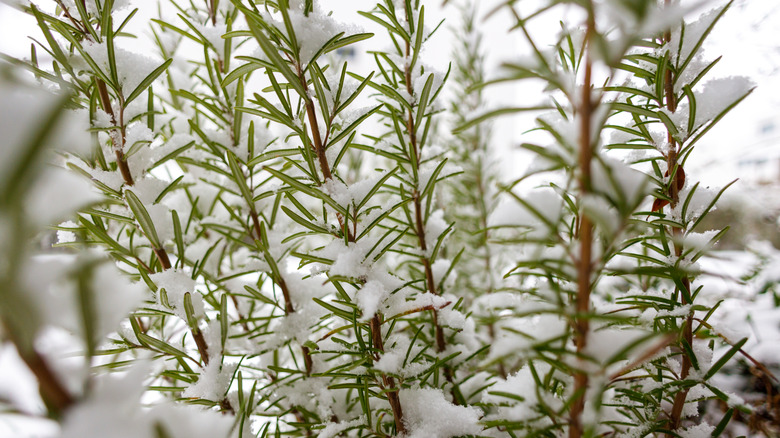
In regions that aren't expected to get much snow, mulching becomes even more important. That might sound counterintuitive, but snow acts like an insulating blanket protecting rosemary from plummeting temperatures and icy winds. When freezing temperatures hit stems or roots, it can dehydrate the plant and damage plant cells. This two-count punch kills most annuals. Perennials often harden or go dormant in the winter to survive freezing weather. Rosemary lacks a robust winter defense, making it prone to suffer when temps drop.
Mulch your rosemary now for healthier plants next year
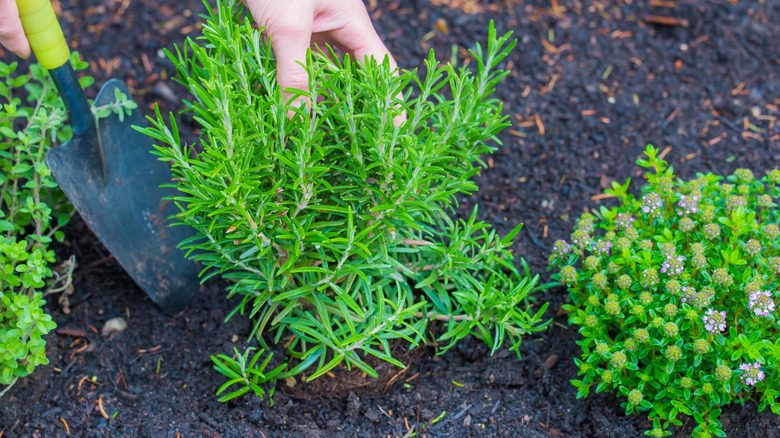
Winterizing your rosemary plants starts with mulching. Choose one that will last throughout the entire season and won't break down too quickly. Shredded tree bark suits rosemary best. Any organic-based material will work well, though. So if tree bark isn't available, chopped leaves or straw will do. Lay at least 3 to 6 inches of mulch at the base of the plant before the first frost hits.
Remember that temperatures for growing different herbs vary. Some rosemary cultivars count themselves as being more cold hardy than others. If you live in zone 6 or a cold-leaning 7, and still want to grow rosemary outside, pick the hardiest kinds of rosemary. 'Arp' typically survives the average zone 6 winter. 'Hill Hardy' or 'Madalene Hill' also make great choices, since they withstand dips down to zero degrees. In even colder or borderline zones, consider covering your rosemary with a burlap sacks during severe cold fronts as an added insurance policy. Try Anphsin burlap plant covers, which come with a built-in drawstring for tightening.
If you're considering transplanting a rosemary bush from the yard into a container to move it inside, don't. Ground-bound rosemary doesn't always do well with the move. Instead, grab a cutting or two from a healthy rosemary plant. Select a 5-inch branch that's still actively growing, and make a clean cut. Cover the cut ends with rooting hormone, and place in a small container of soil by a sunny window. Water regularly. Your rosemary cutting should grow roots in about a month or so. Then, you can repot into a bigger container.