

The Tropical Flowering Shrub That Has Year-Round Blooms In Warmer Climates
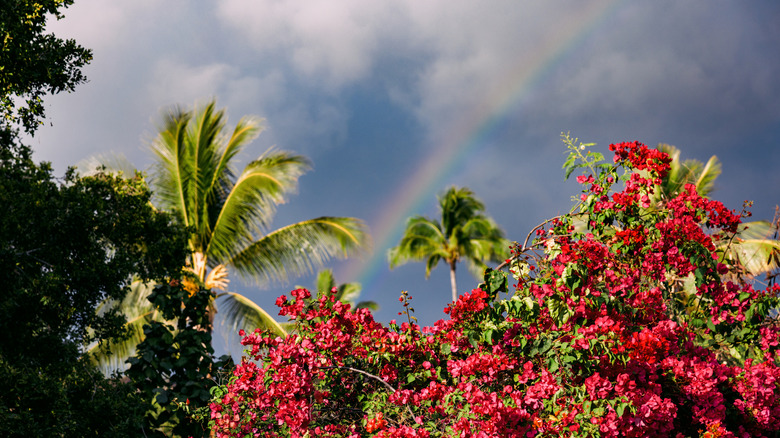
If you're located in USDA Zone 8 or higher and you're on the hunt for some garden eye candy that will deliver year-round color with minimal maintenance, you needn't look much further than lantana (Lantana camara). A native of the tropical Americas and West Indies, this showy shrub has been popular among horticulturists for a few centuries, resulting in a riot of colorful cultivars. From deep red to bright pink, purple to white, orange to brilliant yellow, there's a lantana color for almost every garden's color scheme.
Often, lantana's flower bunches feature multiple hues, as many change color dramatically as they age. With its brilliant, continuous blooms (as long as it's grown in a frost-free area), lantana is a low-lift feast for the eyes, as well as for your local pollinators. Its brilliant flowers will easily attract hummingbirds to your yard and garden, as well as butterflies, bees, and other beneficial critters.
A quick word of caution regarding this tropical species: In climates where it's comfortable and isn't killed off by cold winters, lantana can become weedy and may even be considered an invasive species. Luckily, if this is an issue for your area, you can counter this tendency by shopping smart. There are many beautiful cultivars and hybrids available that have been bred to be sterile — unable to produce viable seeds or pollen — and thus noninvasive. Look for the cheery yellow 'New Gold', any of the 'Bloomify' series, and the extra cold-hardy 'Miss Huff', among many others.
How to grow and care for lantana to get the best blooms
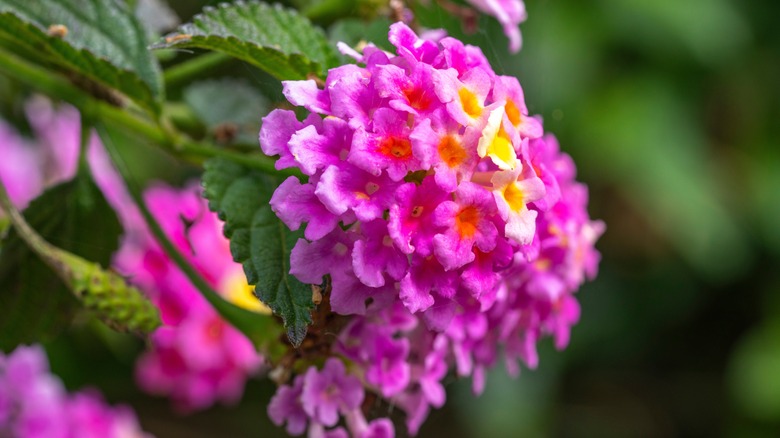
As you might expect from its tropical origins, lantana loves warmth and sun. You'll see the best blossoms from shrubs planted in full sun in a site with well-draining soil. Additionally, while they are very drought tolerant — and salt and humidity tolerant! — they'll thank you for a regular drink with more flowers. Poor soil isn't an issue for lantana; you can fertilize it lightly in spring, but too much will result in an overabundance of vegetation with fewer flowers. You won't have many diseases to worry about, and you likely won't deal with a lot of lantana pests, either.
Because lantana is typically a rapid-growing shrub, you may want to give it a good pruning — by up to a third — to keep it in line. It may also benefit from being pruned back to 6 to 12 inches above the ground in the spring, which can eliminate woody old growth. Also, you can prune the tips of your lantana lightly throughout the summer to encourage further flowering. Just be sure to wear gloves when trimming back your lantana, as contact with its leaves and berries can cause skin irritation. You can also divide a lantana plant or take vegetative cuttings to propagate it, if you desire.