

How To Clear Pesky Spurge Weed From Your Garden Before It Takes Over
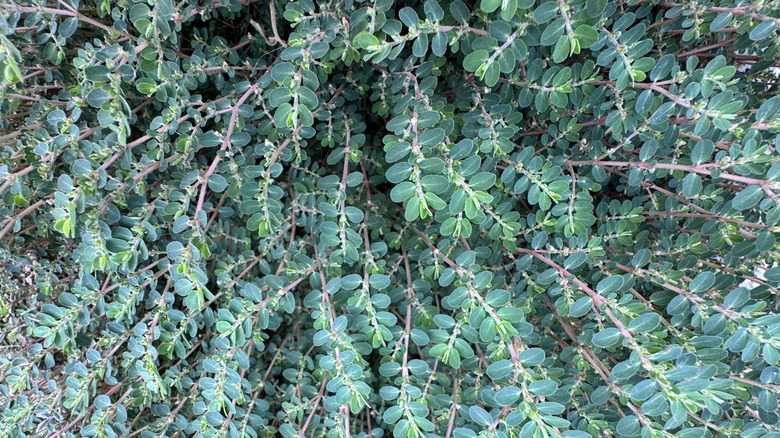
Few garden weeds are more obnoxious than spurge, a low grower with a deep taproot that seems to come back again and again, even after aggressive, back-aching weeding sessions. When its many sprawling stems are cut or broken, it oozes a milky white sap that can cause skin irritation if handled without gloves and, to make matters worse, is sticky and difficult to wash off. Each plant can produce thousands of seeds, which can germinate quickly under ideal conditions or wait, dormant, until the weather turns in their favor — essentially, a recipe for a rapid and unsightly invasion of your landscape beds if you don't keep on top of it. If spending hours on your hands and knees rooting out stubborn spurge mats doesn't sound like your idea of summer fun, it's a good idea to apply a preventative layer of mulch.
Invasions of spurge are more commonly problematic in flower beds or vegetable gardens than in a well-cared-for lawn, as thick grass will easily out-compete these weeds. Spurges (Euphorbia spp.) are a genus of full-sun annuals, with spotted spurge (Euphorbia maculata) being one of the most common. Their seeds require light to germinate. When you use mulch to prevent weeds in your flower bed, you'll be keeping light from reaching spurge seeds, which in turn prevents the plants from photosynthesizing, essentially starving them before they're able to gain a foothold in your garden.
How to apply mulch to control spurge (and what to do if mulch isn't enough)
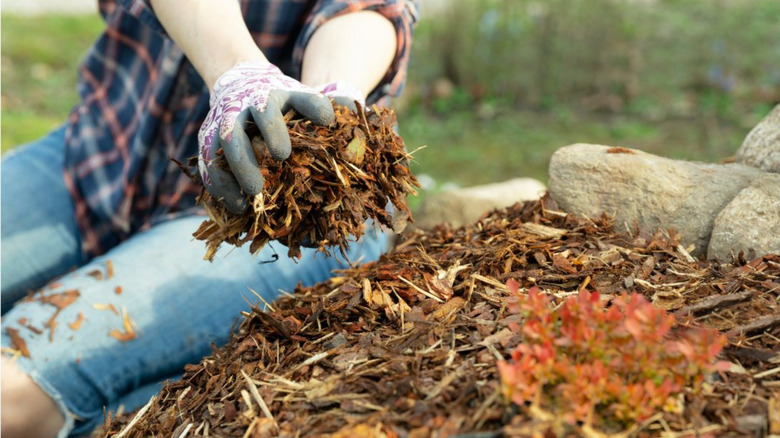
Add mulching your garden to your list of early spring chores. Generally, spurge seeds start to germinate once the temperature reaches 75 degrees Fahrenheit and peak growth occurs in summer, so you'll want to get ahead of the warmer weather. You can lay approximately two inches of fine organic mulch, such as straw, compost, or small shreds of bark and wood. Alternatively, if you'd prefer to use mulch composed of larger pieces of bark or wood, make sure to create a thicker layer — preferably three to four inches.
There are advantages and disadvantages to either choice. Finer mulches will need to be replaced more often, as they decay more quickly. Coarser mulches last longer, but may accumulate soil or other debris in between pieces where weeds can grow. You can also try using a fabric weed barrier and add some mulch on top to make it a little more pleasing to the eye.
If you've been dutifully applying mulch every year and still often find yourself hand-weeding spurge infestations, it might be a good idea to explore some chemical control measures. You can apply postemergent herbicides, such as RoundUp, which may be especially useful on mature plants in warmer months, and apply preemergent herbicides, such as Pendulum or Treflan, in late winter or early spring to prevent the infestation from returning. Keep in mind, however, that many preemergent herbicides shouldn't be applied to vegetable gardens, as they can leave long-lasting chemical residues. Do your research and always read warning labels carefully.