

What To Do When Ants Are Invading The Roots Of Your Plants
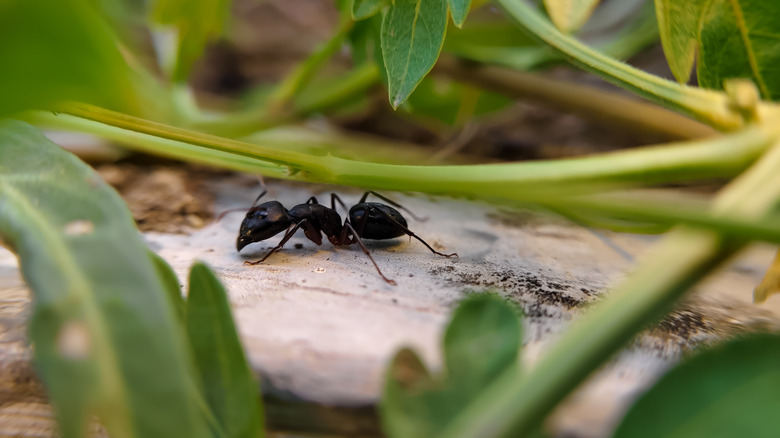
As fun as ants can be to watch work, they aren't generally insects that you want too close to your plants. Not only do they often farm aphids, which can damage your plants' leaves or roots, but even the ants themselves can sometimes cause damage. While ants don't consume plant roots, they may chew through them when making tunnels. They can even cause the roots to dry out by removing too much soil. And if you're dealing with fire ants, it may not just be your plants that are at risk — you and your family could also get injured.
If your attempts to use fresh scents like patchouli to keep ants out of the garden failed, then you could be looking at major issues. Luckily, there are ways you can fight back against ant infestations near your plants' roots. Digging out the colony or repotting your plant can often work well and allows you to eliminate the ant colony without using harsh chemicals.
Simply transplanting your leafy friend to a new pot or location in your garden or manually removing the ant colony from the soil may be sufficient. If you think you may be dealing with fire ants, be sure to wear heavy cuffed gloves and coat your shovel's handle with baby powder. This may help prevent the ants from crawling on to you and stinging while you work.
Chemical methods for dealing with ant infestations
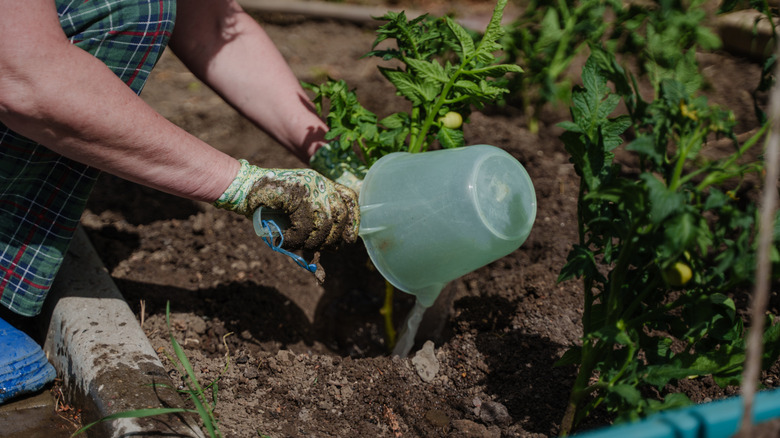
If transplanting your infested plant or digging out the colony aren't realistic options, or can't be done without damaging the plant, then you may want to try drenching the colony invading the plants' roots in a citrus oil-based product like d-Limonene. This should consist of 5 gallons of water and a squirt of dish soap for every ⅓ cup of d-Limonene. Pour this mixture over the ant mound slowly, so as much as possible is absorbed.
Don't forget that killing the queen is generally the best way to destroy the colony. Because ant queens are often higher in the colony in the morning, try to apply this mixture early in the day. You should also start by making a circle of the drench around the colony area to prevent the queen from being taken to safety. While sufficiently diluted d-limonene is safe for most plants, there are some, like ferns, that can be damaged. So be sure to check that your plants are tolerant of citrus oils before trying this method.
For particularly severe situations, the pesticide permethrin can also be used if necessary. Look into what appropriate safety gear you need to wear and make sure to follow the instructions on your pesticide's label carefully, as many must be diluted with water. Then slowly pour the mixture onto the colony. Much like with the d-Limonene drench, you want to limit the amount of runoff and increase your chances of killing the queen.