

Problems With Planting A Magnolia Tree Beside A House
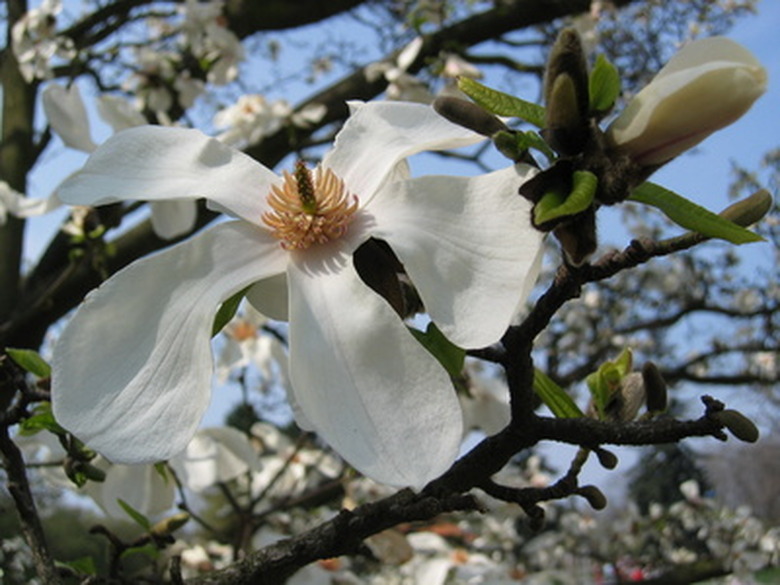
The Magnolia (Magnolia grandiflora) is a magnificent evergreen tree that is native to the deep, moist, acidic soils of the Southeastern United States. Although it is a desirable landscape tree, like most large trees, it can cause problems if planted too close to a house or other structure.
Excessive Shade
Magnolia trees provide dense shade in the landscape that is desirable during the warmer parts of the year. However, during the winter, they prevent warming sunlight from reaching the house. Also, the dense shade prevents anything from growing under the tree, so the area under the tree usually consists of bare soil or a very thin layer of grass. This can lead to a damp, muddy area under the tree, where it is located close to the house, creating mildew problems on the structure itself.
Animals
Large trees located close to the house give rats, squirrels, raccoons and other wildlife easy access to the roof structure of the house. Once the animals have access, they can chew through the eaves to gain access to the attic or nest in a chimney or attic vent.
- The Magnolia (Magnolia grandiflora) is a magnificent evergreen tree that is native to the deep, moist, acidic soils of the Southeastern United States.
- This can lead to a damp, muddy area under the tree, where it is located close to the house, creating mildew problems on the structure itself.
Roots in Foundation
The roots of a magnolia tree grow very large and close to the surface. When a large tree, such as a magnolia, is planted close to a foundation, the roots can interfere with the foundation of the house, buckling the foundation, walls and even breaking pipes.
Messy Seed Pods
Magnolia trees, although beautiful, produce messy seed pods that are about the size of pine cones, but are full of bright red seeds that some birds love to eat. The seed pods take a long time to decay and the area under a magnolia tree can have seed pods in various stages of decay over several years. These seed pods can collect in gutters and on rooftops, causing moisture to collect around the walls and roof area, leading to mildew and rot of the roof and walls of the structure.