

How To Kill Hornworms On Your Tomato Plants
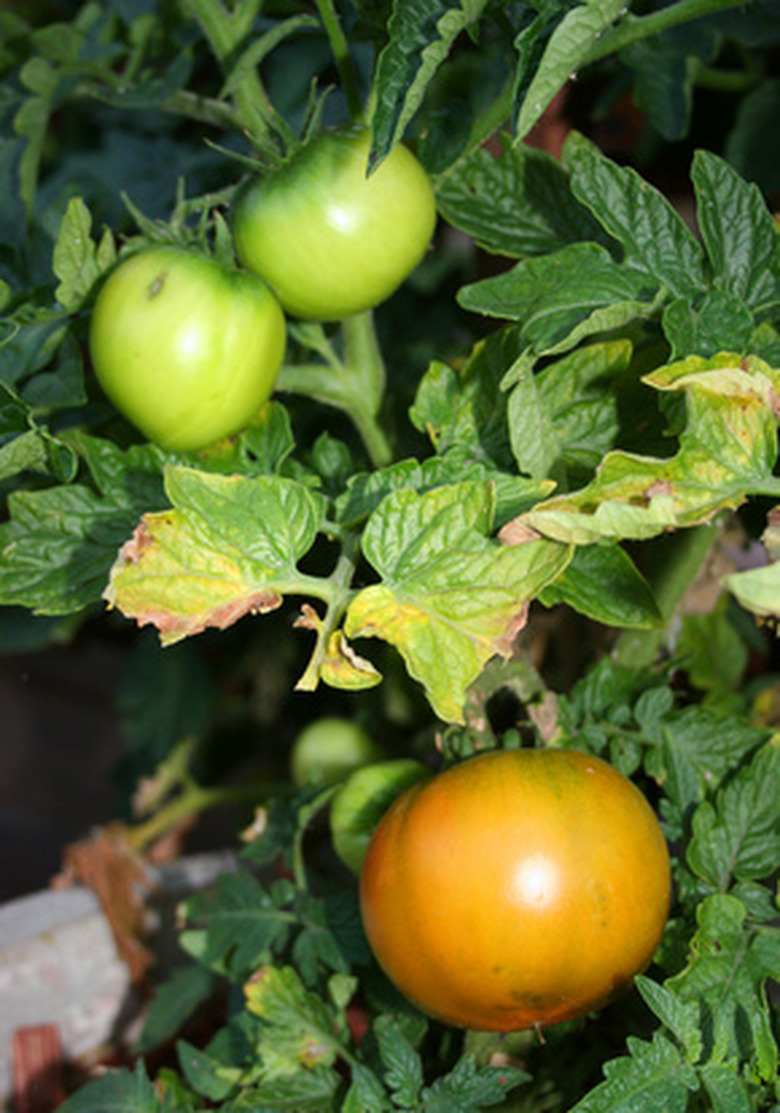
Things Needed
- Small bucket
- 3 Tbsp. dish soap
- 1 gallon of water
- Bacillus thuringiensis (Bt)
- Insecticide
Hornworms that infest the tomato plant are appropriately called tomato hornworms, or Manduca quinquemaculata. According to the University of Minnesota, tomato hornworms are more of a problem in home gardens than they are on a commercial farm. You can recognize a tomato hornworm by the eight V-shaped markings on the hornworm's underside. Hornworms can grow up to 4 inches in length. If you spot any tomato hornworms on your tomato plants, you can take action to get rid of them before they destroy your tomato plants.
Step 1
Examine the hornworms before you take any action. If the tomato hornworm has any white cotton-like sacs on it, let the hornworms be. These are the eggs of a parasitic wasp. When those eggs hatch they will destroy the other hornworms naturally.
- Hornworms that infest the tomato plant are appropriately called tomato hornworms, or Manduca quinquemaculata.
- You can recognize a tomato hornworm by the eight V-shaped markings on the hornworm's underside.
Step 2
Mix dish soap and water together in a bucket. Pluck the tomato hornworms off your tomato plants one by one and drop them in to the bucket, where the worms will drown. This method works well for small hornworm infestations.
Step 3
Spray or dust Bacillus thuringiensis, Bt for short, on your tomato plants. This all-natural product comes in a powder or liquid form. Make sure you get underneath the leaves, as this is where hornworms like to settle and eat. The hornworms will eat the Bt and begin to die within a few days.
- Mix dish soap and water together in a bucket.
- Pluck the tomato hornworms off your tomato plants one by one and drop them in to the bucket, where the worms will drown.
Step 4
Use a chemical insecticide to kill your tomato hornworms. Only do this if you have a large infestation that has not responded to any other methods. Some of the chemicals could seep in to the tomatoes. Colorado State University recommends using insecticides with the active ingredient carbaryl, or permethrin.
Tip
Be sure to till your soil each year so that the any tomato hornworm eggs in the soil are killed.
Warning
If it rains, you will need to reapply the Bt.