

Care Of Crimson King Maple
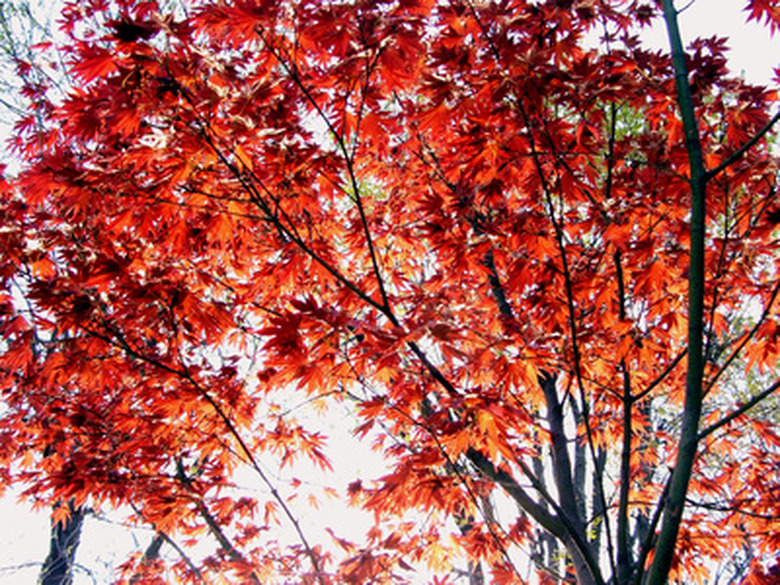
The Crimson King maple is a variety of the Norway maple (Acer platanoides). These medium-sized (up to 45 feet), showy trees are popular with home gardeners who want a shade tree that will provide spring, summer and fall color. Crimson King maples grow well in United States Department of Agriculture hardiness zones 3 through 9 and are well-known for their distinctive, greenish-purple summer leaves. Crimson King maples require only basic culture and are easy to maintain when planted in the proper location and climate.
Step 1
Provide light for your Crimson King maple tree. These trees grow best in full sun to dappled shade. They do not do well in locations that are in full shade. Six hours of sunlight per day is the minimum amount required for Crimson King maples to thrive.
- The Crimson King maple is a variety of the Norway maple (Acer platanoides).
- Crimson King maples require only basic culture and are easy to maintain when planted in the proper location and climate.
Step 2
Choose the right location. These trees have shallow roots. For that reason, they should be planted at least 6 feet from any sidewalks, driveways or other paved areas where the roots might disturb the ground.
Step 3
Make sure the soil is well-draining and does not collect standing water. Standing water can quickly rot the shallow roots of this tree. The Crimson King maple also loves rich, organic matter, so amend the soil around your tree with organic compost to a depth of 12 inches.
Step 4
Water young trees frequently throughout the first growing season. Slow, deep watering is best, such as done with a drip or soaking hose. Keep the soil moist and cool until fall arrives. Established trees are moderately drought-tolerant and only need supplemental watering during long, hot and dry periods.
- Choose the right location.
- Keep the soil moist and cool until fall arrives.
Step 5
Watch carefully for signs of insect pests and fungal diseases. These trees, while beautiful, are also more susceptible to diseases than many other species of maple. Using a preventive fungicide in the spring before bud break can prevent diseases such as leaf spot. Spraying the tree with an insecticide at the first sign of insect pests can reduce the chance of defoliation occurring.
Tip
Plants, including grass, do not grow well under this tree due to the deep shade caused by the dense canopy. In addition, the shallow roots can be damaged by lawn mowers, so it's best not to try to plant anything under this tree.
Warning
Watch for the shallow roots to encircle, or girdle, the trunk of the tree. If this happens, they can cut off the flow of nutrients to the trunk, causing the tree to die. Remove any such roots.
Things Needed
- Drip or soaking hose
- Fungicide
- Insecticide