

How Long Does It Take Red Radishes To Grow?
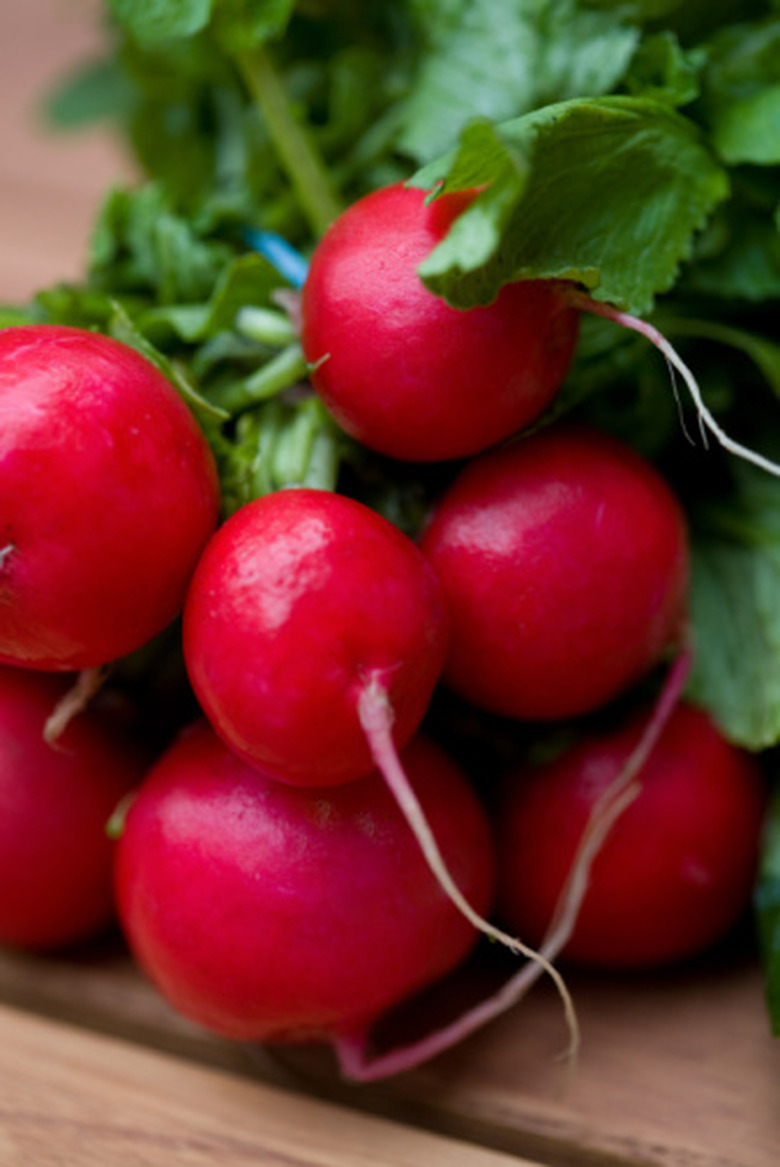
The amount of time it takes a red radish to mature depends on the type of radish seeds you plant. Red radish varieties include Champion, Cherry Belle, Cherry Queen Hybrid and Early Scarlet Globe.
Growing Conditions
Red radishes grow best when planted during the cooler temperatures of the spring season. Radishes need regular watering and may mature quicker if you mix fertilizer into the ground soil of the planting site.
Harvest Times
You can harvest Champion radishes 28 days after sowing; Cherry Belle radishes take 22 days to mature. Early Scarlet Globe radishes mature about 23 days after planting. Cherry Queen Hybrid radishes are ready 24 days after sowing, according to the University of Illinois Extension website.
- The amount of time it takes a red radish to mature depends on the type of radish seeds you plant.
- Radishes need regular watering and may mature quicker if you mix fertilizer into the ground soil of the planting site.
Considerations
Thin out radish seedlings so the plants have room to mature. Space spring variety red radishes between half an inch and one inch apart, according to the University of Illinois Extension.
Grow Scarlet Globe Radishes
Cultivate the soil to a depth of 6 inches. Remove weeds and rocks, and pulverize clumps that can obstruct root growth. Sow the scarlet globe radish seeds about 1 inch apart and 1/2 inch deep in rows that are 1 foot apart. As an alternative, broadcast the seeds on a bed, and thin the seedlings to 2 inches apart when they emerge. Don't allow the soil to fully dry. Expect germination within three to four days. Trim the leaves with scissors or a knife, and store the radishes in a plastic bag in the refrigerator for up to three weeks.
- Thin out radish seedlings so the plants have room to mature.
- As an alternative, broadcast the seeds on a bed, and thin the seedlings to 2 inches apart when they emerge.