

Disadvantages To Landscaping With Volcanic Rock
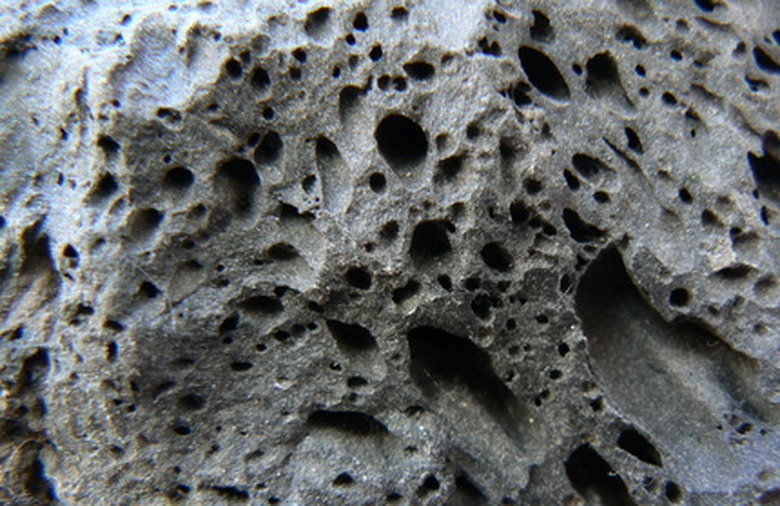
Volcanic rock, often referred to as lava rock, is popular for use in landscapes because it does not decompose and require annual replacement like organic mulches do. Its porous nature also allows for good drainage. However, before you add volcanic rock to your landscape, it is important to look at the disadvantages to landscaping with it.
Too Light
Volcanic rock is lightweight, which means it can blow, roll or wash away. If it gets onto your lawn, it could get thrown by a lawn mower, risking injury to people and the mower. A border can help keep the rock in place.
Sinks into Soil
Unless a strong landscape fabric or layer of plastic is used underneath, volcanic rock can sink below the soil over time. Once below the surface, the rock is incredibly difficult to remove.
- Volcanic rock, often referred to as lava rock, is popular for use in landscapes because it does not decompose and require annual replacement like organic mulches do.
- Volcanic rock is lightweight, which means it can blow, roll or wash away.
Difficult to Move
Like all inorganic mulches, volcanic rock is difficult to move after it has been laid. This can be a problem should you later decide to renovate or if a bush or tree needs to be replaced.
Difficult to Clean
It is more difficult to remove leaves, branches and other debris that falls into volcanic rock. Choosing not to remove garden debris them generally makes the rock less attractive.
Absorbs Heat
Dark-colored rock absorbs heat during the day and releases it at night, which can increase water loss and increase the temperature of the soil.
Reflects Light
Light-colored rock will reflect sunlight and increase the temperature around your plants during the day.
Does Not Break Down
The fact that volcanic rock will not break down might seem like an advantage (and it can be), it also means that it won't improve the soil structure or add nutrients.
- Like all inorganic mulches, volcanic rock is difficult to move after it has been laid.
- The fact that volcanic rock will not break down might seem like an advantage (and it can be), it also means that it won't improve the soil structure or add nutrients.
Incompatible
Volcanic rock may not be compatible with your overall landscape design. According to North Carolina State University, it may not be appropriate for perennial flowerbeds and foundation plantings. The rock may also modify the growing conditions (as mentioned above), which makes them incompatible for use around some plants, such as lupine, delphinium, primrose and Siberian iris.