

Characteristics Of Loam Soil
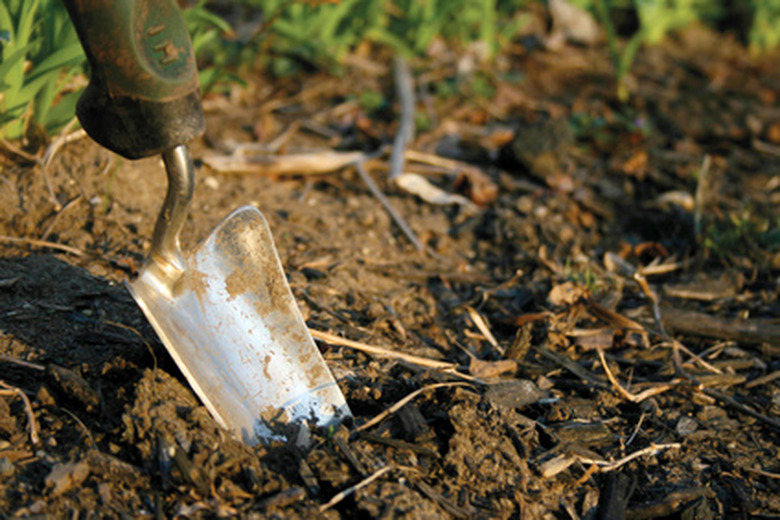
According to Purdue University, loam soil is recommended for the majority of plants. Loam refers to a textural classification for specific types of soil, and cultivated soils in garden and farm settings often fall under the loam classification. Ranging from clay loam to sandy loam, the classification helps gardeners understand how well the soil will support plant life.
Texture
Loam soil consists of three textural componentsl: silt, sand and clay. These elements are mixed with organic matter, water and air to make loam soils. According to the University of Connecticut Home and Garden Education Center, loam technically consists of 7 to 27 percent clay, 28 to 50 percent silt and 52 percent or less sand.
When more sand is present in the mix, gardeners consider the loam to be sandy loam. If more clay is present, it is considered clay loam. As long as the range of individual textures remains in the appropriate percentages, the soil is considered to be a type of loam.
- According to Purdue University, loam soil is recommended for the majority of plants.
Compaction Resistance
According to the University of Connecticut, loams with higher levels of sand tend to resist compaction. Sandy loams provide a preferred surface for areas that tend to compact because of traffic or other conditions.
Drainage
The amount of sand in loam gives it the ability to drain well. According to the RAIN network, loam soils are free draining, especially when there is a low organic content. Loam soil holds water better than sandy soil types because of the level of clay particles. The lack of sufficient organic material in a loam soil may result in soil that dries out too quickly, according to the World of Soil.
Aeration
In addition to draining well, loam soils feature good aeration levels. The University of Arizona recommends proper aeration for the survival of soil organisms beneficial to plant nutrition absorbency. Loams that have high amounts of clay offer less aeration for plants, insects and soil organism. Gardeners face more difficulty in working loams that range on the clay end of the scale.
- According to the University of Connecticut, loams with higher levels of sand tend to resist compaction.
Nutrients
Gardeners consider loam soils to be in the middle range when it comes to the ability to maintain nutrient levels. Sandy loams that drain freely hold lessened nutrient levels when compared to loams with higher levels of organic materials. Washington State University recommends the addition of compost for long-term improvement to the nutrient level of loam soil.