

How To Grow Sorghum
Things Needed
- Plow
- Hoe
- Organic compost
- Sorghum seeds
- Water
- Large blade
Sorghum has different uses depending on the type of grass grown. Sweet sorghum is grown as a syrup or molasses. Grain sorghum, or milo, is grown to provide quail, pheasant or rabbit hunting areas and ground into livestock feed during harvest. It can also be used to make alcoholic beverages, flour, flatbread and snack foods. According to the Celiac Sprue Association, it is an appropriate and gluten-free flour substitute. Sorghum grows best when planted in late May and June, and produces the most yield in temperatures of 80 to 90 degrees Fahrenheit.
Step 1
Obtain sorghum seeds from a local farm supply store. Always purchase more seeds than you need to ensure a high yield in case certain seeds fail. Be sure to specify which variety you are planting when obtaining seeds. Sweet sorghum makes molasses, and grain sorghum can be ground for gluten-free flour. Purchase disease resistant varieties to prevent the spread of common diseases like ergot, stem rust, Johnson grass virus, head smut and leaf blight.
- Sorghum has different uses depending on the type of grass grown.
- Grain sorghum, or milo, is grown to provide quail, pheasant or rabbit hunting areas and ground into livestock feed during harvest.
Step 2
Plow the soil as deep as possible using either a motorized plow or manual plow. A motorized plow is easier to use, especially if planting a larger crop. Mix organic compost with the plowed soil to provide nutrients and enrich the soil for planting. Gardeners should prepare their plots when the soil temperatures are at 60 degrees to 65 degrees Fahrenheit.
Step 3
Smooth the soil back over the plowed area and sow sorghum seeds by hand. Plant them 1 to 2 inches deep and 6 to 8 inches apart. If you are growing rows of sorghum, the rows must be at least 3 to 4 feet apart.
- Plow the soil as deep as possible using either a motorized plow or manual plow.
- If you are growing rows of sorghum, the rows must be at least 3 to 4 feet apart.
Step 4
Fertilize 2 to 3 inches around the edges of the planted seeds if you did not add compost to the soil prior to planting. The best fertilizer for sorghum will be high in nitrogen with moderate amounts of phosphate and potassium.
Step 5
Hoe the area daily to stop the growth of any unwanted weeds. Keep the soil evenly moist but never soggy and small sprouts should appear after three to five days. Continue to hoe the area until the sorghum has grown to 4 feet in height and can block the sun from any weeds that would grow.
Step 6
Water the sprouted sorghum plants as needed to keep the soil moist but never soaked. Never water directly onto the planted area. Always apply water around the sides of the plants.
- Fertilize 2 to 3 inches around the edges of the planted seeds if you did not add compost to the soil prior to planting.
- Continue to hoe the area until the sorghum has grown to 4 feet in height and can block the sun from any weeds that would grow.
Step 7
Apply insecticide to protect the sorghum against its many pests. Once sorghum is harvested, destroy all plant remains. Pull up every stalk and rid the garden of any evidence of sorghum. According to scientists at Texas A&M, removing the insect's food source reduces the number of insects. Crop rotation, or planting sorghum in different areas each season, will reduce the amount of insects and allow used soil to regain nutrients.
Step 8
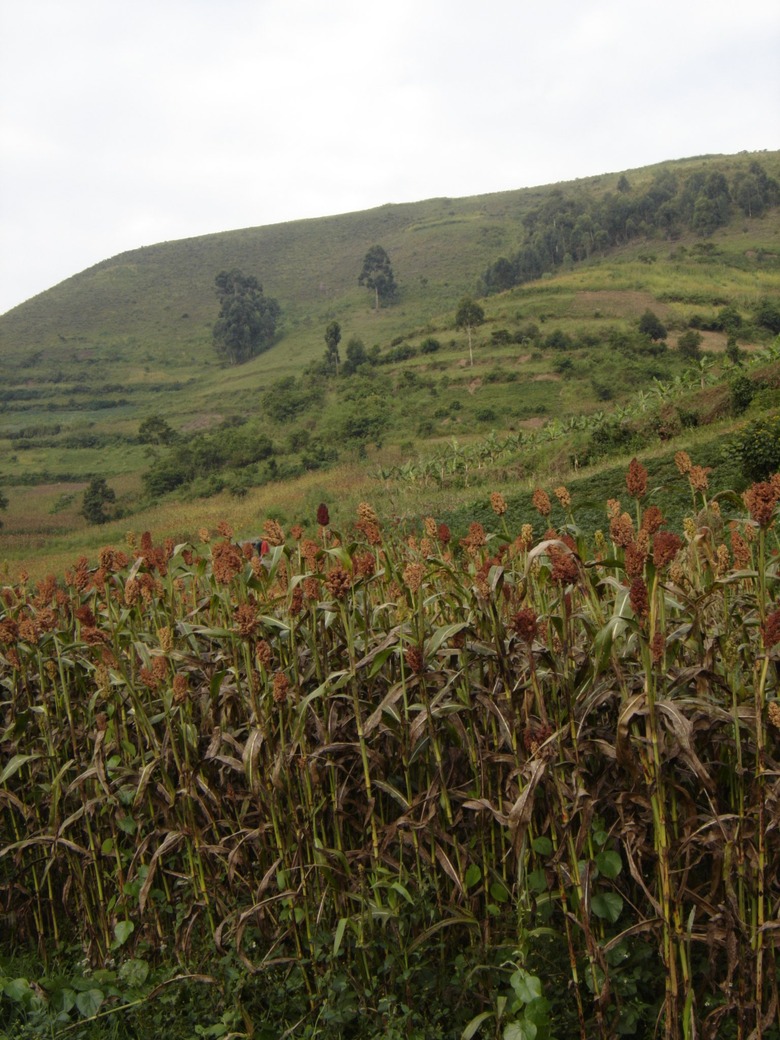
Harvest the sorghum in October when rust-colored seeds have sprouted from the top. The seeds can be used as livestock feed and the stalks can be squeezed for molasses or ground into flour, according to the type of sorghum.
- Apply insecticide to protect the sorghum against its many pests.
- Crop rotation, or planting sorghum in different areas each season, will reduce the amount of insects and allow used soil to regain nutrients.