

How To Kill Invasive Ground Cover Plants
Things Needed
- Gloves
- Garbage bag
- Pruning shears
- Cardboard box
- Garden spade
- Systemic nonselective herbicide
- Black plastic sheeting
- Scissors
- Garden stakes
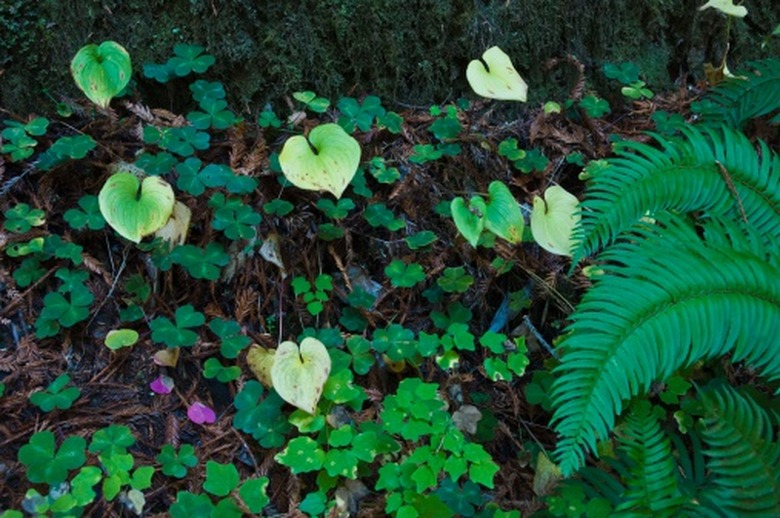
Invasive ground cover plants are low-growing and spread quickly. These types of invasive plants will take all the moisture and nutrients from any surrounding plants, resulting in stunted growth or death. Types of invasive ground cover plants include ivy, violets and various varieties of grasses. When removing or killing invasive ground covers, there is the possibility of harming other plants as well. With careful attention, you can get rid of the ground covers and save the surrounding plants.
Using Nonselective Herbicide
Step 1
Put on gloves to protect your skin from sharp vines or thorns.
Step 2
Pull as much of the invasive ground cover away from the surrounding plants as you can and spread the tendrils on the ground. If you happen to pull parts of the invasive off the main plant, discard them in the garbage bag.
- Invasive ground cover plants are low-growing and spread quickly.
- Pull as much of the invasive ground cover away from the surrounding plants as you can and spread the tendrils on the ground.
Step 3
Take the remaining cut tendrils in your hands and trace them back to the root of the plant. Use the sharp pruning shears to snip off the tendrils one inch away from the ground or root. Throw the cut tendrils into the garbage bag.
Step 4
Place a cardboard box with one side cut out and facing you over the invasive ground cover root. This will isolate the area from the other plants.
Step 5
Dig up the soil surrounding the base of the invasive ground cover, using a garden spade. Keep digging until the roots become exposed. Spray only the invasive ground cover base and root with a systemic nonselective herbicide. These types of herbicides will travel into the roots of the ground cover to kill the entire plant system.
- Take the remaining cut tendrils in your hands and trace them back to the root of the plant.
- Use the sharp pruning shears to snip off the tendrils one inch away from the ground or root.
Step 6
Pull the root system from the soil with a garden spade after the plant has died. Place the dead plant into the garbage bag. Repeat this process for any remaining invasive plants.
Killing the Invasive Ground Cover Without Chemicals
Step 1
Repeat Steps 1 through 3 from above.
Step 2
Cut out a square of black plastic sheeting large enough to cover the base of the invasive ground cover.
Step 3
Place the black plastic over the base of the invasive ground cover and secure the sheeting to the ground with garden stakes. This will ensure that no light will reach the invasive plant.
- Pull the root system from the soil with a garden spade after the plant has died.
Step 4
Leave the black plastic for two to three weeks or until the ground cover is dead. The lack of light will eventually kill the plant.
Step 5
Dig the dead base and root system out of the ground with a garden spade. Dispose of it in the garbage bag. Repeat this process for any remaining invasive plants.
Tip
Spray the nonselective herbicide on a windless day to reduce overspray.