

How To Care For Rieger Begonias
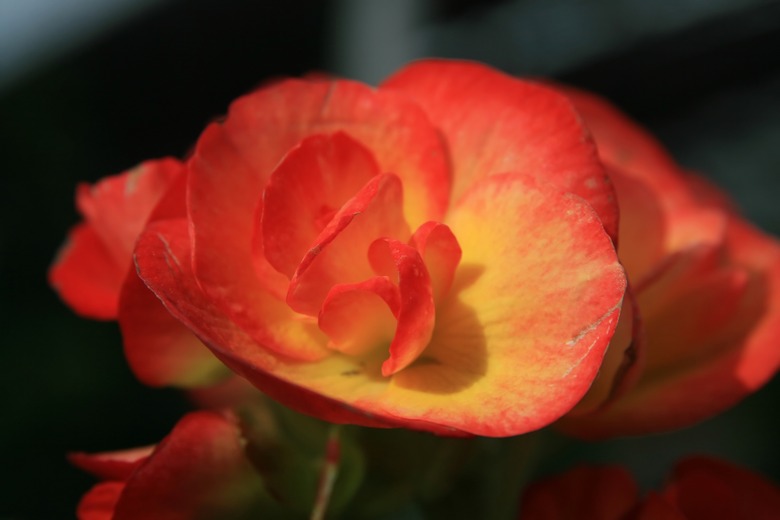
The Rieger begonia (Begonia hiemalis), a colorful flower that adds splash to the garden year-round, was developed by English plant breeder James Veitch when he crossed the Begonia socotrana from the Scootra (Soqotra) Island off the coast of East Africa and the tuberous begonia from South America. The Rieger begonia is one of those flowers that looks good with its large and round red, rose and yellow flowers, but don't expect a fragrance because the flower doesn't give one off.
Like the three little bears, the Rieger begonia prefers temperatures that are not too hot and not too cold, which makes care of it fairly easy.
Either outdoors or in a pot in your home, keep the flower well-aired. A fan nearby assures the movement of air while placed in an indoor location. When planted outdoors, consider that it shouldn't be shielded by a larger plant. The Rieger begonia thrives in USDA plant hardiness zones 8-11.
Tip
Since Rieger begonias are sensitive to overwatering, feed the pot from the top instead of the bottom. This will prevent the roots from getting root rot.
Choose Your Rieger Begonia
Select your potted plant at either a big-box store or a smaller garden center but check the pot for oncoming buds. You don't want to choose one that's soon to be in full bloom, as you'll need to hit the ground running with it.
Check the Moisture of the Soil
Test the moisture of the soil to be sure it's not too wet, as root rot or powdery mildew may be setting in, according to Home for the Harvest.
Place in a Spot with Even Sun Distribution
Place the container in an east-facing window for even distribution of sun and, if planting outdoors, select a spot that offers partial sun and partial shade.
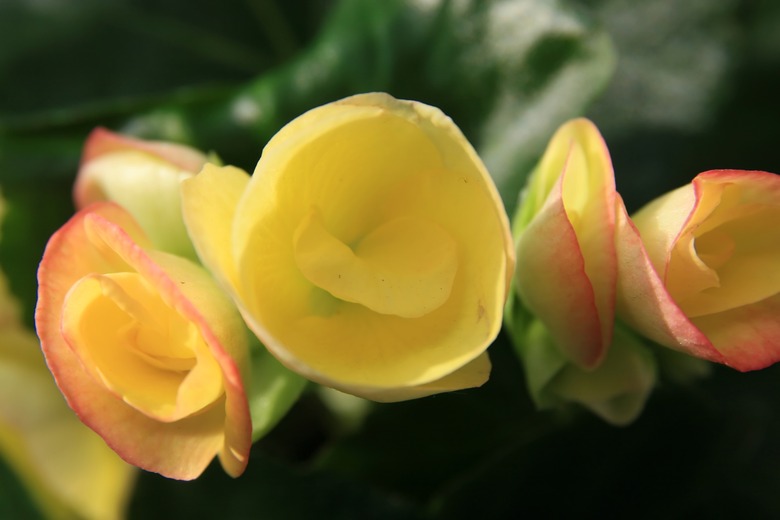
It's best to introduce the Rieger begonia in the winter months when temperatures range from 60◦ to 72◦F, says Plant Care Today. If you see the flowers starting to drop off when they do arrive, the temperature is too warm.
 David J. Stang
Prepare the Soil
Because of their ease of care, the Rieger begonia is ideal for the beginning gardener. Dig a hole that is larger than the begonia's pot and fill it with potting soil. If it's winter, be sure not to overwater, as the roots take up moisture more slowly.
When planting in a container, remove the plant from its pot and place it into a pre-dug hole in a clay container that has potting soil. Be sure to ruffle the roots before planting it to let air circulate through the roots. Press down and feed the plant some water but not too much.
Add 15-30-15 Fertilizer
If the plant is blooming, add liquid fertilizer with a 15-30-15 ratio. The high phosphorus (30) quantity promotes blooming.
Only fertilize every two weeks in the growing season and let the plant rest during its off season.
Be cautious if you see the plant's leaves turning a blue-green. Too much fertilizer is the culprit.
Warning
If your begonia's leaves begin turning blue-green, then you're using too much fertilizer.
Maintain a High Humidity Level
Humidity is the Rieger begonia's friend. If your home has a humidistat, that's a plus, as the humidity is constant.
If not, a humidifier near the indoor plant helps, as does misting the roots. Only mist in the morning and never on the flowers themselves in order to prevent root diseases.
Water Moderately
The Rieger begonia doesn't like a lot of water, and it will remind you by its leaves turning a copper color.
If planted outdoors during the rainy season, check the soil to be sure it's not waterlogged. You may need to cover the plant to protect it from too much water.
If your Rieger begonia is indoors, water moderately. Check the soil by dipping a finger into the pot to at least 1 inch deep. If it comes out dry, give the plant a bit of water. It's thirsty.
Deadhead to Promote Future Growth
Once the plant has flowered, remove the dead flower and cut back the stalk by about 3 inches. Your Rieger begonia will reward you with more flowers in the months to come, as energy is directed toward new growth instead of energizing the dead flowers.