

How To Mount A Staghorn Fern
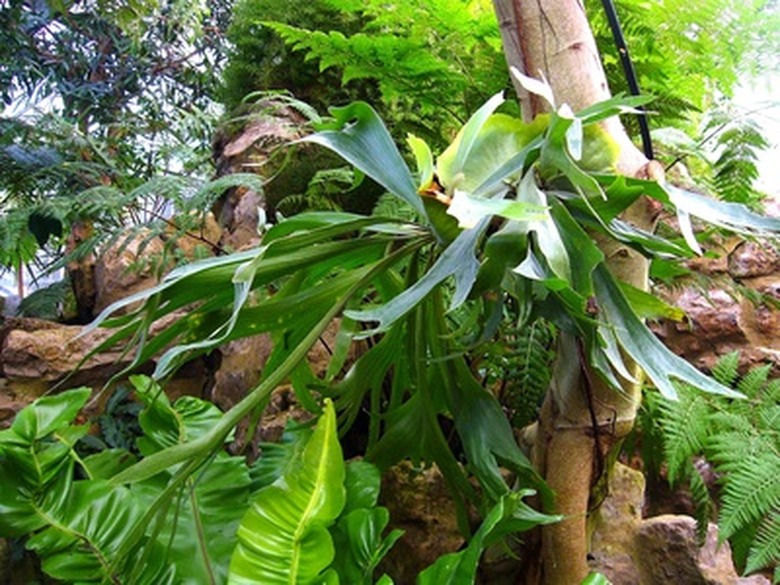
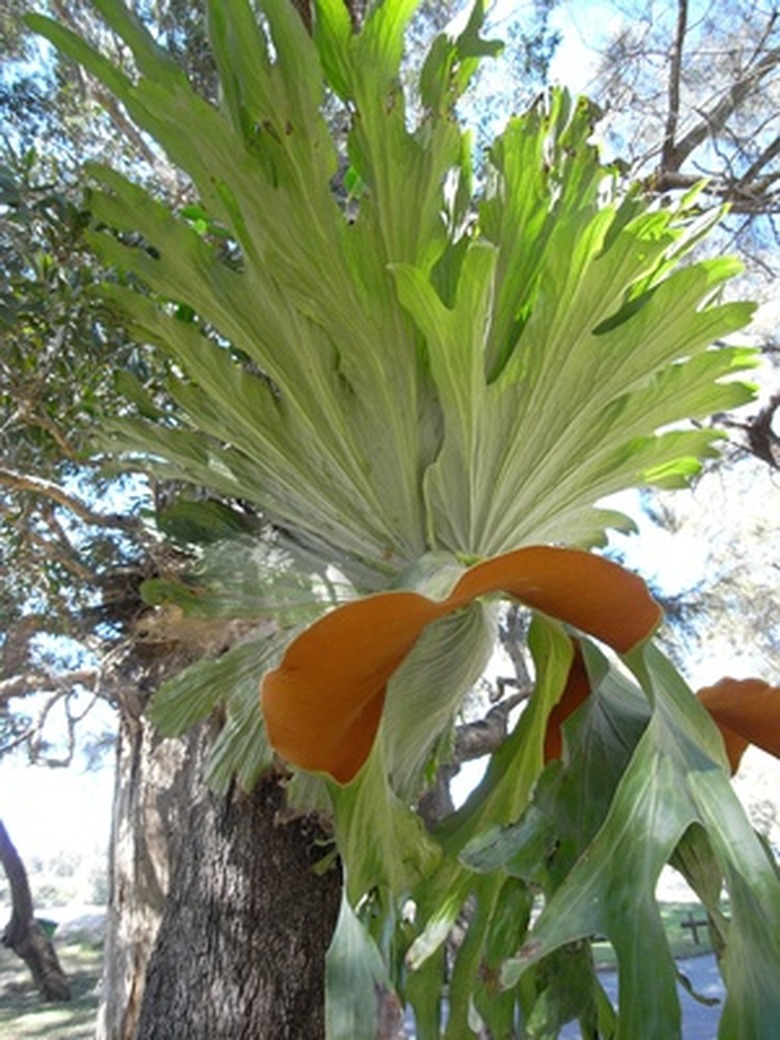
Staghorn ferns grow as epiphytes directly on living trees and on rocks without soil in tropical climates. They can be successfully grown on wood or other types of mounts with only the slightest amount of organic matter. Mounting is easy. If the fern's roots can stay in contact with the mount long enough, it will eventually attach to it and no longer need to be tied down.
Step 1
Place the mounting slab flat on a table with the front facing up and decide which part will be the top. Use the wire to make a hook or loop at the top of the mount to hang it up when you are finished. For dense mounting materials like redwood or cypress, you may need to drill a hole to feed the wire through. With softer materials like tree fern slabs, the wire can be pushed through the fibers relatively easily.
- Staghorn ferns grow as epiphytes directly on living trees and on rocks without soil in tropical climates.
- They can be successfully grown on wood or other types of mounts with only the slightest amount of organic matter.
Step 2
Lay a small rounded mound of wet sphagnum moss in the center of the mount. The mound should be an inch thick and wide enough to extend slightly beyond the diameter of the sterile shield fronds at the base.
Step 3
Remove the staghorn fern from the nursery pot it came in and carefully knock off the excess soil. Be sure to leave a root mass.
Step 4
Place the root mass on the mound of sphagnum moss so the fertile fronds are oriented correctly when the mount is hanging from the wire. The sterile fronds should lay as flat as possible against the moss.
Step 5
Tie a loop of fishing line around the mount and wrap it over the sterile fronds. Continue to wrap the line around the mount and the plant until it is firmly in place with the moss sandwiched between the mount and the bottom of the plant. Do not wrap too tightly because the line will cut through the leaves. Avoid damaging the growing bud where the fertile fronds emerge.
- Lay a small rounded mound of wet sphagnum moss in the center of the mount.
- Tie a loop of fishing line around the mount and wrap it over the sterile fronds.
Step 6
Tie off the line and clip the excess line with the scissors.
Step 7
Soak the mount, sterile fronds and moss with a fine spray of water from the hose until completely saturated, then let drip dry.
Step 8
Hang the plant in a shady location for several weeks before moving it into brighter light in its final growing location. The fishing line can be removed within a few months after several new shield fronds develop, or it can be left on and will eventually be covered by foliage.
Tip
When selecting a mount, use a rot-resistant wood such as redwood or cypress, otherwise it will rot quickly. You can also use pottery, or even stone. Some people have had success with plastic mounts. Choose a mount that will accommodate several years of growth. Some staghorn ferns get very large and may need to be remounted every few years. Any type of wire or string can be used in place of fishing line, as long as it is not copper and will resist decay for a couple of growing seasons. Some people choose to nail the sterile fronds to the mount directly with galvanized nails or staples instead of fishing line.
Warning
Although the ferns will attach directly to concrete such as walls, this is not advised because the roots will cause the concrete to crack over time. Staghorn ferns can also be mounted directly on a tree trunk, but this is not advised because they will retain moisture against the tree bark and potentially open the door for rot.
Things Needed
- Mount
- Wire
- Long-grain sphagnum moss (wet)
- Fishing line
- Scissors
- Staghorn fern