

Where To Cut The Stem Of An Orchid After The Flowers Are Gone
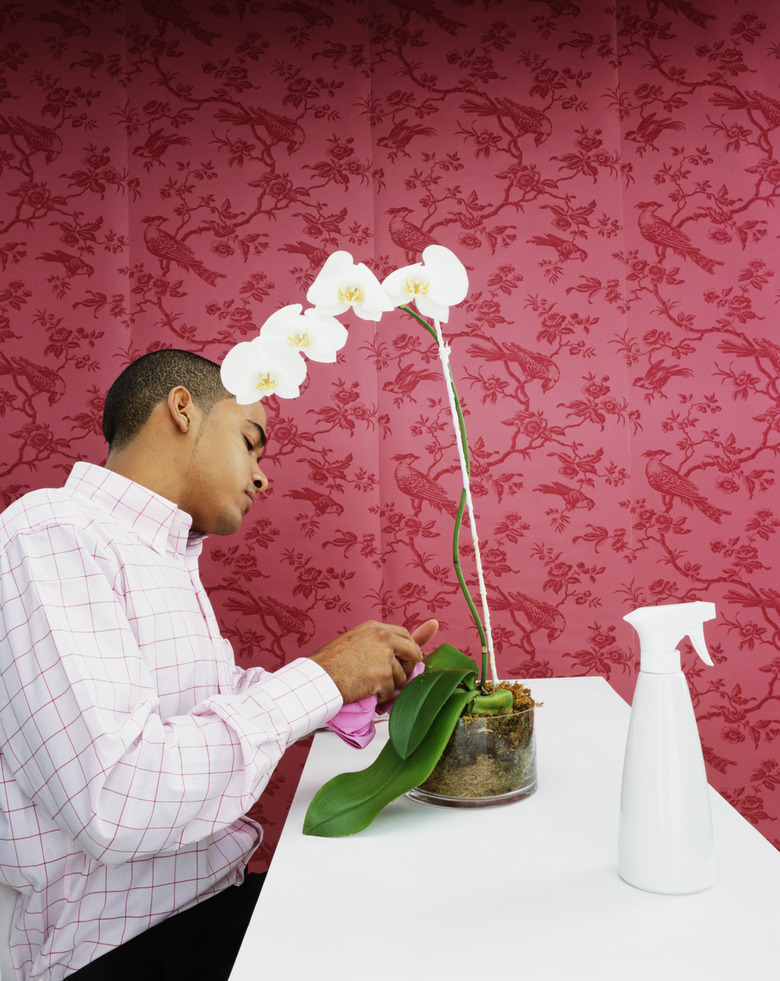
Orchids bloom at various times throughout the year depending on the species and growing conditions. Cattleyas and phalaenopsis, for instance, tend to bloom in the spring while cymbidiums and oncidiums generally bloom in the winter. The flower stems will dry up and turn brown after the flowers fall, at which time they can be cut off. Where the stem or spike should be cut depends on the type, health and maturity of the orchid.
Orchids in General
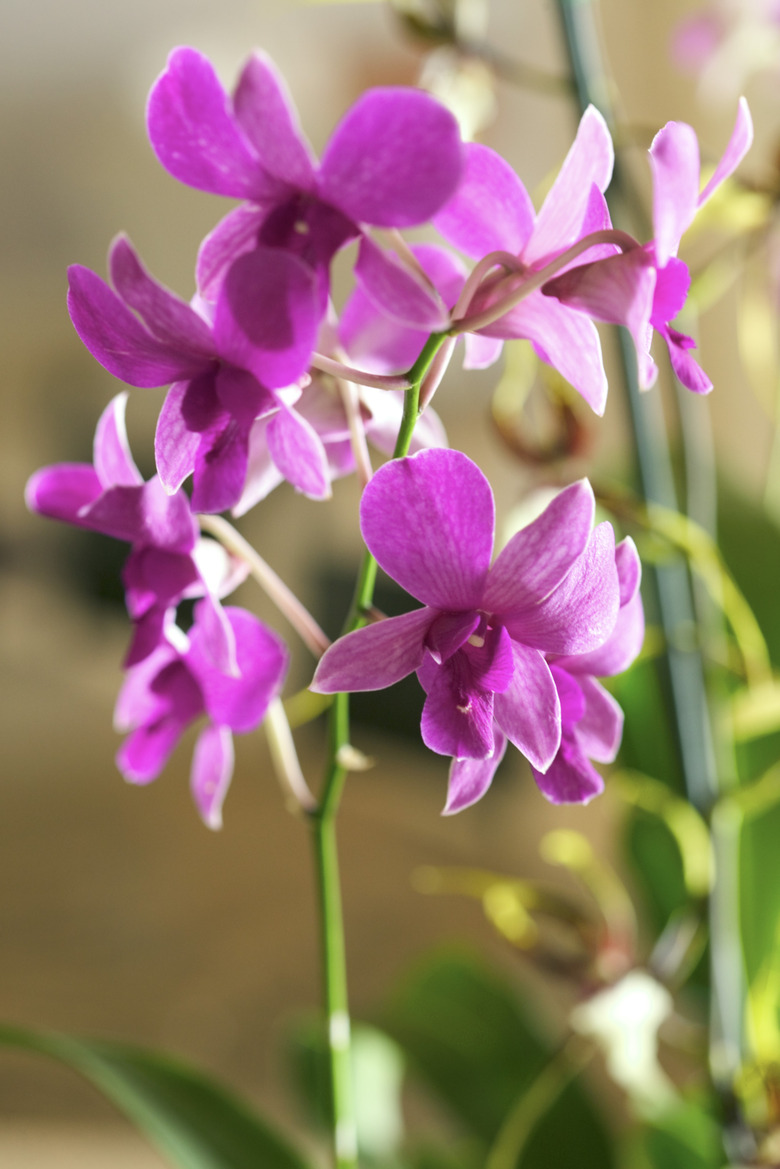
The general rule of thumb when cutting spent flower stems or spikes from orchids is to cut them off at the base. This should be done on cattleyas, cymbidiums, dendrobiums, epidendrums, paphiopedilums, phragmipediums and vandas. After these orchids have bloomed, they will not produce any more flowers on the flower spike. There is no need to leave the spike on the orchid until the whole thing turns brown. It can be removed as soon as the flowers drop and the tip of the spike turns brown. As long as the orchid is healthy and growing conditions are right, it will put out a new spike for the next bloom season.
- Orchids bloom at various times throughout the year depending on the species and growing conditions.
- The general rule of thumb when cutting spent flower stems or spikes from orchids is to cut them off at the base.
Phalaenopsis Orchids
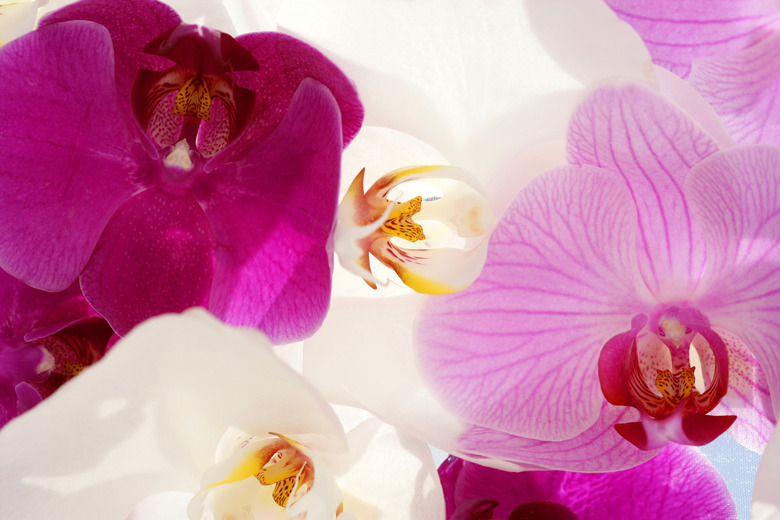
Phalaenopsis orchids produce multiple blooms on the same spike. Most types of phalaenopsis can have the spike cut back to just above a healthy growth node when the flowers drop and the spike begins to turn brown. Growth nodes are raised triangular flaps of plant tissue on the flower spike. The healthy phal will grow new spikes from the growth node and bloom from those. Small, young phals that are less than 1 foot tall or those that are not growing vigorously should not be allowed to try to rebloom. Their flower spikes should be removed at the base of the spike as soon as the blooms drop. Some orchid growers always cut the spike off at the base to prevent reblooming regardless of the size, health or maturity of the orchid. Blooming saps energy from the plant, resulting in slower plant growth.
- Phalaenopsis orchids produce multiple blooms on the same spike.
- Most types of phalaenopsis can have the spike cut back to just above a healthy growth node when the flowers drop and the spike begins to turn brown.
Amboninsis, Cornu-cervi and Violacia Descendants
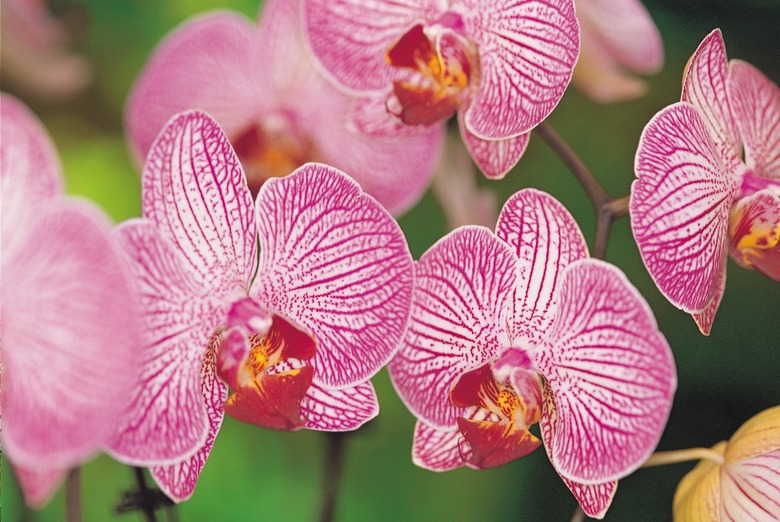
Phalaenopsis orchids that are descendants of amboninsis, cornu-cervi, violacia and similar orchids bloom continuously from the same flower spike. The spikes on these phals should not be cut unless they grow too long. If the spike has grown so long that it has become unsightly, it can be cut back to just above a growth node. It can also be removed at the base in the spring to give the orchid a rest and encourage new plant growth.
Oncidiums (Psychopsis)
Some types of oncidiums (psychopsis), such as papilio or butterfly orchid, should not have the flower spikes cut when the blooms drop. These orchids will bloom on the same spike for years. The spikes can grow to 2 feet long. The flower spike should be removed at the base when the orchid is repotted to reduce stress while it becomes re-established. Use a good potting medium that breaks down very slowly to allow as much time as possible between repottings.
- Phalaenopsis orchids that are descendants of amboninsis, cornu-cervi, violacia and similar orchids bloom continuously from the same flower spike.
- It can also be removed at the base in the spring to give the orchid a rest and encourage new plant growth.