

How To Improve Bermuda Grass Growth
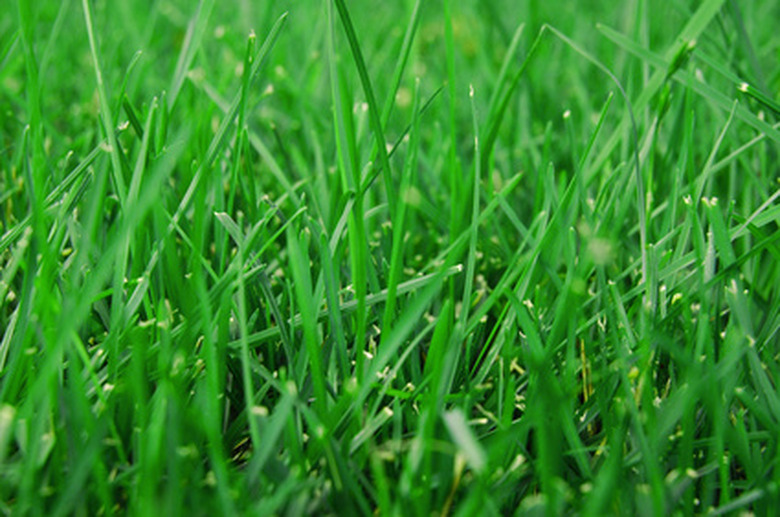
Bermuda grass (Cynodon spp.) thrives in many climates and conditions, making this grass a good choice for lawns and parks. This type of turf grass grows rapidly through rhizomes and stolons. These runners quickly spread over areas of soil to create a lush, thick lawn. Although, normally a carefree variety of grass, Bermuda grass often suffers from adverse conditions and pests. Unhealthy Bermuda grass requires assistance to improve its rate of growth and overall health.
Step 1
Mow your Bermuda grass in the spring, before noticing signs of new growth. Remove dead blades by cutting the tops off the grass. This practice allows sunshine and warmth to penetrate to the new shoots as they begin emerging from the soil. Maintain a regular mowing schedule throughout the entire season by cutting at least once each week. Set your lawn mower to cut the grass about 2 inches high. Do not remove more than one-third the length of the grass blades during a single cutting.
- Bermuda grass (Cynodon spp.)
- This practice allows sunshine and warmth to penetrate to the new shoots as they begin emerging from the soil.
Step 2
Fertilize your Bermuda grass to improve the health of your lawn. Apply a grass fertilizer high in nitrogen to your lawn in the early spring. Select a grass fertilizer formulated for use on Bermuda grass and apply according to the manufacturer's instructions.
Step 3
Water your Bermuda grass when it shows signs of dryness. Look for the appearance of footprints after walking across the lawn. Healthy Bermuda grass springs back, but dry grass stays compressed. Most varieties of Bermuda grass require weekly applications of an inch or more of water during the warm, summer months.
- Fertilize your Bermuda grass to improve the health of your lawn.
- Select a grass fertilizer formulated for use on Bermuda grass and apply according to the manufacturer's instructions.
Step 4
Remove weeds from your Bermuda lawn. Use a pre-emergent herbicide in late winter or early spring to kill weed seeds before they sprout. Apply a post-emergent herbicide if you notice weeds growing in your lawn during the summer. Purchase an herbicide labeled for use on lawns containing Bermuda grass. Apply herbicides according to accompanying instructions.
Step 5
Remove the thatch buildup from your Bermuda grass lawn every couple of years. Due to its rapid growth and spread, this type of turf grass requires regular thatch removal. Remove the thatch during early spring. Use a strong garden rake to pull up the thatch buildup from the surface of the soil. Using an upward motion, rake a small area of the lawn at a time to pull out dead grass and debris.
- Remove weeds from your Bermuda lawn.
- Apply a post-emergent herbicide if you notice weeds growing in your lawn during the summer.
Things Needed
- Lawn mower
- Fertilizer
- Water
- Herbicide
- Garden rake