

How To Care For A Sycamore Tree
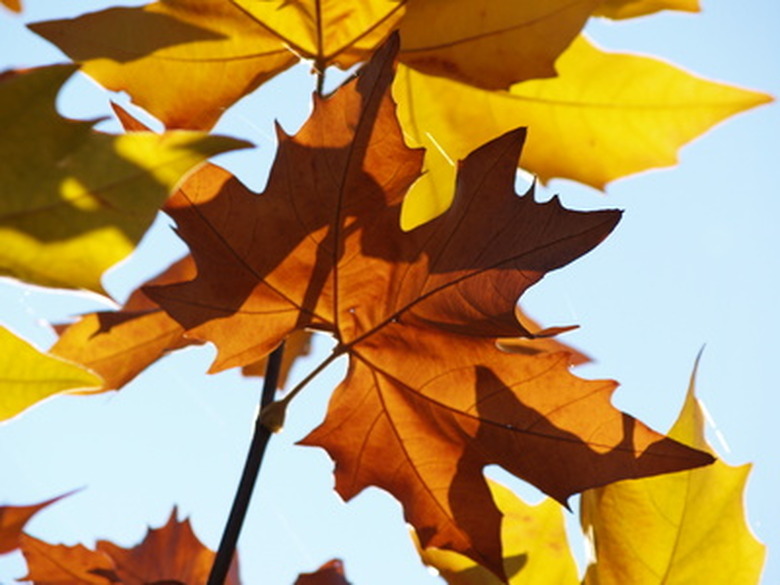
Things Needed
- Pruning shears
- Gardening gloves
- Water
- Fungicide (optional)
When determining how to care for a sycamore tree, the most significant factors include paying attention to the great size of sycamores (as they are not generally well-suited to small residential lots), their overall maintenance requirements, and being mindful of their high susceptibility to anthracnose. Keeping your sycamore tree vigorous through proper care is key to steady growth, a healthy, aesthetically pleasing appearance, as well as a sycamore tree's ability to fight off disease.
Step 1
Locate your sycamore tree on an expansive landscape. Sycamore trees are quite large with a height of 75 to 100 feet and a spread that equals or surpasses their height. Though sycamore trees can survive in urban areas, their roots can cause damage to streets and sidewalks and they create large amounts of leaf litter, according to the Clemson University Extension.
Step 2
Fulfill your sycamore tree's sun requirements. Sycamore trees thrive in full sun to partial shade, according to the Clemson University Extension. Improper sun exposure can lead to diminished health.
- When determining how to care for a sycamore tree, the most significant factors include paying attention to the great size of sycamores (as they are not generally well-suited to small residential lots), their overall maintenance requirements, and being mindful of their high susceptibility to anthracnose.
Step 3
Situate sycamore trees in deep, moist, oxygen-rich soil, as directed by the Clemson University Extension. Though sycamore trees will grow under other circumstances, proper soil conditions mean your sycamore is getting the nutrients and water it needs for growth and optimal health. Keep soil moist as sycamore trees are tolerant to wet sites. According to the University of Florida IFAS Extension, dry soil is a leading cause of sycamore tree illness.
Step 4
Prune your healthy sycamore tree during the winter season. For injured sycamores, prune any dead or damaged areas of the tree with pruning shears, as injured trees and open wounds become highly susceptible to disease. Injured areas can be pruned all year long. If your sycamore is in a residential or urban area, the Clemson University Extension suggests that you prune branches once they begin to droop to keep sidewalks and roadways clear.
- Situate sycamore trees in deep, moist, oxygen-rich soil, as directed by the Clemson University Extension.
- If your sycamore is in a residential or urban area, the Clemson University Extension suggests that you prune branches once they begin to droop to keep sidewalks and roadways clear.
Step 5
Pay close attention to your sycamore tree's leaves and trunk. Sycamore trees are highly susceptible to a fungal disease called anthracnose. Anthracnose is caused by the fungus Apiognomonia venata; symptoms include brown, dead areas on leaves, twig blight, leaf drop, diminished health, the presence of cankers (sunken areas) and eventual tree death. Take action immediately if you notice symptoms; for smaller trees, the Clemson University Extension suggests a regular application of chlorothalonil, thiophanate-methyl or copper fungicides during the spring season, but the presence of a problem may call for off-season fungicide application. Larger, more established trees are often not treatable; a trained professional (arborist) may be able to inject antibiotics into your tree to prolong its life. Always remove and destroy any diseased parts of your sycamore tree.
Tip
Pay consistent attention to your sycamore tree. Since sycamore trees have a moderate to rapid growth rate, according to the Clemson University Extension, they are not low-maintenance trees. Keeping up with care for a sycamore tree is beneficial as it prevents future problems and ensures steady growth.
Warning
Always wear gardening gloves when pruning to protect hands and arms from sharp blades.