

Can Metal Buckets Be Used As Flower Pots?
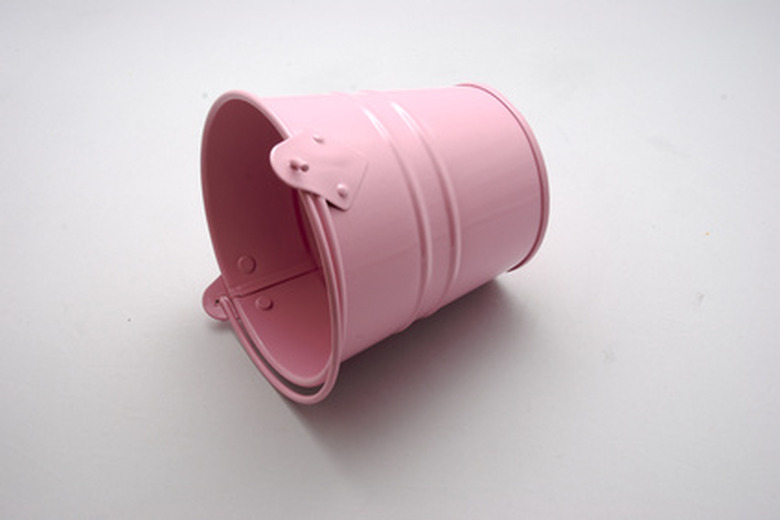
Metal buckets provide a durable and attractive option when repurposed into a planter. Most flowers grow well in containers, and making your own is a cost-effective choice. The buckets require some preparation before they are ready for plants, otherwise your flowers may not thrive in their new container.
Cleaning Buckets
The surface of the bucket may harbor organisms that are harmful to plants, regardless if the bucket is new or previously used. Before planting in it, disinfect it to ensure your plants remain healthy. Wash the buckets thoroughly with warm soapy water. If necessary, scrub the bucket with a stiff brush. A final wash in a solution of 1 part bleach to 9 parts water kills any remaining organisms on the bucket, rendering it safe for plants. Allow the bucket to dry completely before planting in it.
- Metal buckets provide a durable and attractive option when repurposed into a planter.
- Allow the bucket to dry completely before planting in it.
Rust Issues
Choose buckets that provide some rust resistance, such as those made of galvanized steel. While the rust won't harm plants, it does cause the bucket to weaken and eventually become useless. If the bucket you use isn't rust resistant, consider a plastic liner. Liners are sold in a variety of sizes to fit into most containers, including buckets. A liner that is not as deep as your bucket is preferable.
Providing Drainage
Plants require well drained soil to thrive. Standard plant pots are sold with drainage holes on the bottom, but buckets are not. Drill four ¼-inch diameter holes in the bottom of the bucket with a drill equipped with a metal bit to provide drainage. If you are using a lined bucket, poke holes in the bottom of the liner and set a drip tray in the bottom of the bucket beneath the liner. Remove the liner from the bucket after each watering and empty the collected water from the tray.
- Choose buckets that provide some rust resistance, such as those made of galvanized steel.
- If the bucket you use isn't rust resistant, consider a plastic liner.
Special Considerations
Metal buckets require some special care that isn't usually necessary for other planters. The metal sides tend to heat up in the sun, which can dry out the soil more quickly or burn the plants. Set the buckets in an area where they receive some afternoon shade or where the bucket is in shade while the plant foliage receives full sunlight. If the soil dries quickly, more frequent watering is necessary. While heat can lead to dry soil, in cooler weather the soil may tend to remain overly moist since moisture cannot evaporate through the metal. Water less if the soil seems overly wet or soggy.