

Grub Control
Step 1
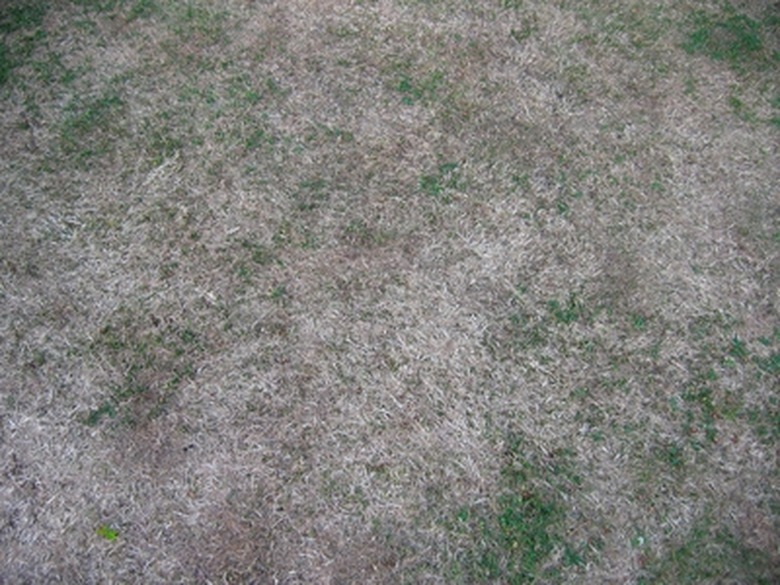
If you have been noticing drying patches of grass across your lawn, it may be suffering from unsightly grubs. Hidden below the surface, eating away on your green grass, these pests can easily destroy your lawn if left untreated. Because they are attracted to some of the ingredients in this homemade grub killing agent, you will be able to attract and successfully do away with these grubs, and get your lawn back to its old self again.
Step 1
Bring 8 cups of water to boil in a pot. Remove the pot from the heat and allow the water to cool to a lukewarm temperature. Pour the lukewarm water into a large glass jar.
Step 2
Add 2 tbsp. of Borax laundry assistant and 1 tbsp. of liquid dish detergent to the water and mix well.
- If you have been noticing drying patches of grass across your lawn, it may be suffering from unsightly grubs.
- Remove the pot from the heat and allow the water to cool to a lukewarm temperature.
Step 3
Add 2 cloves of fresh garlic, 1 whole medium-size onion and 1 whole hot pepper to the jar and mix well.
Step 4
Place lid on jar, and allow it to sit overnight. Remove the lid the next morning and stir again.
Step 5
Apply the grub killer to your lawn and garden using a 16 oz. spray bottle. Add 3 to 4 tablespoons of the grub-killing mixture to 3 cups of water in the spray bottle for each application.
Step 6
Water your lawn where it is affected by the grubs. Spray the affected area with enough solution to thoroughly saturate the ground.
- Add 2 cloves of fresh garlic, 1 whole medium-size onion and 1 whole hot pepper to the jar and mix well.
- Add 3 to 4 tablespoons of the grub-killing mixture to 3 cups of water in the spray bottle for each application.
Tip
Apply the grub-killing mixture in the early morning. The grub killer can be kept in refrigerated storage for two to three weeks.
Step 1
Remove all lawn grass and grassy weeds from in and around your vegetable. Grassy patches attract the adult beetles that lay the eggs which later turn into grubs.
Step 2
Till the garden soil every spring and fall. Use a spade for small garden areas or a mechanical tiller if you're managing a large garden plot. This exposes the hidden grubs and helps dry them out and kill them, according to the University of Wisconsin.
Step 3
Mix a diazinon-, chlorpyriphos- or permethrin-based granular pesticide into the soil before planting your vegetables, according to Oklahoma State University. Apply the pesticide as directed by its labeled guidelines, as toxicity varies widely by product.
- Remove all lawn grass and grassy weeds from in and around your vegetable.
- Mix a diazinon-, chlorpyriphos- or permethrin-based granular pesticide into the soil before planting your vegetables, according to Oklahoma State University.
Tip
The adult beetles only lay eggs in grass. Thus, only gardens newly created from previously sodded areas, or gardens heavily covered in grassy weeds, will have problems with grubs, according to the University of Wisconsin.
Pesticides do not work to kill grubs. The best insecticide to treat lawns that have white grubs, according to Iowa State University Extension, is a product with imidacloprid. Imidacloprid provides long-term control of the white grubs as it is absorbed by the root system and does not wash away, dilute from heavy rains or degrade in hot weather.
Step 1
Purchase a grub control product. If you want to control grubs in the spring, the University of Rhode Island Horticulture Program specifically recommends an insecticide containing Dylox® (trichlorfon) as one of the more effective springtime chemical applications.
Step 2
Adjust the lawn spreader to the proper setting according to the instructions on the product.
Step 3
Treat the border of the lawn first and then fill in the center. Walk at a steady pace and make parallel passes to ensure even distribution of the granules.
- Pesticides do not work to kill grubs.
- The best insecticide to treat lawns that have white grubs, according to Iowa State University Extension, is a product with imidacloprid.
Step 4
Lightly water the lawn to soak the granules into the ground.
Tip
The University of Rhode Island Horticulture Program suggests planting shade trees and shade-tolerant grasses for long-term grub prevention. Grubs are not often found in shaded yards.
Warning
Do not allow children or pets on the area until the lawn is dry.
Step 1
Cut back on your watering for the flowers and surrounding area if you can. Grubs prefer well watered lawns and healthy lawns. Cutting back on the watering will help deter them.
Step 2
Spread milky spore on the lawn and around the flowers where the grubs are located. Apply it based on the quantity recommendations of the package. Milky spore is a bacteria that will grow in the soil and attacks grubs. It will stay in the soil for many years.
- Lightly water the lawn to soak the granules into the ground.
- Spread milky spore on the lawn and around the flowers where the grubs are located.
Step 3
Apply nematodes to the soil. Fill a bucket with water and add the package of nematodes. Allow them to soak for a few minutes, then spray or pour them onto the soil with a garden sprayer or watering can. Water evenly and shake the container occasionally to keep the water mixed. Follow dosage instructions on the package. Keep the soil watered well for a couple of weeks after you apply the nematodes.
How to Kill Lawn Grubs
Step 1
Mix one cup of laundry detergent with one cup of water. If you need to get rid of a larger area of lawn grubs, increase the mixture.
- Apply nematodes to the soil.
- Keep the soil watered well for a couple of weeks after you apply the nematodes.
Step 2
Pour the detergent mixture over your lawn in the area with the lawn grubs. The mixture won't harm your lawn, but will work to kill the lawn grubs.
Step 3
Remove the lawn grubs from your lawn once they rise to the surface. You can also leave them there for birds and other animals to pick up and eat.
How to Kill Moles
Step 1
Step on a portion of the mole tunnel with your foot to flatten it. A mole using these tunnels will usually repair the crushed tunnel within a day or two, so you'll know the tunnel is active.
Step 2
Drop mole bait into the tunnel. Use a stick or rod to get the bait far enough into the tunnel.
- Pour the detergent mixture over your lawn in the area with the lawn grubs.
- A mole using these tunnels will usually repair the crushed tunnel within a day or two, so you'll know the tunnel is active.
Step 3
Cover up the tunnel so the mole doesn't notice a disturbance.
Warning
Make sure you don't place the mole bait above ground where another animal can get to it.

Step 1
Look for small white creatures.
Step 2
You will often find grubs in a C shape when they are feeding on your lawn.
Step 3
Generally, you will find damage from grubs starting in mid August and continuing until early October.
Step 4
When it is an infestation of grubs damaging your lawn, you will see brown patches. Of course, brown patches can result from other lawn issues, so do not rely on this one characteristic.
Step 5
If you do have a brown spot, lift the grass in the brown patch. If you see the little white creatures in a C shape on the root zone, you will know you do indeed have a grub infestation.
Step 6
- Cover up the tunnel so the mole doesn't notice a disturbance.
- If you see the little white creatures in a C shape on the root zone, you will know you do indeed have a grub infestation.
Step 7
If you find 8 to 12 grubs in a square foot area, you will need to treat your lawn.
Step 1
Walk on the grass wearing lawn-aerator sandals. According to Sandra Mason of the University of Illinois Extension Office, the spikes on these sandals pierced an average of two lawn grubs per inch when University of Colorado Researchers walked the lawn three to five times wearing them.
Step 2
Keep your lawn healthy. In a Michigan State University Extension Office fact sheet, George Silva explains that watering your lawn regularly, cutting it and removing dry and dead grass strengthens it against grub infestation. If you use pesticide, Silva suggests you apply it only to the areas where you see grubs.
Step 3
Apply organic pesticide to your lawn. To kill Japanese beetle grubs, use a drop spreader to add bacillus popilliae, sold as milky spore and bacterial spores, to the lawn. Apply them once in the spring, summer and fall for two years. You can also spray parasitic nematodes to control other beetles' grubs. The manufactured product (Grub Away) comes as a gel that you dissolve in water before spraying on the lawn.
Step 4
- If you find 8 to 12 grubs in a square foot area, you will need to treat your lawn.
- In a Michigan State University Extension Office fact sheet, George Silva explains that watering your lawn regularly, cutting it and removing dry and dead grass strengthens it against grub infestation.
Identification
Step 1
Lawns are susceptible to infestation by white grubs, the larva of scarab beetles. The problem is more common in sandy, light soils. White grubs are distinctly C-shape worms with white bodies and a brown head. The pests have three pairs of legs.
Damage
Step 1
White grubs are root eaters and feed on grass roots. Affected grass areas start to yellow, thin and die. This creates spongy, soft patches on lawns. The resulting dead, brown, irregular areas gradually increase in size as grass is unable to utilize water and nutrients. Heavy infestation often causes grass to roll up like a rug.
Step 2
- Lawns are susceptible to infestation by white grubs, the larva of scarab beetles.
- Heavy infestation often causes grass to roll up like a rug.
Management
Step 1
Introduce natural predators like ground beetles and parasitoids in infested turf. Insect parasitic nematodes are also helpful in white grub control. You can also use curative insecticides like trichlorfon. Apply insecticide when grub presence is established.
Brown Grass
If the grass is browning even when you keep watering, you may have a grub infestation. The grubs can affect the entire yard, or they may cause brown patches to form. The wilting and browning grass can occur in irregular shapes. Pull back the sod to check for white grubs, which are c-shaped, white and resemble plump worms.
- Introduce natural predators like ground beetles and parasitoids in infested turf.
- The grubs can affect the entire yard, or they may cause brown patches to form.
Skunks, Moles or Raccoons
Grubs in the soil will attract skunks and raccoons at night. The animals will dig holes in the lawn to find the grubs and eat them. Check for grubs in any area of the lawn that contains numerous holes.
Birds
If you notice that sparrows or other birds such as the starlings are pecking at the brown spots in the lawn, the birds may be looking for grubs. Crows do not usually dig for grubs, but some robins will if the grubs are closer to the top of the soil.
Beetles
A large amount of beetles in your yard in May and June could signify a grub infestation or lead to a potential infestation next year. The Japanese beetle, also known as the June beetle, lays its eggs in the lawn. The eggs develop into grubs. During May or June, the larvae enter the final pupae stage and emerge as full-grown beetles.
- Grubs in the soil will attract skunks and raccoons at night.
- The animals will dig holes in the lawn to find the grubs and eat them.
Step 1
Check the affected area for white, C-shaped grubs. Gently pull back the surface layer of grass and roots to look for the grubs. When searching for potential areas, focus on areas of the lawn that are browning.
Step 2
Look for damage to your lawn that may have been caused by skunks or raccoons. They will most likely dig up the lawn to search for grubs to eat.
Step 3
Take a sample of your soil. Use a shovel and cut three sides of a 12-inch square. Peel back the cut area and look for grubs. Count the number of grubs in this square-foot area. Replace the soil and water the area completely. If you see more than 10 grubs per square foot, then you will have to treat your lawn for these pests.
- Check the affected area for white, C-shaped grubs.
- Peel back the cut area and look for grubs.
Michigan State University Extension recommends treating Michigan lawns with grub problems in mid-July. There are several treatments for use in spring and fall, however, they are not as effective and more toxic to humans.