

Are You Supposed To Deadhead Clematis?
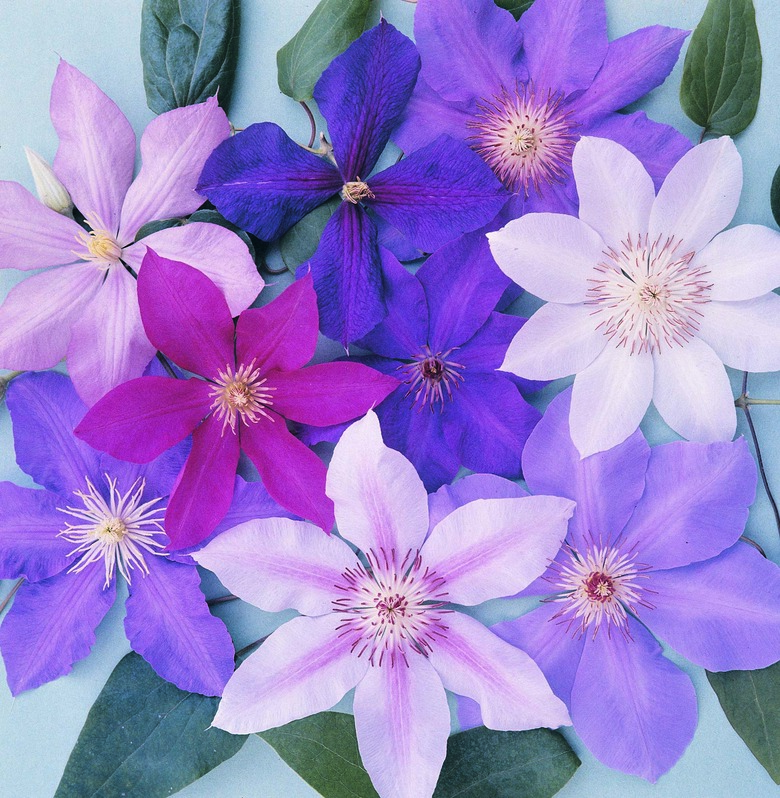
Clematis (Clematis spp.) are usually deciduous flowering vines, although there are a few evergreen and groundcover or shrub-type varieties. There are many different shapes, sizes and colors of clematis flowers. The flowers bloom from early spring to fall depending on the species. Pruning requirements differ depending on the flowering type: early-flowering, large-flowered or late-flowering. Whether to deadhead depends partly on the flowering type and partly on personal preference.
Step 1
Clematis need a well-draining soil with about 8 inches of compost worked into the soil before planting. Plant the vines near a support, such as a trellis. For best growth, plant the clematis where the flowering vine will get six hours of sun a day, but the base of the plants and the roots are shaded. They should get at least 1 inch of water per week, and a 2-inch layer of mulch around the base of the vine will help keep the soil moist. You can add general-purpose fertilizer to the soil each spring.
Early-Flowering Clematis
Step 1
Early-flowering clematis including Alpine clematis (Clematis alpina) and downy clematis (Clematis macropetala), growing in USDA zones 4 through 9, flower in the spring. Prune them after the flowering stops to promote flowering the next season. Avoid cutting into the woody parts of the vines. To get these early-blooming vines to bloom longer, deadhead the flowers to get a second bloom. If you do not deadhead, the flowers will form seed heads and blooming will stop for the season as energy will be directed to forming seeds.
Step 2
Step 3
- Clematis need a well-draining soil with about 8 inches of compost worked into the soil before planting.
- Prune them after the flowering stops to promote flowering the next season.
Large-Flowered Clematis
Step 1
Large-flowered clematis has blooms 4 to 7 inches across. "Nelly Moser" (Clematis "Nelly Moser") and "Niobe" (Clematis "Niobe"), growing in USDA zones 4 through 11 and 4 through 8 respectively, are two large-flowered hybrids. These clematis varieties also bloom twice per year, in the spring and again in the summer. Prune the large-flowered vines in the spring to remove dead wood, and after the first blooms prune the shoots back to encourage new flowers. Deadhead all the spent blooms from the spring bloom period to get the second flowering in the summer.
Late-Flowering Clematis
Step 1
The late-flowering varieties including Italian clematis (Clematis viticella), growing in USDA zones 4 through 11, and sweet autumn clematis (Clematis terniflora), growing in USDA zones 5 through 9, bloom from spring through summer. They bloom on new growth, so you can cut back the vines to 2 to 3 feet above ground level in the winter during the dormant period. Deadhead flowers if you wish, but you can also leave them alone to form attractive seed heads that will persist into winter on some species.
Step 2
Step 3
- Large-flowered clematis has blooms 4 to 7 inches across. "
- Deadhead flowers if you wish, but you can also leave them alone to form attractive seed heads that will persist into winter on some species.
References
- Clemson University Cooperative Extension Service: Clematis
- University of Missouri Extension: Basic Clematis Pruning
- The Ohio State University Extension: Growing Clematis
- Iowa State University Extension: Clematis
- Colorado State University Cooperative Extension: Pruning Clematis
- Fine Gardening: Plant Guide: Clematis
- Monrovia: Clematis x "Niobe"
- Missouri Botanical Garden: Clematis terniflora