

What Kinds Of Fruit Grow In The Amazon Rainforest?
Many kinds of fruits grow in the Amazon rainforest, including fruits familiar in the United States, such as bananas, pineapples, mangoes, lemons and grapefruit. Aside from these, many other types of fruit also grow in the Amazon. Many of these fruits have nutrition and health benefits that remain unknown to people outside the rainforest.
Step 1
The acai palm berry is a staple of the Brazilian diet. It is becoming popular globally because scientists have discovered its antioxidant potential. Purple acai berries grow in clusters on the top branches of the tree. Each acai palm can produce between 40 and 50 pounds of the berries each year. Once the berries are ripe, they don't last long, so it isn't practical to export the fruit from Brazil. The juice and extracts, however, are exported.
Passion Fruit
Step 1
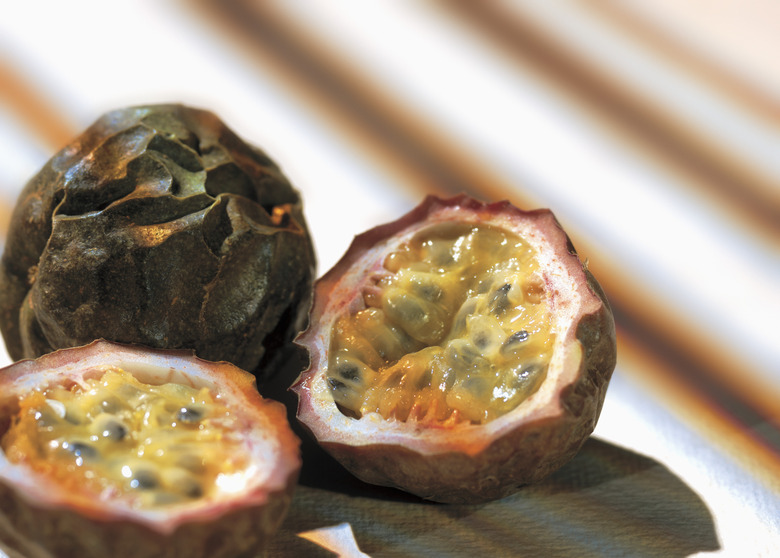
Passion fruit is known by many names in the Amazon rainforest, including maracuja, maypop and apricot vine. This fruit grows on vines in the Amazon. Inside the passion fruit is a yellow and gelatinous pulp. It is used in many ways: eaten fresh, juiced or made into jam, sherbet and salad dressing. Passion fruit leaves also are made into a drink that is said to help ease the nerves.
Step 2
- The acai palm berry is a staple of the Brazilian diet.
- Passion fruit is known by many names in the Amazon rainforest, including maracuja, maypop and apricot vine.
Strawberry Guava
Step 1
Strawberry guava plants are bushy shrubs that grow between 10 and 20 feet tall. The plant has shiny green leaves and produces white flowers. The fruit is also called cattley guava and is a dark shade of red with thin skin. Strawberry guava is juicy with a strawberry-like flavor. It is commonly eaten in Brazil and is also made into jam.
Aguaje
Step 1
Aguaje fruit is bright yellow and covered with dark maroon scales. It tastes somewhat like a carrot and is high in vitamin A. People in the Amazon often eat this fruit raw, but it is also cooked or made into juice, ice cream and frozen desserts. Aguaje fruits grow on aguaje palm trees near water in the Amazon rainforest.
Step 2
- Strawberry guava plants are bushy shrubs that grow between 10 and 20 feet tall.
- The fruit is also called cattley guava and is a dark shade of red with thin skin.