

How To Get Rid Of Termites In A Tree
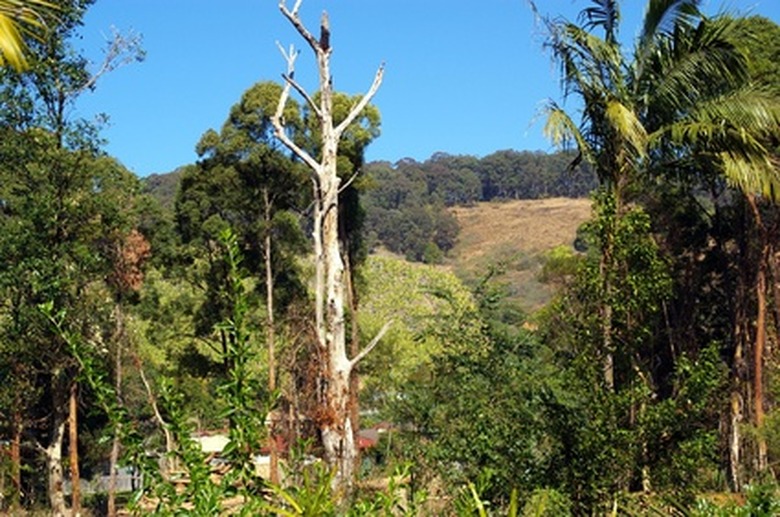
Drywood termites and subterranean termites commonly afflict trees. Drywood termites burrow into the tree using holes they seal off to hide infestation, making it difficult to be sure if a tree is under attack. The only indication is a small pile of fecal matter deposited at the base of a tree as the termites push it out and then reseal the hole. Subterranean termites live in the ground surrounding a tree in large colonies. Both types of termites will swarm in search of a new home and can easily relocate to houses, garages or outbuildings in search of wood.
Step 1
Insert termite bait traps next to subterranean termite tunnels at the base of the tree that is under attack. Bait traps are small plastic tubes filled with a slow-release insecticide or growth regulator that the termites consume through the plastic holes. The substance is normally mixed with small particles of wood to make it more enticing to the termites.
- Drywood termites and subterranean termites commonly afflict trees.
- Drywood termites burrow into the tree using holes they seal off to hide infestation, making it difficult to be sure if a tree is under attack.
Step 2
Remove the tree and stump of any tree infested with drywood termites. Cut the tree down, grind the stump and remove large roots. Destroy the wood by fire or remove the wood from your property to prevent the termite colony from relocating to another area. Dispose of any timber debris on the property to discourage future infestations.
Step 3
Drench the soil around the tree using an insecticide (imidacloprid and fipronil). Follow the directions on the label for application instructions. Both imidacloprid and fipronil work well at killing subterranean termites.
- Remove the tree and stump of any tree infested with drywood termites.
- Drench the soil around the tree using an insecticide (imidacloprid and fipronil).
Step 4
Apply a borate spray/foam to the tree that is infected by drywood termites. Drill holes into the tree trunk and spray thoroughly. Drill completely around the tree using at least a 3- to 4-inch drill bit that is 1/2 inch or larger in diameter. Apply the borate directly into the holes to kill the termites.
Tip
The property owner should not be concerned with saving the tree. Termites do not invade a healthy, live tree.
Things Needed
- Midacloprid and fipronil (insecticides)
- Termite bait traps
- Chain saw
- Stump grinder
- Borate spray/foam
- Drill
- 1/2-inch diameter drill bits that are 3-4 inches long