

Types Of Grass In Oklahoma
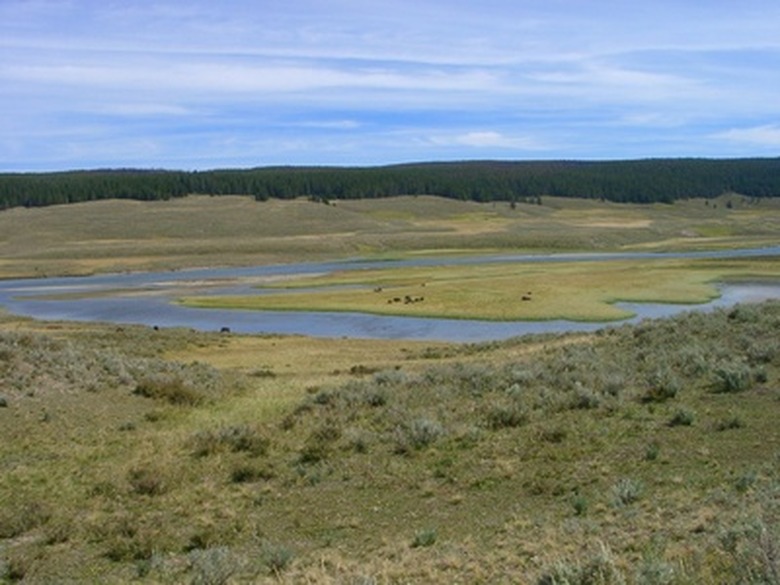
Many types of grass perform well in Oklahoma, which falls within the USDA hardiness zones 6 and 7. If you live in Oklahoma, choose grass varieties according to intended use, blade and flower colors, grass height and general culture.
Indian Ricegrass
Indian ricegrass (Achnatherum hymenoides), sometimes called Indian millet or sandgrass, ranges from 1 to 2 feet in height. This perennial bunchgrass bears wiry, sage-green blades that turn tan during its winter dormancy. Tiny yellow to green blossoms appear from June through September. The creamy white seed heads contrast nicely with the darker foliage. This drought-tolerant, ornamental grass prefers dry, rocky or sandy soils in sunny locations. Indian ricegrass works well in Oklahoma's dry grasslands and land reclamation projects.
- Many types of grass perform well in Oklahoma, which falls within the USDA hardiness zones 6 and 7.
- Indian ricegrass works well in Oklahoma's dry grasslands and land reclamation projects.
Buffalo Grass
Buffalo grass (Bouteloua dactyloides) reaches between 3 and 12 inches in height and spreads by creeping rhizomes. This perennial turfgrass bears curly, blue-green or gray-green blades, thin stems and small, yellow flowers that appear from October through March. This drought-tolerant grass prefers well-drained, loamy soils in full-sun positions. Oklahoma gardeners often plant the buffalo grass in meadows, shortgrass prairies and pastures.
Plains Lovegrass
The plains lovegrass (Eragrostis intermedia) features long, thin blades in various shades of green. These blades reach from 12 to 36 inches in height. Pink to purple blossoms and long, delicate-looking seed heads appear from May through October. This tufted bunchgrass tolerates drought conditions and prefers deep, dry soils in partial shade areas. Oklahoma gardeners typically use this warm-season grass as a garden accent or in meadow gardens.
- Buffalo grass (Bouteloua dactyloides) reaches between 3 and 12 inches in height and spreads by creeping rhizomes.
- This perennial turfgrass bears curly, blue-green or gray-green blades, thin stems and small, yellow flowers that appear from October through March.
Burrograss
Burrograss (Scleropogon brevifolius), a rugged turfgrass variety that generally reaches less than 12 inches in height. This drought-tolerant grass grows best in dry, well-drained soils that receive plenty of sun. Burrograss features small pink or white flowers that appear only after a summer rain. This grass sometimes spreads aggressively. Burrograss performs well planted in Oklahoma plains and meadows.
Nimblewill
Nimblewill grass (Muhlenbergia schreberi) bears tiny green blossoms that appear from July through September. This perennial grass also features delicate green blades that reach between 12 and 30 inches in height. Nimblewill thrives in various types of moist soils in shady locations. Oklahoma gardeners often use the nimblewill grass in suburban lawns.
- Burrograss (Scleropogon brevifolius), a rugged turfgrass variety that generally reaches less than 12 inches in height.
- Burrograss features small pink or white flowers that appear only after a summer rain.
Texas Blue Grass
Texas blue grass (Poa arachnifera) naturally occurs in Oklahoma savannahs, woodland margins and pastures. This cool-season grass tolerates various lighting conditions but prefers moist, loamy or sandy soils. Texas blue grass bears thick clusters of thin blue-green blades that form clumps ranging form 1 to 2 feet in height. Fluffy flowers in silver-white shades bloom from March through May. Oklahoma gardeners often use the Texas blue grass as groundcovers in meadows, plains and prairies.