

What Flowers Attract Gold Finches?
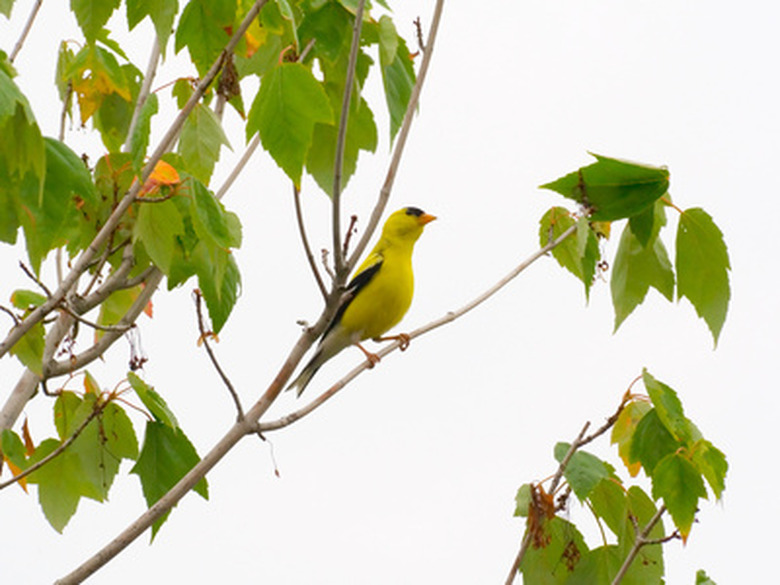
Gold finches, also called wild canaries, are found throughout North America. Their happy song and splash of bright yellow color makes them popular birds to attract to backyard feeders. Gold finches are seed eaters, although if seeds are not available they will eat small insects. Nyjer seed, sometimes referred to as thistle seed, is sold as the favorite food of gold finches. But they are also attracted to the seeds of many garden flowers that are easy to grow in most areas of the U.S.
Nyjer (Niger)
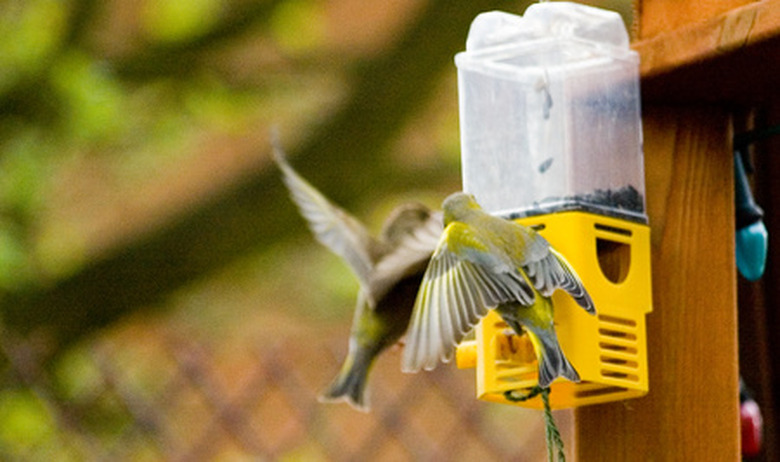
Nyjer is not really a thistle at all. It is the seed of Guizotia abyssinica, an annual plant with yellow, daisy-like flowers. This plant is grown mainly in Ethopia and India. It is grown commercially for the edible seeds and for the oil pressed from the seeds. Nyjer was introduced as a crop in a few states in the U.S.; imported seed is sterilized and will not grow. Check for nyjer availability at a local garden center or your County Extension office to find U.S.-grown, live seed for your garden.
- Gold finches, also called wild canaries, are found throughout North America.
- Nyjer seed, sometimes referred to as thistle seed, is sold as the favorite food of gold finches.
Thistle
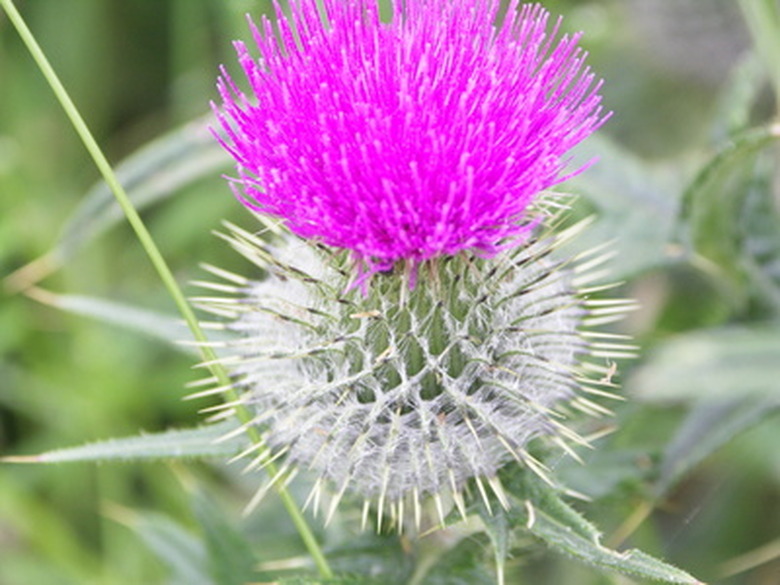
Natural thistle is a prickly weed that grows in many parts of the world. Thistle seed is a favorite of finches, but they also use the fiber fluff from the seed head to line their nests. After the purple flowers appear, the seeds and fluff develop. The timing of the thistle fluff and seeds is thought to be one reason for the late nesting habits of gold finches.
Dandelions
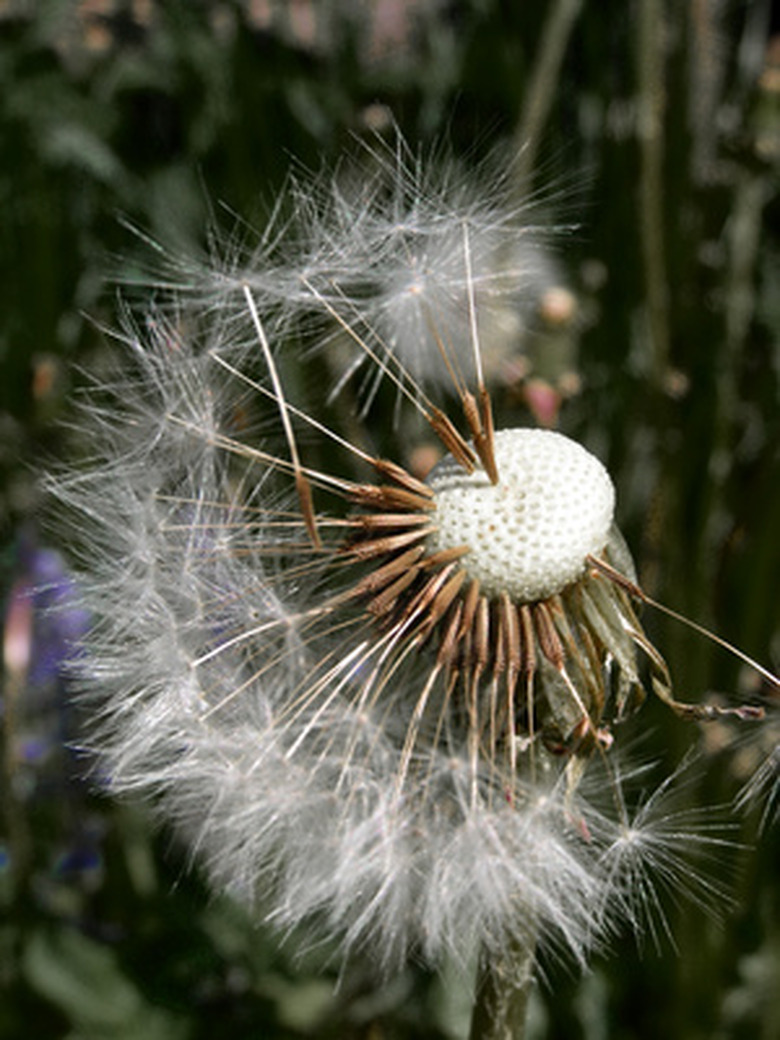
Although some homeowners despise dandelions in the lawn, dandelion seeds are another favorite food of goldfinches. They cling to the stem or seed head, cleaning off the seeds. (Ref 1)
- Natural thistle is a prickly weed that grows in many parts of the world.
- Thistle seed is a favorite of finches, but they also use the fiber fluff from the seed head to line their nests.
Sunflowers
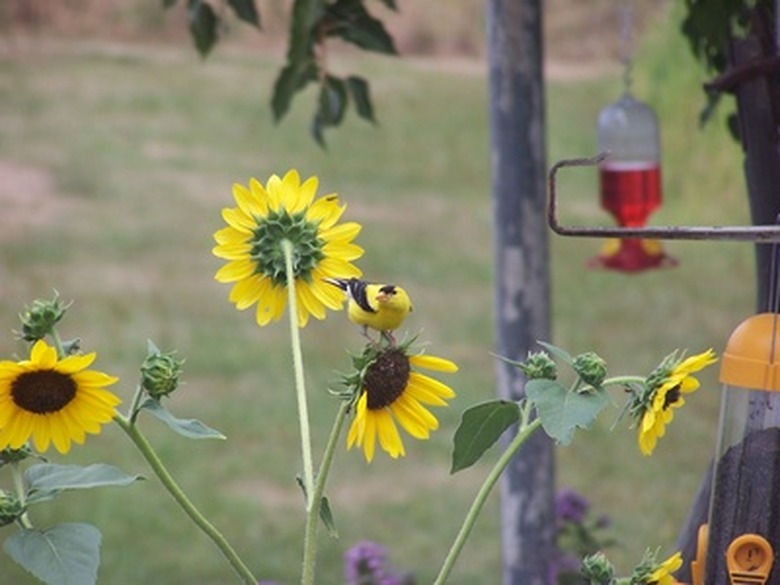
Sunflower seeds attract many species of birds, gold finches among them. As the seeds develop in the center of the flower, the petals drop, leaving the open seed head. Gold finches perform acrobatics hanging from sunflower seed heads, picking out seeds with gusto.
Other Flowers with Seed Heads
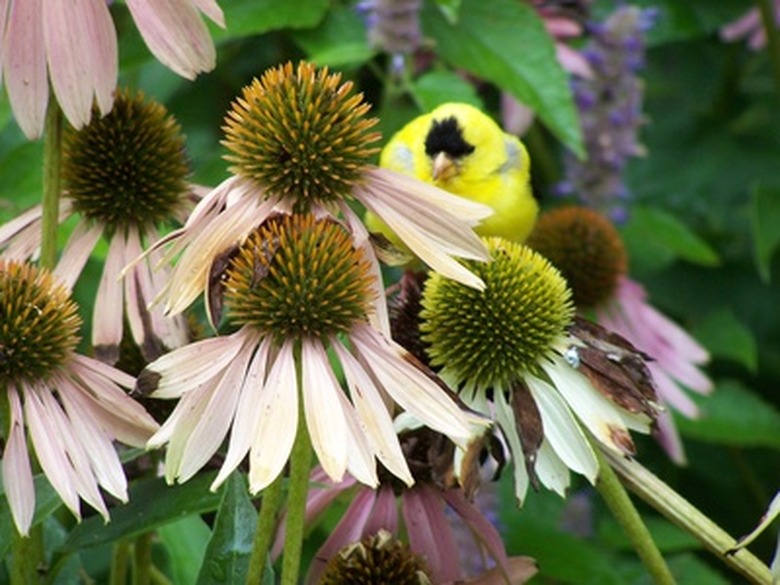
Native wildflowers and other common garden flowers are sources of food for gold finches. Any flower that produces a seed head cluster of small, lightweight seeds that can be easily cracked open are candidates for the bird garden. Zinnias, cosmos, rudbeckia, Echinacea and coreopsis are flowers that form seed heads that attract gold finches.
To use your flower garden to attract gold finches, do not deadhead all of your flowers, but allow some of them to go to seed.
- Sunflower seeds attract many species of birds, gold finches among them.
- Zinnias, cosmos, rudbeckia, Echinacea and coreopsis are flowers that form seed heads that attract gold finches.