

Stanley Plum Tree Care
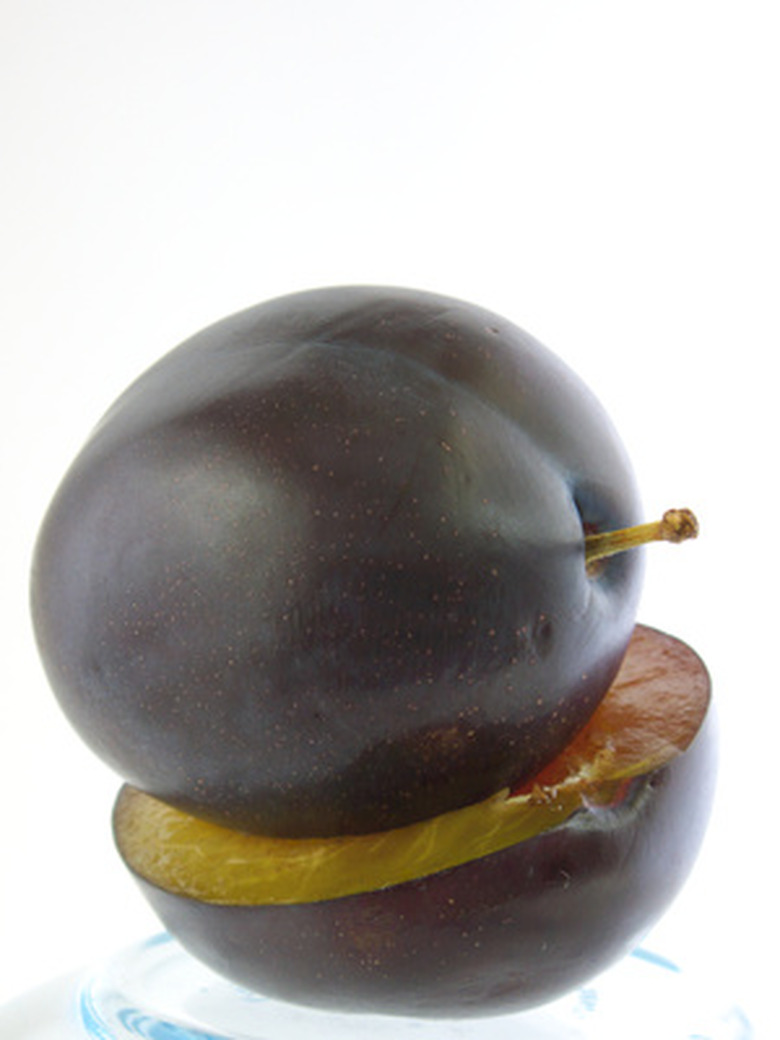
The Stanly plum tree (Prunus domestica) remains an old time favorite with juicy, purple fruits that taste delicious picked directly from the tree. The plums also make great dried fruit. With proper care, the trees start producing fruit three to five years after planting, coming into full production in about 10 years.
Description
Most plum trees fit into two categories–Japanese and European. The Stanley plum falls into the European plum category. Stanley plum trees grow up to 30 feet high and 25 feet wide although semi-dwarf types only reach about 18 feet. The tree features a profusion of fragrant white blooms in April as the dark green leaves of the tree start emerging. Dark bluish-purple fruits with yellowish-green flesh mature in the summer.
- The Stanly plum tree (Prunus domestica) remains an old time favorite with juicy, purple fruits that taste delicious picked directly from the tree.
- Stanley plum trees grow up to 30 feet high and 25 feet wide although semi-dwarf types only reach about 18 feet.
Planting
Plant Stanley plum trees in the spring after all danger of frost passes in U.S. Department of Agriculture hardiness zones 4 to 10. The trees thrive in well-drained soil with average moisture as long as they receive full sun. Young trees require planting with the graft union two inches above the surface of the soil. Plant the trees on mounds away from buildings to prevent cold air pockets from harming the tree during late spring frosts.
Watering
Water young trees frequently until they become established. After that, regular watering keep the tree in good health, although the tree may need more water on hot days or during times of drought. Consider adding a layer of mulch around the tree to preserve moisture.
- Plant Stanley plum trees in the spring after all danger of frost passes in U.S. Department of Agriculture hardiness zones 4 to 10.
- After that, regular watering keep the tree in good health, although the tree may need more water on hot days or during times of drought.
Pollination
While most plum trees require another nearby plum tree with which to pollinate, Stanley plum trees self-pollinate and do not require another tree. Since Stanley plum trees produce fruit on their own, they work well in small gardens where space remains a premium.
Diseases and Pests
Plum trees get attacked by a variety of pests including the peach tree borer and the pear slug. Peach tree borers attack the lower part of the trunk, requiring chemical spray to keep the borers from killing the tree. The pear slug sucks juice from the leaves until the leaves completely disappear. Dusting the leaves with wood ashes kills the larvae of the pear slug. Birds also find the ripe fruits highly attractive. Placing netting over the tree to protect the fruit helps keep birds from pecking holes in the fruit.
- While most plum trees require another nearby plum tree with which to pollinate, Stanley plum trees self-pollinate and do not require another tree.
- Peach tree borers attack the lower part of the trunk, requiring chemical spray to keep the borers from killing the tree.
Pruning
Pruning of a newly planted tree takes place when 3 to 4 inches of new growth appear. The main goal of pruning at this point focuses on creating a leader so the tree grows upright with lots of branching on the sides. Pruning of plum trees in later years focuses on allowing light in between each set of branches so fruit matures evenly. Prune established tree as late in the winter as possible to prevent injury to the tree.