

Mold On Peat Pots
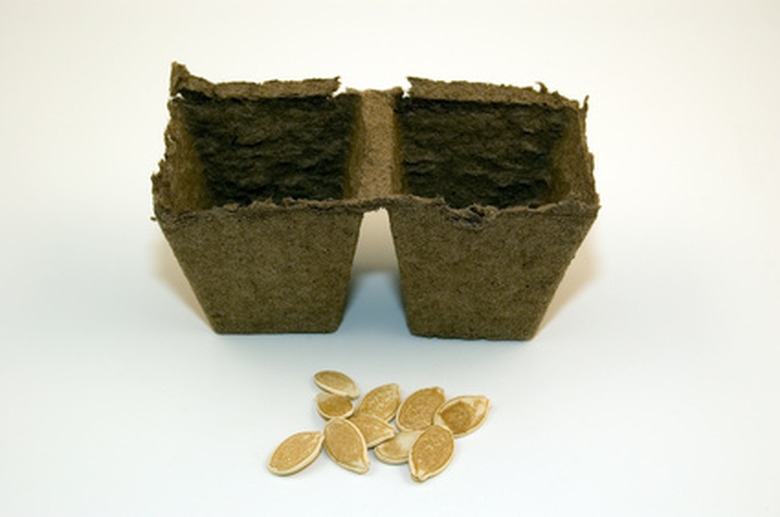
Many gardeners plant seeds in peat pots because of the ability to retain moisture that is essential for germination. Made from compressed organic matter, peat pots are environmentally friendly and usually planted directly in the soil. Mold that is every gardener's bane thrives in moist conditions and shows up as fuzzy white mass on the sides, base or rim of peat pots.
History
To harvest peat moss, large vacuums sweep moss fields that are left in stacks to dry. Microorganisms enter the stacks when humidity in the surrounding atmosphere is relatively high. Monocillium and penicillium are molds present in stacks, according to the American Journal for Respiratory Critical Care. Although these molds are likely to be carried with peat that is not processed, they do not usually exist on commercial peat pots.
- Many gardeners plant seeds in peat pots because of the ability to retain moisture that is essential for germination.
Significance
Manufacturers compress unprocessed peat into seed pellets and pots for retailers. These pots are inexpensive and preferred by domestic and commercial gardeners as a means to gardening in greenhouses or indoors. Gardeners usually place peat pots directly in the soil to minimize disturbing roots of seedlings. The increased humidity found indoors along with overcrowding make the pot susceptible to mold.
Mold
Sclerotinia sclerotiorum is a soil-borne or airborne fuzzy white mold that thrives in moist areas including those found in peat pots, according to the University of Hawaii Extension. The cotton-like mycelium that sclerotia produces adversely affects more than 360 species of plants including celery, common bean, tomato, squash, cucumber, lettuce and coriander. Allow the mold on the peat pot to dry out, or scrape it off carefully with a blunt knife and discard.
- Manufacturers compress unprocessed peat into seed pellets and pots for retailers.
- These pots are inexpensive and preferred by domestic and commercial gardeners as a means to gardening in greenhouses or indoors.
Prevention
Prevent mold from growing on peat pots by providing plenty of light and good air circulation. Water the pots from the base upwards, and check frequently to ensure they do not sit in pools of water for a long time. Many gardeners place peat pots in a plastic bag to mimic a greenhouse effect that assists seed germination. Remove this plastic sheet as soon as the seeds sprout. Add one part of hydrogen peroxide with 20 parts of water and pour the mixture into the peat pots to prevent mold.
Peat Pot Alternatives
Some gardeners find it difficult to manage mold on peat pots and switch to commercially available alternatives. Cow manure pots for instance are odorless and quickly replacing peat pots, as are peat-free pots made from coir; a substance extracted from coconut shell fibers. Other alternatives include pots made from empty toilet rolls or newspapers.
- Prevent mold from growing on peat pots by providing plenty of light and good air circulation.
- Water the pots from the base upwards, and check frequently to ensure they do not sit in pools of water for a long time.