

The Best 4 Season Shrubs
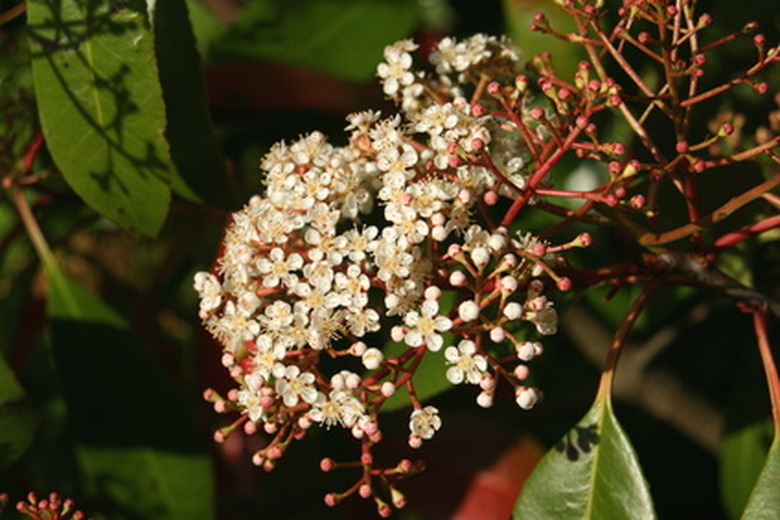
Shrubs provide an ideal way to add year-round interest to your landscape. They give color to each season along with texture and height. Shrubs serve as borders, specimens, hedges or accent plants. Choosing four season shrubs adds vibrancy to your landscape, preventing it from becoming dull or dreary.
Dogwood
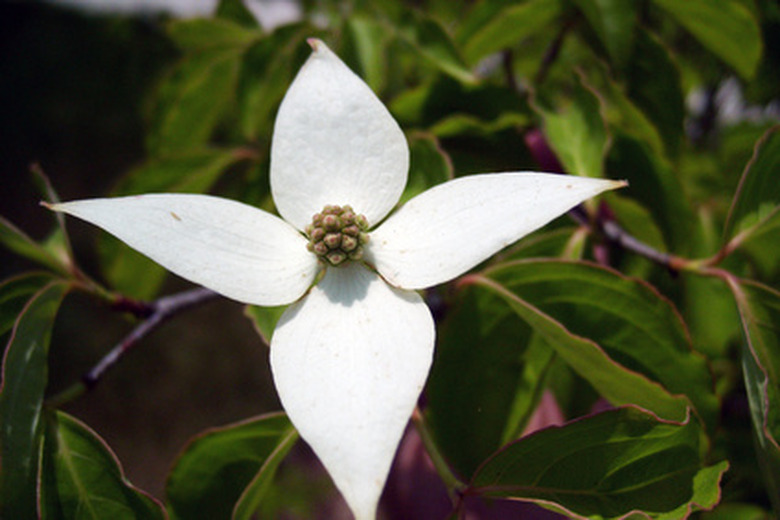
Deciduous shrubs don't usually top the list for four season interest. Losing their leaves in the winter means they look twiggy and lack vitality. Dogwoods are the exception. Dogwoods have bright to dark red stems that add contrast to the winter landscape. The shrubs can grow large, up to 20 feet. Pruning—best completed in early spring—keeps them to any desired size. Dogwoods tolerate a range of soil types, but thrive in moist areas. The need full sun for the best growth. Most species flower in late spring with fragrant, white blooms. Fruits form in late summer and compliment the red-purple fall color. Choose from varieties such as pagoda (Cornus alternifolia), silver edged dogwood (Cornus alba 'Argenteo-marginata') and red twig dogwood (Cornus sericea form baileyi).
- Shrubs provide an ideal way to add year-round interest to your landscape.
- Deciduous shrubs don't usually top the list for four season interest.
Ilex
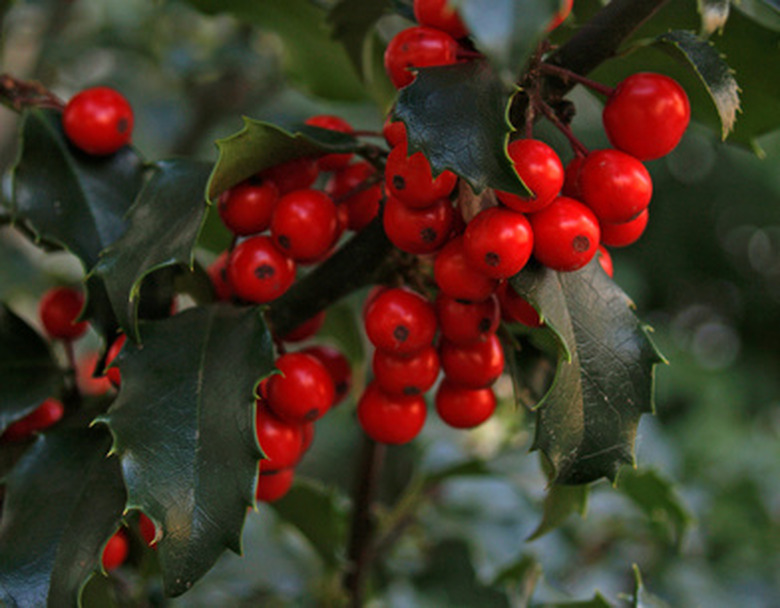
Species of shrubs in the Ilex group have evergreen or deciduous leaves, bright berries and distinct textures. They grow up to 10 feet tall. Ilex shrubs need moist, well-drained soil and full sun to partial shade. Flowers appear in the summer. Female plants set red fruit in the fall with a nearby male cultivar. The shrubs need some pruning to maintain size. The leaves range from green to blue-green. The reddish-purple stems, green leaves and red berries create a colorful display in the winter. Varieties available for landscaping include winterberry (Ilex verticillata), inkberry (Ilex glabra) and Meserve hybrid holly (Ilex x meserveae).
- Species of shrubs in the Ilex group have evergreen or deciduous leaves, bright berries and distinct textures.
- The reddish-purple stems, green leaves and red berries create a colorful display in the winter.
Rhododendron
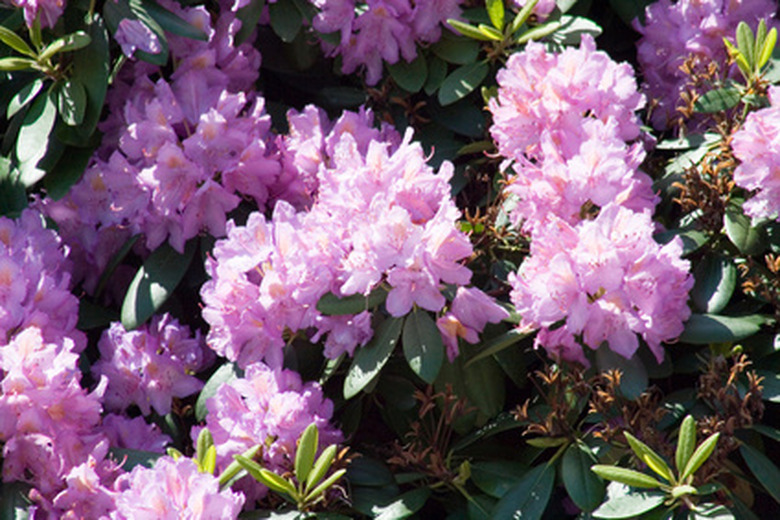
Shrubs in the rhododendron family provide year-round color. The evergreen shrubs range in size from 3 to 15 feet tall with a spread between 4 and 20 feet. Flowers adorn rhododendrons in hues of white, pink, red, purple, yellow or bi-color. The glossy, dark green leaves retain color throughout the year, though on some species the leaves turn mahogany. Rhododendrons require moist, well-drained and acidic soil. Because they have surface root systems, they need supplemental water during dry spells and a layer of mulch to conserve moisture. Plant rhododendrons in partial shade for best results. The shrubs need only light pruning to remove dead twigs and flowers. Some cultivars to choose from include 'P. J. M.', 'Charles Dickens', 'Alpine Snow' and 'April Gem'.
- Shrubs in the rhododendron family provide year-round color.
- The shrubs need only light pruning to remove dead twigs and flowers.
References
- "Pictorial Guide of landscape Plants"; M. Jane Coleman Helmer, Ph. D.; 1988
- University of Illinois Extension: Selecting Shrubs for Your Home, Pagoda Dogwood
- North Carolina State University: Inkberry
- University of Illinois Extension: Selecting Shrubs for Your Home, Meserve Hybrid Holly
- University of Illinois Extension: Selecting Shrubs for Your Home, Catawba Rhododendron