

How To Prepare The Soil To Grow Morel Mushrooms
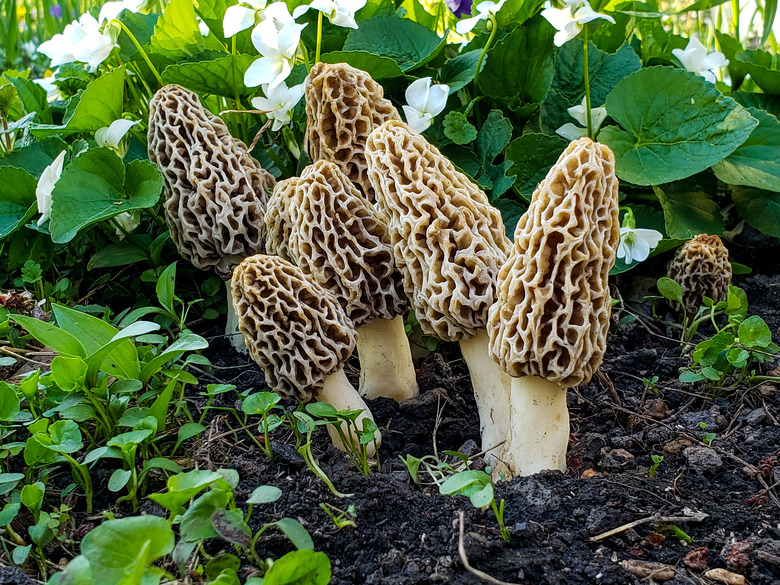
If you've never met morel mushrooms (Morchella esculenta) before, they look like tiny, oval honeycombs—a "brain"—and have a deep, earthly flavor. They're found in the wild in the Northern Hemisphere's USDA hardiness zones 4 through 9.
Unless you have a stand of cedar or hemlock swamps, aspens, elms, an apple orchard or other dying hardwoods nearby, growing wild morel mushrooms isn't for the everyday farmer.
In late spring, when the daytime weather is in the 60s and the soil temperature is in the 50s and wet with organic matter, throngs of morel hunters take to the woods in search of this highly desirable and expensive fruiting fungus, according to research published by Iowa State University.
The Origins of Morel Mushrooms
Forest fires decimate wooded tree stands, yet in springtime after the fires, those cinder-reduced trees provide the perfect growing conditions for morel mushrooms. Conifers and hardwood forests create organic compounds such as ash and bark mulch. When mixed with peat moss and wet shade, the ideal growing conditions for morel mushrooms are created.
For years the home-grown morel mushroom garden was doomed to failure because of lack of knowledge. But researchers have developed home planting kits, and "grow your own" instructions have opened the world of morel mushroom growing and harvesting to those with patience and determination.
Tip
The ideal growing conditions for morel mushrooms (Morchella esculenta) require daytime soil temperatures from 60 to 70°F and 45°F and above at night. Boggy areas are not recommended.
Ideal Growing Conditions for Morel Mushrooms
From Alaska to the Southern states, morel mushrooms need specific growing conditions to be successful.
Daytime soil temperatures should range from 60 to 70°F and 45°F and above at night. Boggy areas are not recommended.
In a dry season, locate your morel patch at the base of a hill where water drains. If you are lucky enough to have a creek running through your property that also has adequate, but not harsh sunlight, take advantage of it when locating your morel garden.
Home-Grown Morel Mushrooms
Growing your own morel mushrooms has become an easier task thanks to researchers from Utah State University who revealed that a Michigan company developed an indoor growing process in 1981.
Forestry waste such as hardwood logs, sawdust, tree branches and other tree litter, nutshells and bedding can be recycled to provide excellent growing conditions for morel mushrooms.
The lack of care and attention to detail derails the novice morel mushroom farmer, but continued experience and the knowledge of the mushroom itself will ultimately yield a successful crop.
 GLJIVARSKO DRUSTVO NIS
Preparing Your Morel Mushroom Field
Start small: A 4-foot square plot is ideal for the beginner. Prep the soil with a mixture of peat moss, ash and wood chips to replicate the conditions found in the wild. Dig down 1/4 inch and spread the mixture on top, then follow these steps:
- Boil distilled water.
- Add 1 tablespoon of molasses to the boiled water to provide
energy.
- Add ¼ teaspoon of salt to prevent bacteria from forming and
bring the mixture back to a boil.
- When the water returns to room temperature, add the spore
parts of some morel mushrooms and set aside for about two days.
- Run the liquid through a cheesecloth; then pour over your prepared
bed.
- Cover with leaves, wait and watch.
- Keep the plot moist but not soggy.
- In as few as six days, the tiny heads will poke through
the ground cover.
Tip
When harvesting, cut the morel at the top of the stem, never pulling it out of the ground.
Harvesting Home-Grown Morel Mushrooms
When the morels reach about 3 inches tall, it's time to harvest. Harvest only the healthy-looking morels, leaving behind those that don't look viable. They will provide the nutrients for next year's harvest. Cut the morel at the top of the stem, never pulling the morel out of the ground.
Gently wipe the morels with a damp paper towel or soft brush and store them in a paper bag or wax paper in the refrigerator. It's important to let air penetrate to prevent the slimy buildup that mushrooms are known for. They will keep for about two to three days, but after that, it's time to prepare them for dinner.
Air-dry morel mushrooms by laying them in the sun and rotating them until they are dry. Stored in an airtight container, they will last up to six months. Add a dash of water to rehydrate. Freezing dried morel mushrooms is another way of stretching your hard-worked morel crop into soups, sauces and other exotic recipes until your next harvest.