

Which Parts Of The Flower Develop Into The Seeds?
Flowers developed to help plants reproduce themselves. It's relaxing to watch bees and butterflies move from plant to plant, gathering pollen and nectar, but the activity is a sort of "business relationship." To reproduce, plants need to spread pollen to other flowers to create seeds. Some parts of flowers are essential to producing seeds; other parts help protect the flower while it's developing, or they attract pollinators.
Step 1
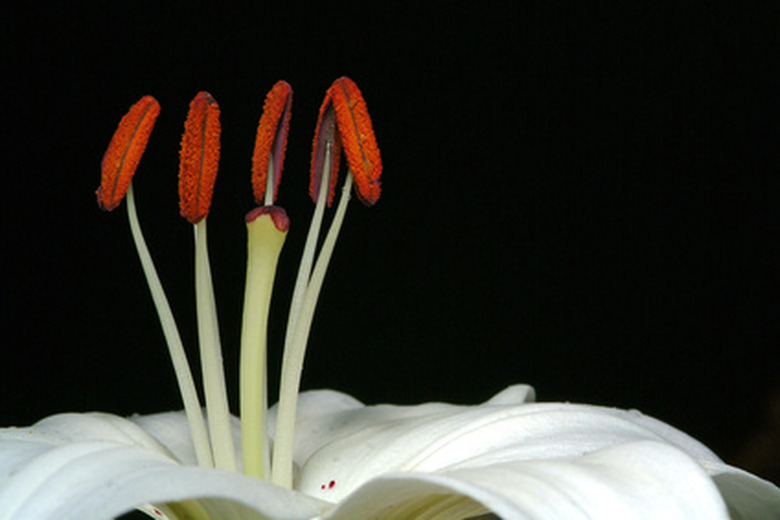
Most flowers have both a stamen, which is the male flower part, and a pistil, the female flower part. The stamen consists of paired anthers, which are pollen sacs, on filaments. Filaments are long, thin stalks sitting in the middle of flowers that hold anthers up in the air, making the pollen available to wind and other pollinators. The yellow, gold or brownish powder on anthers is pollen, or male reproductive cells. Each plant has several stamens. Pollen sacs release their pollen onto the outside of the anthers, which insects brush up against when they move around in flowers. The pollen that sticks to their bodies is distributed when they visit other flowers.
Step 2
- Most flowers have both a stamen, which is the male flower part, and a pistil, the female flower part.
- The stamen consists of paired anthers, which are pollen sacs, on filaments.
Pistil

Step 1
The pistil, a flower's female part, is a tube that's often shaped like a bowling pin and located in the very center of the flower. It extends farther out than do the anthers, which surround it. A pistil has three parts: a stigma, style and ovary. The stigma is the sticky surface at the top of the pistil, to which pollen adheres from pollinators' bodies. The tube-like structure that holds up the stigma is the style, which leads down to the ovary. The ovary contains female egg cells, called ovules. If an egg is fertilized—this happens when pollen reaches it—the ovule develops into a seed.
Step 2
- The pistil, a flower's female part, is a tube that's often shaped like a bowling pin and located in the very center of the flower.
- The tube-like structure that holds up the stigma is the style, which leads down to the ovary.
Ovary and Ovule
Step 1
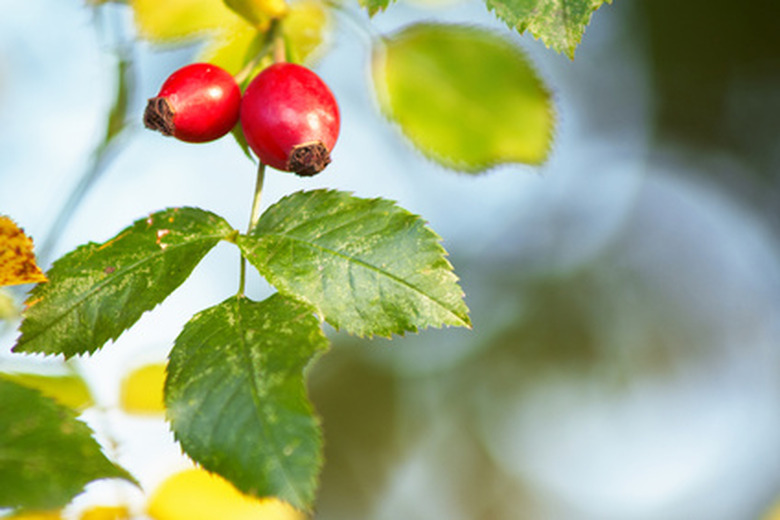
During the process of fertilization, pollen lands on the stigma, and when germinated it forms a pollen tube that grows down the style and enters the ovary. Most plants contain at least several ovules. (Reference 3) Male reproductive cells, or sperm, travel down the tube and join with the ovule, fertilizing it. The fertilized ovule becomes the seed, and the ovary swells and becomes the fruit, containing the seeds.