

Outdoor Plants That Flower In Winter
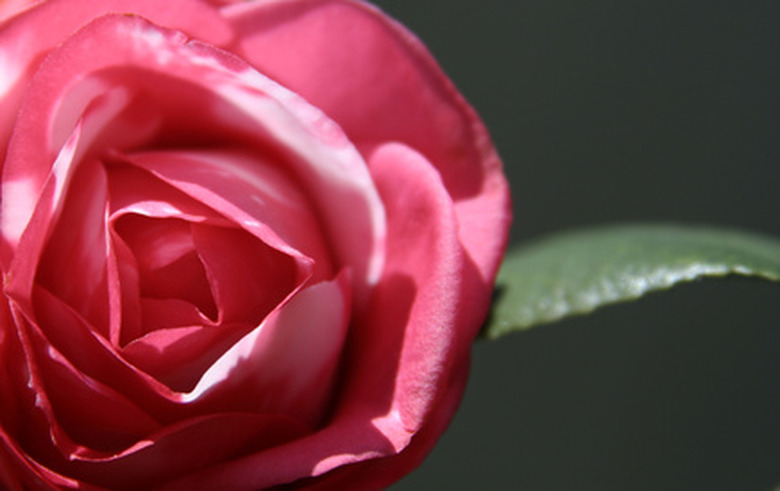
There's no need to have a dreary, colorless landscape in winter. In fact, there are many plants that flower during the cooler months of winter to provide color and texture to the landscape. Winter plants range from evergreen shrubs to perennial flowers, each with its own distinct shape, size and bloom color. Lining a garden walkway or tucked around a backyard patio, winter plants thrive in frost to brighten and lighten up the winter garden.
Hellebore
Hellebore (Helleborus 'Winter Joy Bouquet') is a winter-blooming, herbaceous perennial that has a clumping, bushy form. It grows 12 to 15 inches tall and bears bright flowers that range in color from white and creamy yellow to pink and dark red. The 2-inch-wide, nodding-like flowers on hellebore 'Winter Joy' are cupped-shaped with prominent yellow stamens that appear in cymes or clysters at the center of the bloom. As an evergreen, they retain their dark green, glossy leaves through winter to provide a vibrant landscape display. The narrow foliage is lance- to elliptic-shaped and edged with toothed segments. Hellebore 'Winter Joy' grows best in full to part shade and well-drained, nutrient-rich soil that is alkaline in nature. Plant in USDA zones 4 to 9.
- There's no need to have a dreary, colorless landscape in winter.
- Hellebore 'Winter Joy' grows best in full to part shade and well-drained, nutrient-rich soil that is alkaline in nature.
Winter Daphne
Winter Daphne (Daphne odora 'Marginata') is an evergreen shrub that produces fragrant, rosy blooms in winter. It grows 3 to 6 feet tall and has a moderate growth rate and rounded form to provide a commanding landscape presence to garden beds and borders. Winter Daphne has variegated leaves with a yellow margin that creates a vibrant display. It grows best in full sun to part shade and humus-rich, fertile soil that is somewhat acidic to alkaline in nature. Hardy, winter Daphne is tolerant of frost to bloom in below-freezing temperatures. Winter Daphne resents being transplanted. Plant in USDA zones 7 to 9.
- Winter Daphne (Daphne odora 'Marginata') is an evergreen shrub that produces fragrant, rosy blooms in winter.
- It grows 3 to 6 feet tall and has a moderate growth rate and rounded form to provide a commanding landscape presence to garden beds and borders.
Camellia
Camellia 'Winter's Hope' (Camellia 'Winter's Hope') is a slow growing evergreen shrub that retains its foliage throughout the winter to provide a much-needed burst of vibrancy to an oftentimes colorless landscape. It grows 8 feet tall and wide and has a spreading form. Camellia 'Winter's Hope' produces 4-inch-wide, semi-double, white flowers that bloom in fall and last into winter. 'Winter's Hope' dark green foliage is leather-like and oval in shape. It grows best in light shade and well-drained, moist soil. Plant 'Winter's Hope' in USDA zones 6 to 9.