

How To Treat Lawn Moss With Lime
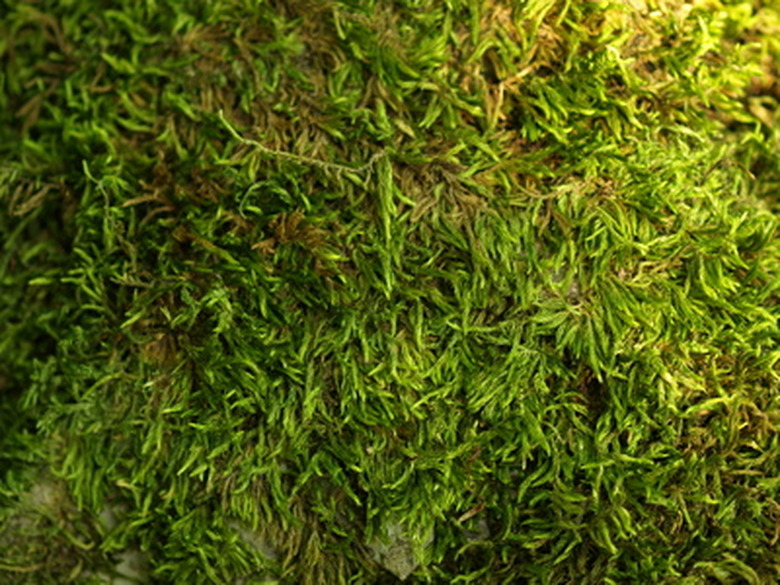
Moss can grow on a lawn for several different reasons. You will not be able to stop the moss from coming back once you remove it, unless you know what conditions led to the moss's growth. For example, if your soil is found to be sour or acidic, moss can grow. You can use lime to neutralize the acid in your soil, thus preventing the moss from growing again in the future.
Step 1
Kill the moss with either bleach, or an herbicide that contains the active ingredient glyphosate. When the moss dies, it will turn brown or black in color.
Step 2
Rake up the dead moss and discard it. You will now have access to the soil so that you can treat it and keep the moss from returning.
- Moss can grow on a lawn for several different reasons.
- You can use lime to neutralize the acid in your soil, thus preventing the moss from growing again in the future.
Step 3
Perform a soil test to make sure that your soil is acidic before you treat it with lime. According to Oregon State University, the normal pH for soil is 6.5 to 7. Anything reading below a 6 means you have acidic soil.
Step 4
Place your lime in a spreader and apply it to the soil where the moss was at a rate of 40 lbs. per 1,000 sq. ft.
Step 5
Reapply the lime in the spring and fall.
- Perform a soil test to make sure that your soil is acidic before you treat it with lime.
- Place your lime in a spreader and apply it to the soil where the moss was at a rate of 40 lbs.
Lime To Kill Moss
Mosses of several species commonly out-compete turf grasses. Moss establishes itself quickly. This commonly held belief arises from the fact that lime may help control and diminish moss populations by encouraging the spread and dominance of turf grass in areas where it competes with moss species. By raising the pH level of soil, these types of limes make soil less acidic. However, lime does not constitute a foolproof method of moss control. For acidic soils, or those with pH levels of 5.5 or below, apply 50 lbs. Apply ground limestone and pelletized limestone at the same rate for pH change, or apply burned limestone at a rate of 10 lbs. Moss grows in conditions often unfavorable to grasses. If moss out-competes grass, introduce more sunlight to the area by pruning large plants and cutting existing grass shorter to expose moss to the sun.
- Mosses of several species commonly out-compete turf grasses.
- This commonly held belief arises from the fact that lime may help control and diminish moss populations by encouraging the spread and dominance of turf grass in areas where it competes with moss species.
Things Needed
- Bleach or herbicide
- Rake
- Soil test kit
- Dolomite lime
- Rotary spreader
Warning
Always wear long clothing and chemical resistant gloves when working with lime.
Tip
You may also want to cut back tree branches, or remove any items that are keeping your lawn from getting adequate sunlight. Moss often grows in dark shady areas.