

Chestnut Tree Disease
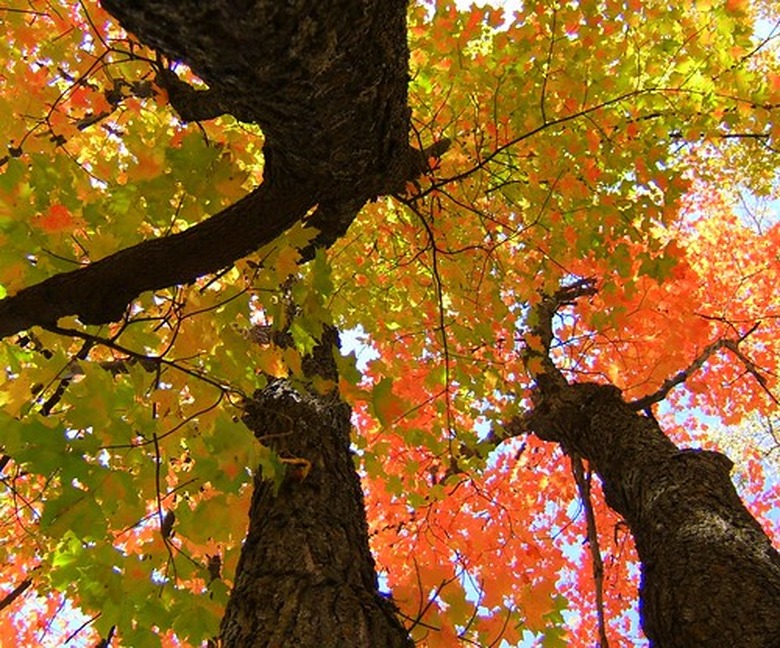
Chestnut trees (Castanea) are deciduous trees in the beech family (Fagaceae). The four major species of chestnut trees are the American chestnuts, European chestnuts, Japanese chestnuts and Chinese chestnuts. Chestnut tree leaves are simple and ovate, and the flowers bloom in spring and summer. The chestnut tree produces clusters of edible nuts. Chestnut trees are susceptible to a number of diseases.
Chestnut Blight
Chestnut blight (Chryphonectria parasitica) is a serious fungal disease that almost wiped out the American chestnut species. This disease first appears as large cankers on the branches. The orange or yellow fungal spores, called pycnidia, spread throughout the limbs and then enter into the trunk through wounds or bark creases. The foliage above the infected area dries out and dies. Chestnut blight eventually kills the entire tree. The chestnut blight fungus is spread to other trees by insects, rain and wind.
- Chestnut trees (Castanea) are deciduous trees in the beech family (Fagaceae).
- The chestnut blight fungus is spread to other trees by insects, rain and wind.
Phytophthora Root Rot
Phytophthora root rot is a serious chestnut tree disease caused by excess moisture. Phytophthora root rot causes infected leaves to dry up and turn a dull yellow or green color. Infected trees often develop dark areas in the bark around the upper roots and crown. Dark sap or gum may ooze from the infected area. This disease often kills young chestnut trees with small root systems and crowns. Phytophthora species are pathogens that inhabit the soil and spread through run-off water and splashing rain.
Leaf Diseases
Chestnut trees suffer from several fungal diseases that attack the leaves. Leaf spot disease (Mycosphaerella maculiformis) initially appears as small white spots that turn dark brown and enlarge as the disease progresses. Leaf blotch disease (Guignardia aesculi) causes large brown spots to form on the infected leaves. Severe leaf blotch infections can cause premature leaf drop. Leaf spot and leaf blotch pathogens overwinter in fallen leaves and then infect chestnut trees during the spring when the trees are forming new leaves.
- Phytophthora root rot is a serious chestnut tree disease caused by excess moisture.
- Leaf spot and leaf blotch pathogens overwinter in fallen leaves and then infect chestnut trees during the spring when the trees are forming new leaves.
Powdery Mildew
Powdery mildew (Sphaerotheca fuliginea) is a common chestnut tree disease. Powdery mildew first forms small, white spots that enlarge and coalesce, eventually creating a continuous mat of mildew. The mildew looks like a gray or grayish-white coating of dust on leaf surfaces. Powdery mildew can stunt or distort an infected chestnut tree's leaves, fruit and buds. The powdery mildew disease usually strikes late in the growing season and is most prevalent in humid environments.
Maintenance
Proper care can make chestnut trees less susceptible to common diseases. Trees should be planted in sunny locations with good drainage. The trees must be spaced far enough apart to allow for proper air ventilation. Chestnut trees should be irrigated with low-angle sprinklers to avoid wetting the lower branches and the trunk. The soil should never be saturated to the point there is standing water around the trees' bases. Fallen leaves should be raked up and disposed of on a regular basis.
- Powdery mildew (Sphaerotheca fuliginea) is a common chestnut tree disease.
- Chestnut trees should be irrigated with low-angle sprinklers to avoid wetting the lower branches and the trunk.