

How To Kill Creeping Charlie Without Killing The Lawn
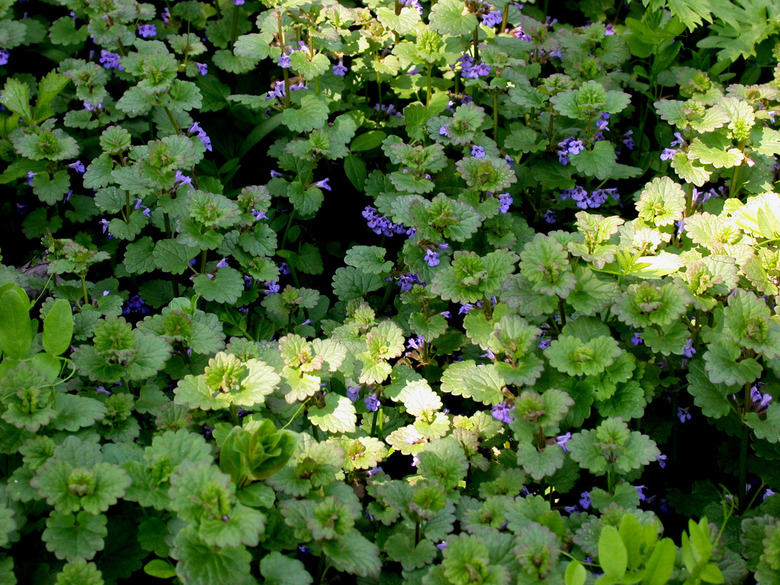
Creeping Charlie (Glechoma hederacea, USDA zones 3 to 10) is a perennial evergreen plant in the mint family. While it is native to Europe, it was introduced to the United States and has become naturalized to the point of becoming invasive.
When it comes to killing creeping Charlie that has invaded a lawn, there are both chemical and non-chemical control options.
Creeping Charlie Identification
Creeping Charlie can be identified by its leaves, which are bright green and may be round or kidney-shaped with scalloped edges. Each leaf is about an inch wide. As members of the mint family, the foliage of this plant emits a strong, mint-like scent when crushed.
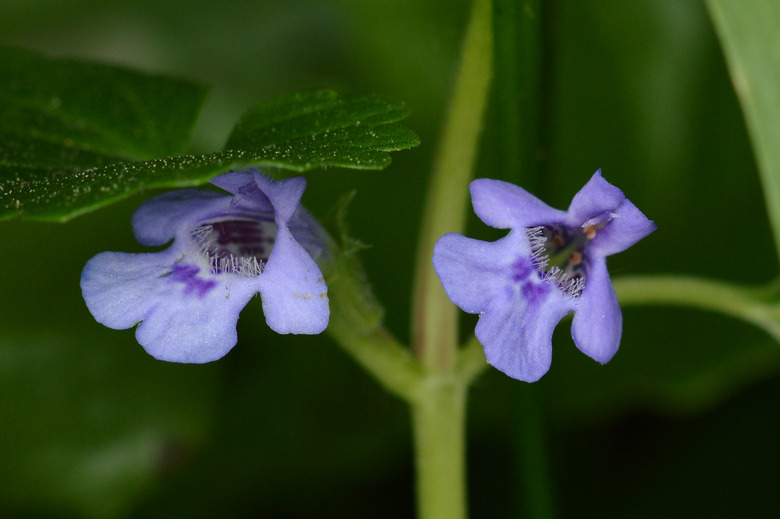
As its name suggests, creeping Charlie is a prostrate plant that spreads via stems known as stolons and forms a mat along the ground. In the spring, this plant produces bluish, funnel-shaped flowers that are very attractive to pollinators.
 Ryan Hodnett
How to Control Creeping Charlie
Since controlling weeds like creeping Charlie can be difficult and time consuming, it is best to prevent these plants from becoming established in the landscape in the first place.
Creeping Charlie grows primarily in shady, moist areas, like those found below trees and shrubs. Watering the soil around trees less often and pruning trees to open up the canopy and allow more light to reach the ground can hinder the growing conditions that encourage the growth of creeping Charlie.
Creeping Charlie grows primarily in shady, moist areas.
Keeping the lawn strong and healthy can also help keep out creeping Charlie and other weeds. This involves mowing the lawn regularly to keep it at a height between 2 and 3 inches. Overseeding the lawn in the fall is also advisable.
If you are seeding grass around a tree or shrub, choose a grass species that thrives in moist, shady conditions and can therefore outcompete creeping Charlie. You might also choose to replace grass with other ground-cover plants that do well in the shade.
In some cases, if the creeping Charlie infestation has not become extensive, it can be possible to remove this plant from the garden by hand.
Tip
Check the weather forecast before applying triclopyr; you want to make sure there is no rain expected in the 48 hours after application.
Creeping Charlie Herbicide
If chemical control of creeping Charlie becomes necessary, the herbicide triclopyr can be used. It targets broadleaf weeds after they have emerged and is found in many lawn products.
This creeping Charlie killer is best applied when daytime temperatures are in the mid 60s to low 70s°F range, which means that fall is a good time to use this product. Check the weather forecast before applying triclopyr; you want to make sure there is no rain expected in the 48 hours after application.
In the case of a very severe creeping Charlie infestation, applying a broad-spectrum herbicide and reseeding the lawn from scratch may be necessary.
When attempting to remove creeping Charlie from a lawn, avoid using borax. Studies have shown that it does not help control this weed and can cause stunting and chlorosis of other plants.