

Homemade Garden Tillers
When you look at high-powered tillers for sale at garden stores, a homemade option might seem optimistic. After all, many use motors to drive sharp steel blades up to 10 inches into the soil. Nonetheless, most gardens under an acre in size don't require a heavy-duty tiller to work the soil. Some smaller plots require only a manual tiller with strong spikes to loosen up the earth. With a little creativity, a homemade garden tiller is achievable.
Garden Tillers
Garden tillers get the ground ready for sowing seeds and planting vegetables. They loosen dirt and break up weeds and grass cover. A tiller must be heavy enough to break through often solid ground. Some common garden tools will make useful improvised tillers when used correctly. For example, it's possible to till soft ground with a metal rake or garden fork, if you use either to break up the first few inches of soil.
- When you look at high-powered tillers for sale at garden stores, a homemade option might seem optimistic.
- Some smaller plots require only a manual tiller with strong spikes to loosen up the earth.
Manual Tiller
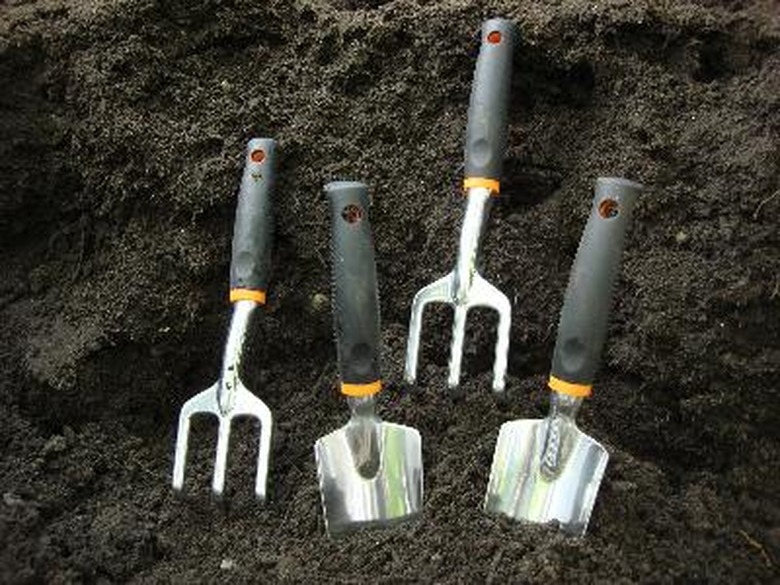
A manual garden tiller relies on the weight of the operator to break up the soil. This makes it a much more suitable option for a homemade tiller. Two small garden forks welded or tied firmly together make a useful basic tiller. They work like a hand-held prong cultivator, loosening up dirt. The drawback is that this type of tiller really only suits small plots and gardens. Leaning your foot on a long-handled manual tiller helps to push it into the ground.
Drag Tiller
One option for gardeners with lots of land and an available ride-on mower is a homemade drag tiller. This requires a heavy metal frame with strong spikes along the rear edge. Frames can be made from heavy angle iron with long, heavy bolts or lengths of rebar that can serve as spikes welded to the frame. When hooked up to the back of your mower and dragged, the spikes cut into the ground and break up the earth. The metal frame needs two sturdy wheels to prevent snags and avoid putting strain on the mower engine.
- A manual garden tiller relies on the weight of the operator to break up the soil.
- One option for gardeners with lots of land and an available ride-on mower is a homemade drag tiller.
Rotary Tiller
A homemade rotary tiller is strictly for gardeners with mechanical knowledge. For example, a basic homemade mechanical tiller may need a welded iron frame, a solid wheel base and a carefully adjusted chain to drive the rotor. Parts of a push lawn mower, including its mower, can form the basis of rotary tiller to make the job a bit easier. A mechanical tiller can easily throw up chunks of rock and root from the ground, so a protective metal cover is recommended. As will all garden machinery, wear goggles and strong clothes when operating.